Rev: - | Copyright © 2020 Marki Microwave LLC.

General Description

The MQS-0518SM is a MMIC 5 GHz – 18 GHz 90° splitter/combiner. Passive GaAs MMIC technology allows production of smaller constructions that replace larger form factor circuit board constructions. Low variation allows for accurate simulations using the provided S4P file taken from measured production units. Tight fabrication tolerances allow for less unit to unit variation than traditional splitter/combiner technologies. The MQS-0518SM is available as 4X4 mm QFN Package. Evaluation boards are also available.

Features

  • Designed for C to Ku-band applications
  • High amplitude and phase balance
  • High isolation
  • Low insertion loss
  • Off Chip termination

Functional Block Diagram

Block Diagram
Photo of MQS-0518SM

Electrical Performance Summary

ParameterTypUnit
Frequency Range5 to 18GHz
Isolation 17dB
Nominal Phase Shift 90°
Phase Balance 2.5°
Amplitude Balance 0.5dB

Summary only – refer to the Electrical Specifications, Absolute Maximum Ratings, and Recommended Operating Range tables for complete details.

Part Ordering Options

Part NumberDescriptionPackageGreen StatusProduct LifecycleExport Classification
MQS-0518SMMMIC 5-18GHz 90° Splitter / CombinerQFN

REACH

RoHS

ReleasedEAR99
EVAL-MQS-0518Evaluation Board, MMIC 5-18GHz 90° Splitter / CombinerEVAL

REACH

RoHS

ReleasedEAR99

Table Of Contents

Typical Performance Plots

All measured data is de-embedded using AFR.

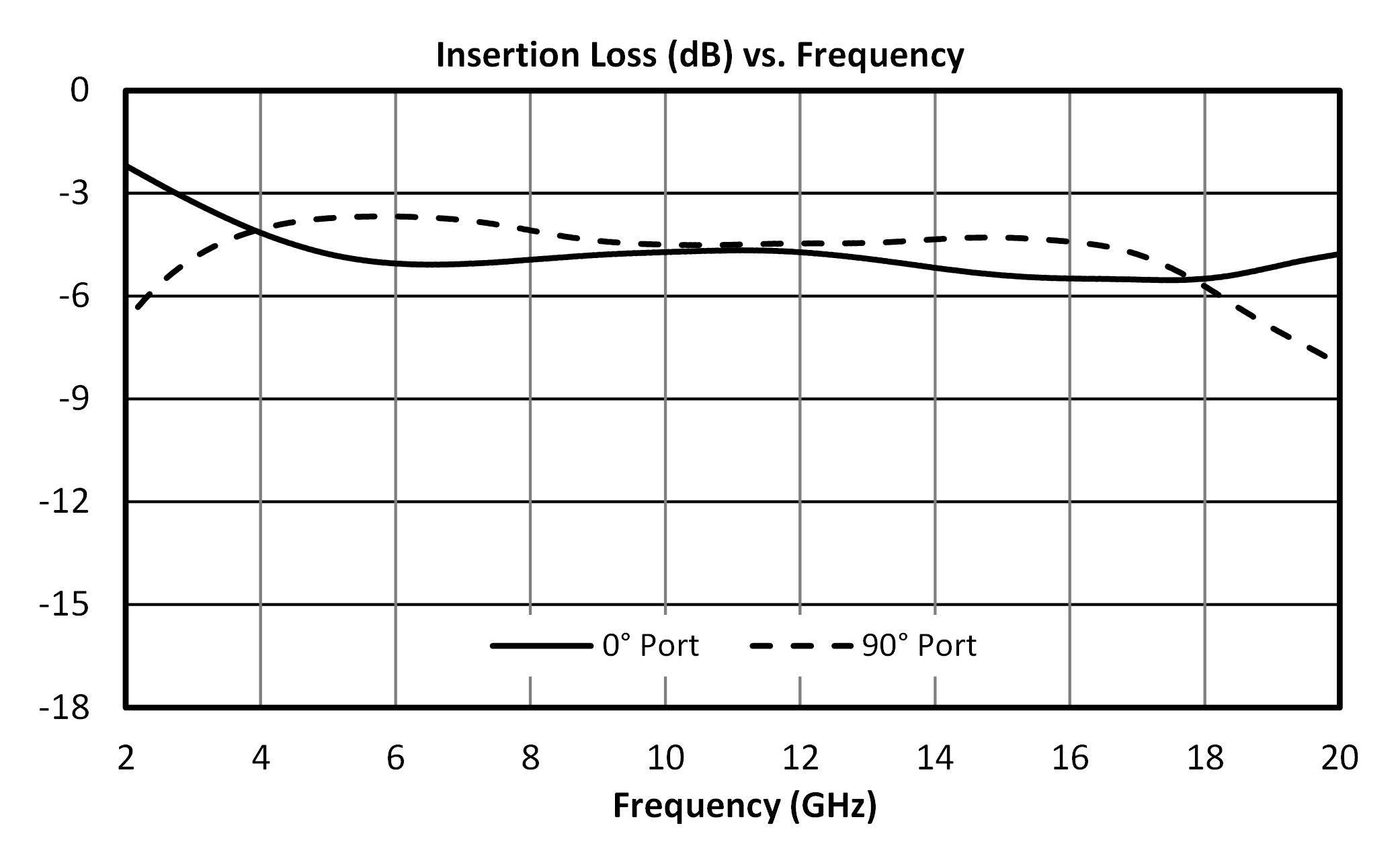
Insertion Loss (dB) graph for MQS-0518SM
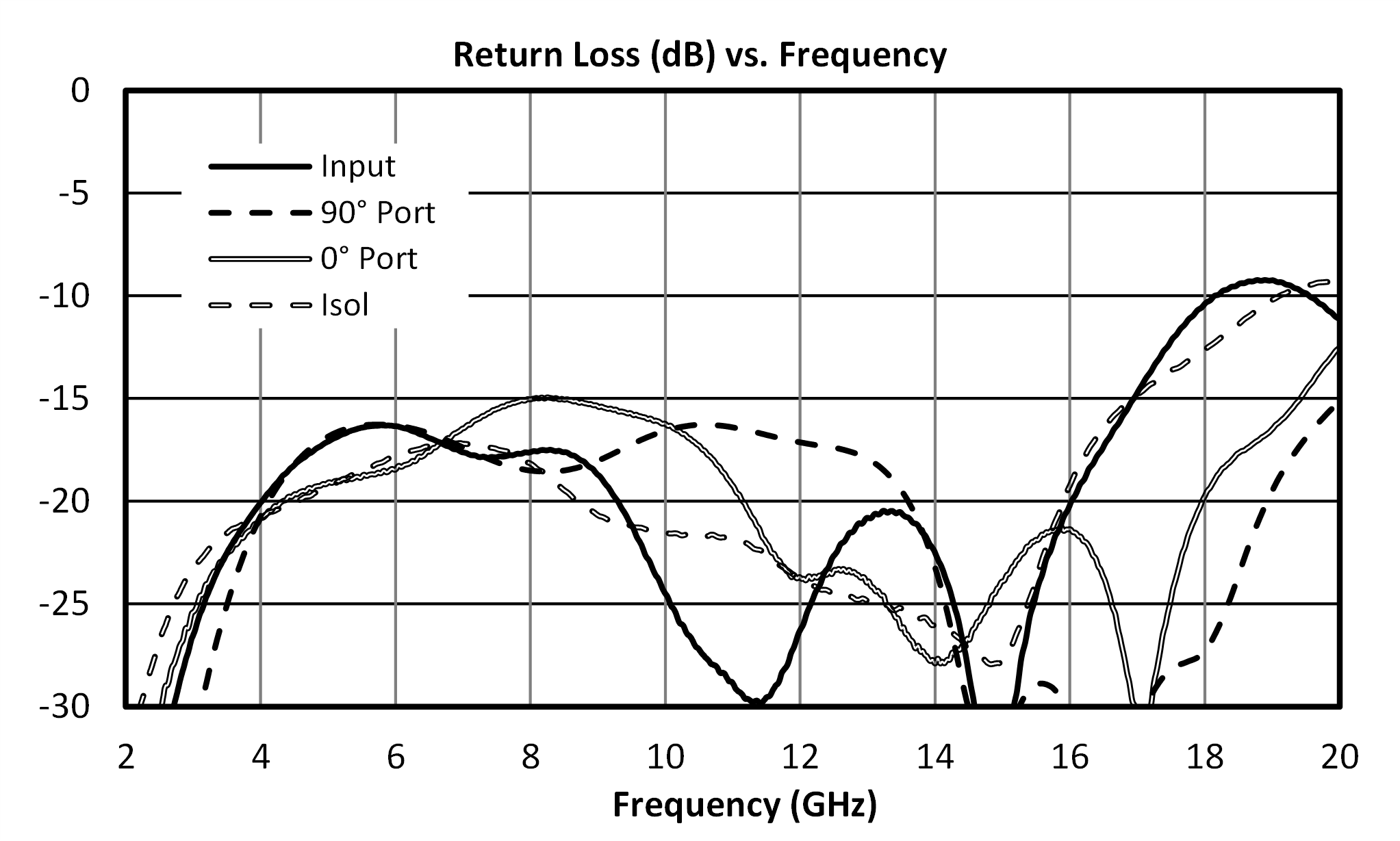
Return Loss (dB) graph for MQS-0518SM
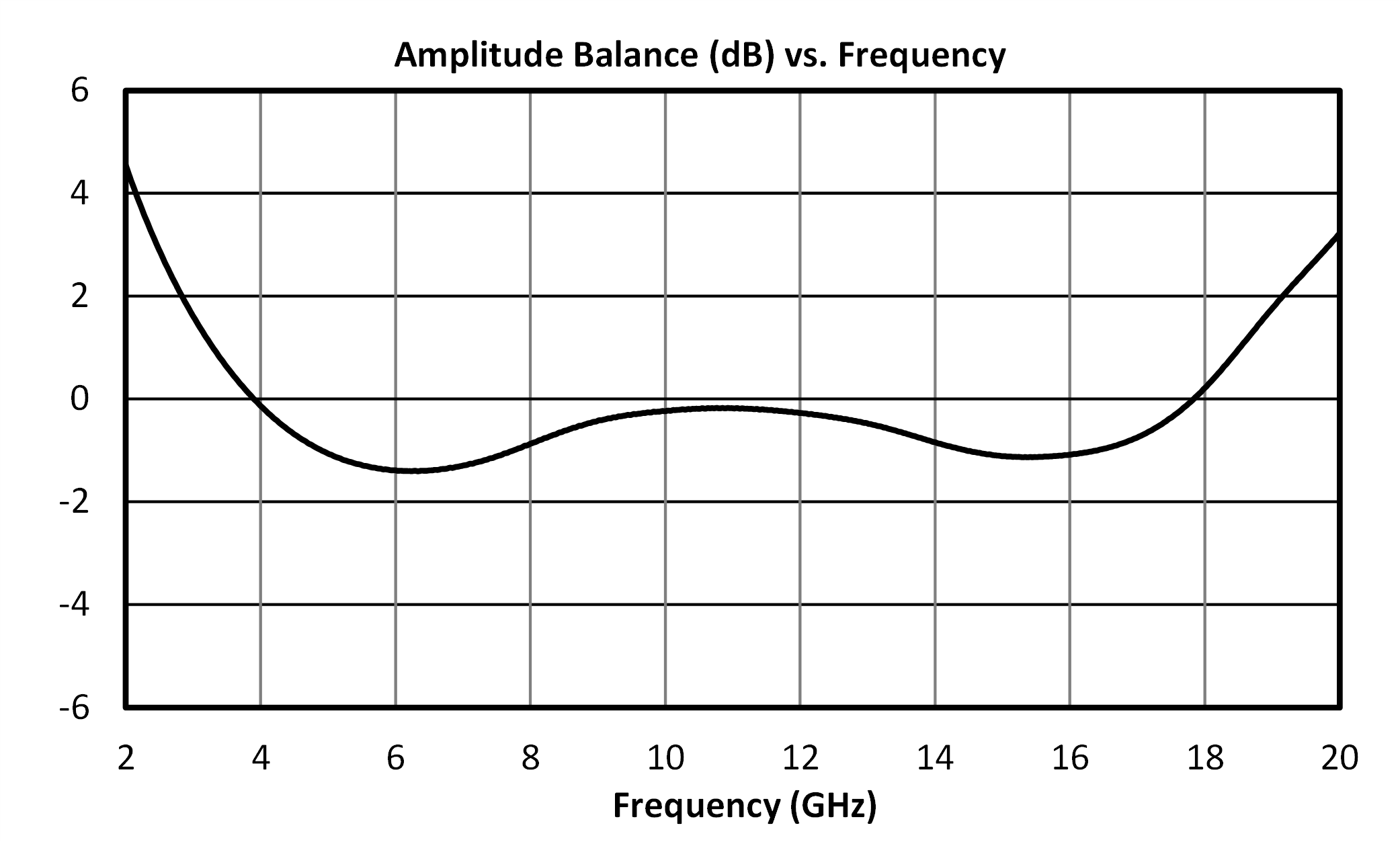
Amplitude Balance (dB) graph for MQS-0518SM
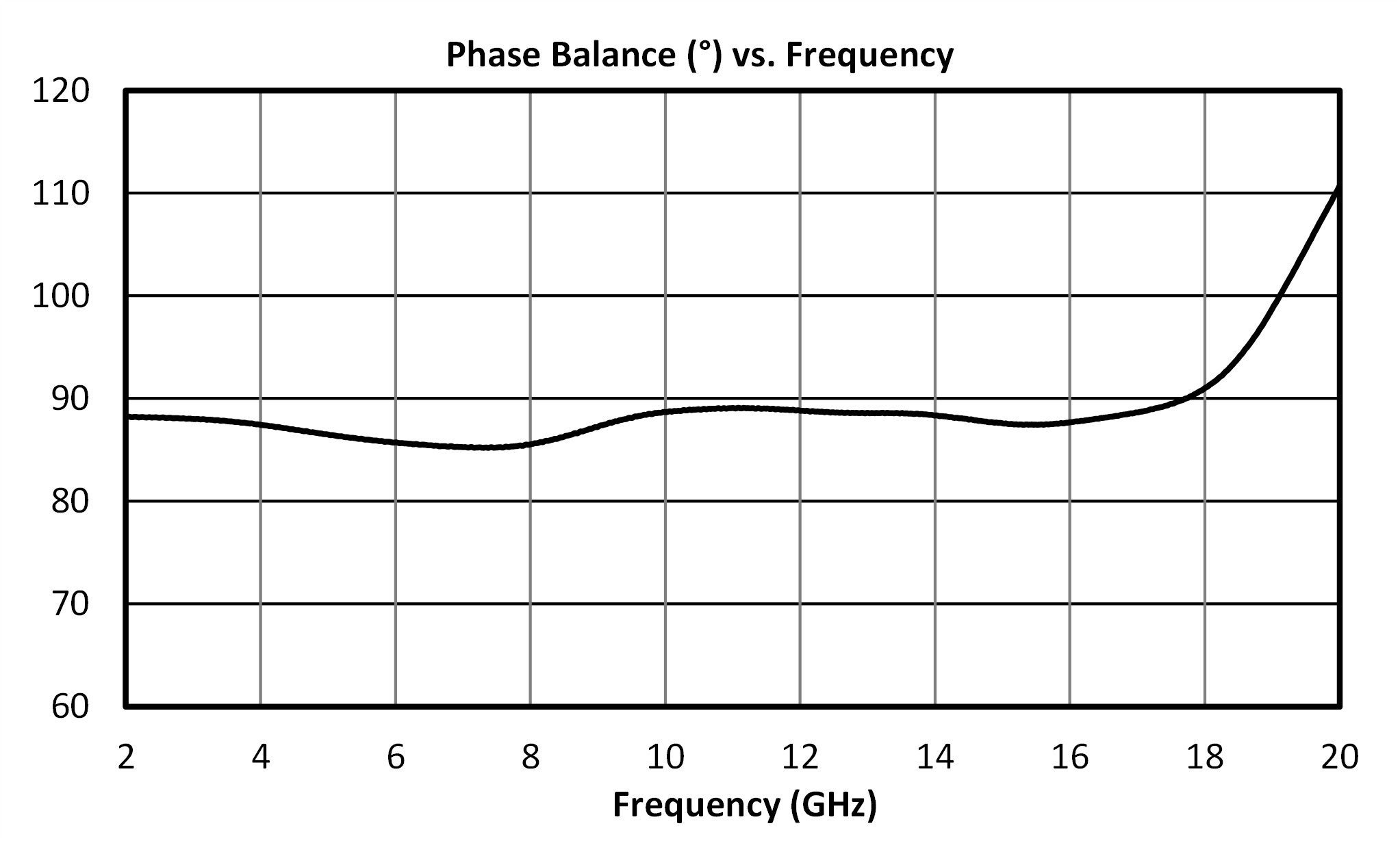
Phase Balance (°) graph for MQS-0518SM
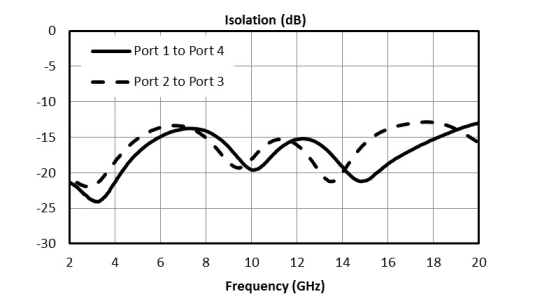
Isolation (dB) graph for MQS-0518SM

All measured data is taken from the eval board without de-embedding of the connectors and traces. 6 Ports 1 – 4 correspond to the Evaluation board package designation.

Evaluation Board Typical Performance Plots

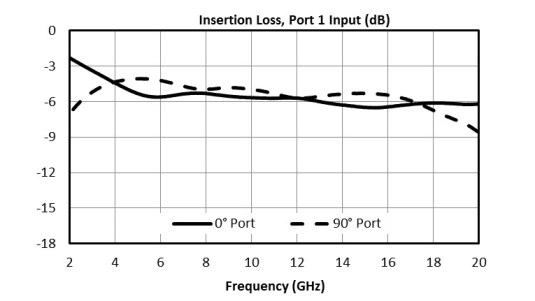
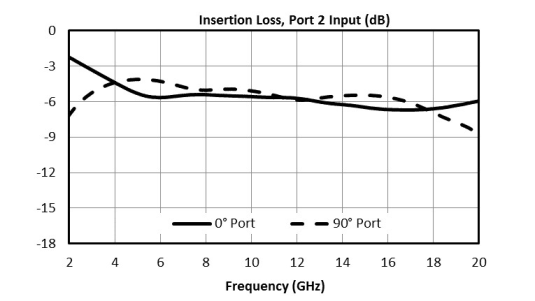
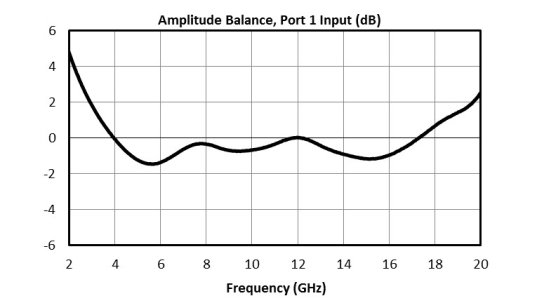
All measured data is taken from the eval board without de-embedding of the connectors and traces.All measurements taken in a 50Ω environment.

Insertion Loss, Port 1 Input (dB) graph for MQS-0518SM
Insertion Loss, Port 2 Input (dB) graph for MQS-0518SM
Amplitude Balance, Port 1 Input (dB) graph for MQS-0518SM
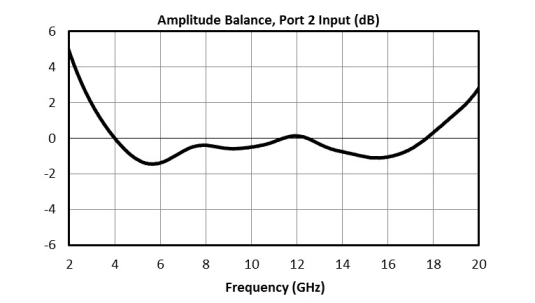
Amplitude Balance, Port 2 Input graph for MQS-0518SM
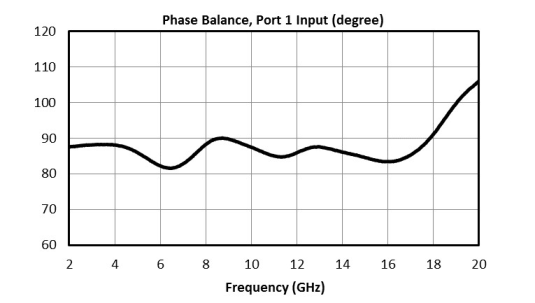
Phase Balance, Port 1 Input (degree) graph for MQS-0518SM
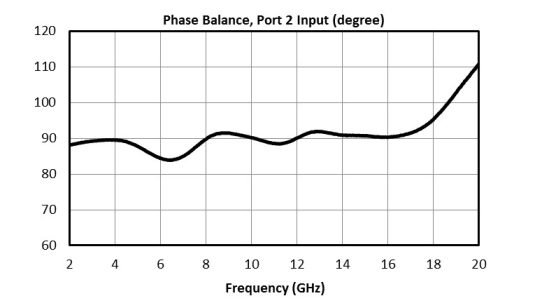
Phase Balance, Port 2 Input (degrees) graph for MQS-0518SM
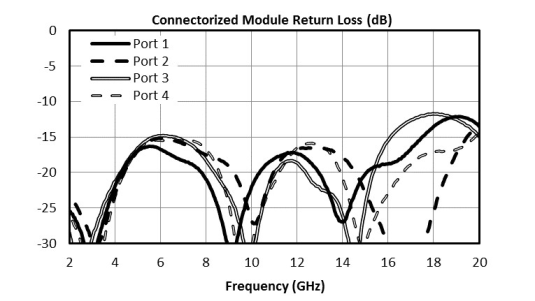
Connectorized Module Return Loss (dB) graph for MQS-0518SM
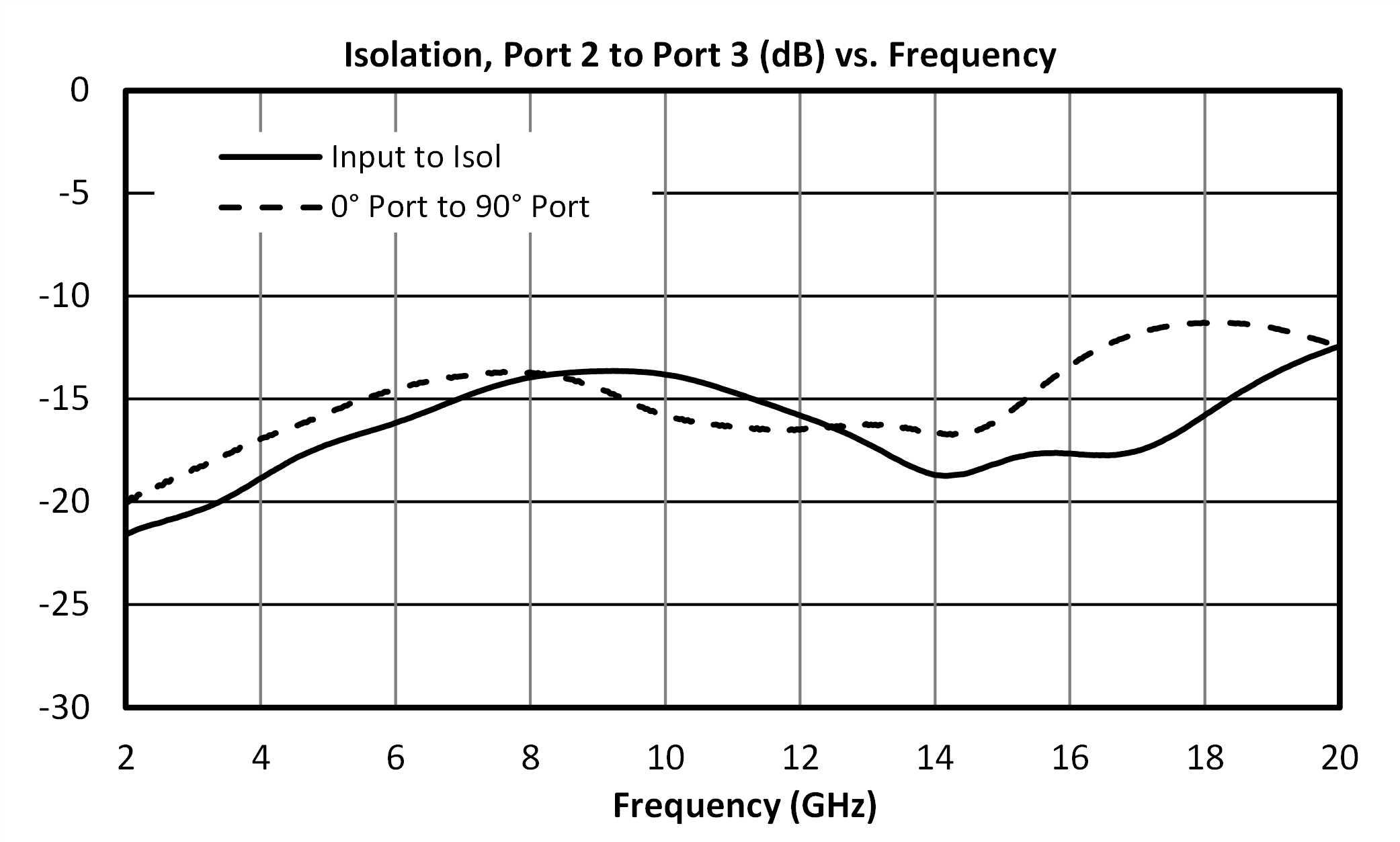
Isolation (dB) graph for MQS-0518SM

All measured data is taken from the eval board without de-embedding of the connectors and traces. 6 Ports 1 – 4 correspond to the Evaluation board package designation.

Specifications

Electrical Specifications

The electrical specifications apply at Tau=+25°C in a 50Ω system. Min and Max limits are guaranteed at Tau=+25°C.

ParameterPort ConfigurationTest ConditionsMinimum
Frequency
(GHz)
Maximum
Frequency
(GHz)
MinTypMaxUnit
Frequency Range--5 18---GHz
Amplitude Balance 1A-5 18-0.52.5dB
Excess Insertion Loss 2A-5 18-4.56dB
Impedance A-5 18-50-Ω
Isolation 3A-5 181017-dB
Mean Coupling 4A-5 18-3-dB
Nominal Phase Shift 5A-5 18-90-°
Phase Balance A-5 18-2.510°
VSWR 6A-5 18-1.2--

[1][3][4][5][6] Device is non-reciprocal. Operation not guaranteed when ports 3 or 4 are used as an input.

[2] Device is non-reciprocal. Operation not guaranteed when ports 3 or 4 are used as an input. Excess Insertion Loss = (Input Port to Common Port Insertion Loss) – 3 dB.

Absolute Maximum Ratings

The Absolute Maximum Ratings indicate limits beyond which damage may occur to the device. If these limits are exceeded, the device may be inoperable or have a reduced lifetime.

ParameterMaximum RatingUnit
Maximum Operating Temperature 100°C
Maximum Storage Temperature 125°C
Minimum Operating Temperature -55°C
Minimum Storage Temperature -65°C
RF Power Handling 10W

Package Information

ParameterDetailsRating
Dimensions-4 x 4 mm
Moisture Sensitivity Level-MSL 1

Port Configuration and Functions

Port Diagram

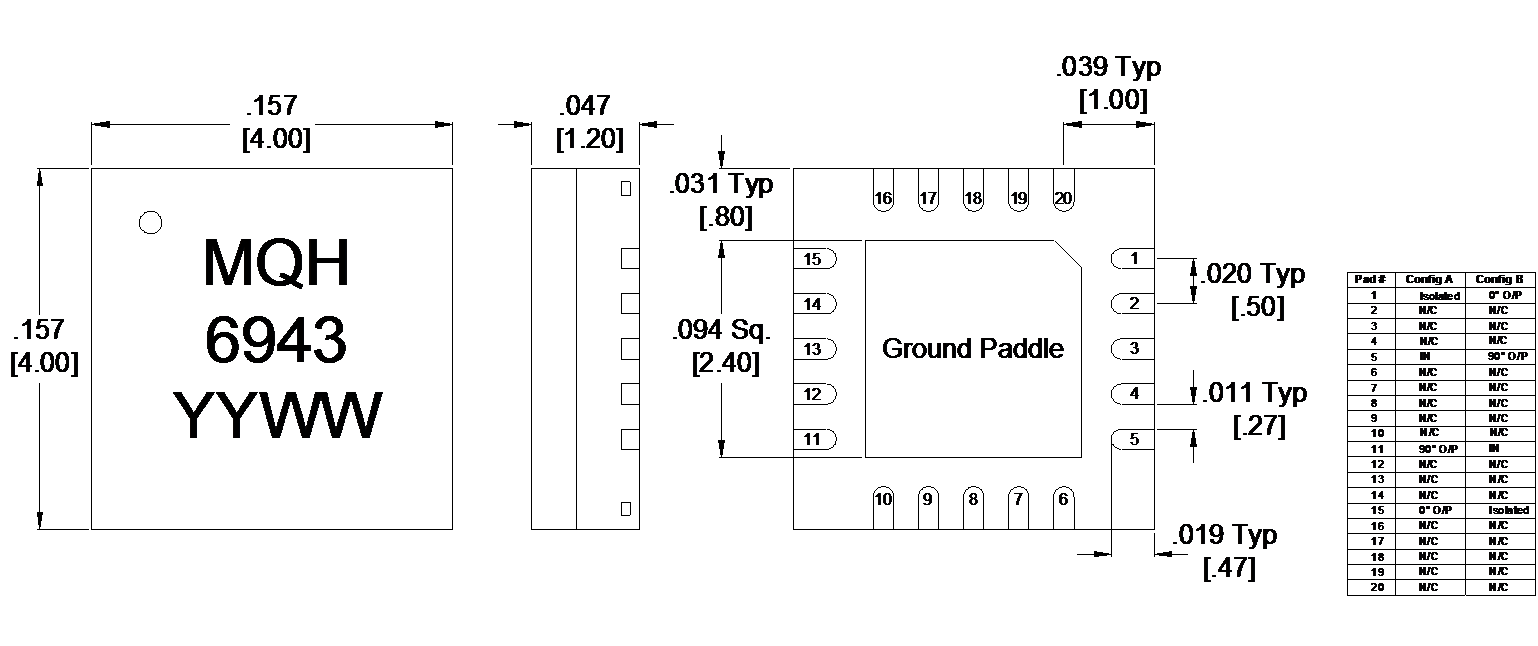
A bottom-up view of the MQS-0518SM’s SM package outline drawing is shown below. Only Pins 5 and 11 may be used as an input. Pins 1 and 15 are not recommended as inputs. Device is not recommended for applications requiring reflected signals.

Diagram of the port configuration for MQS-0518SM

Port Functions

Configuration A

PortFunctionDescriptionDC Equivalent
Circuit
Pin 1Isolated Pin 1 is DC short to pin 11 and open to ground.Equivalent circuit for the Isolated
Pin 1190° Output Pin 11 is DC short to pin 1 and open to ground.Equivalent circuit for the 90° Output
Pin 150° Output Pin 15 is DC short to pin 5 and open to ground.Equivalent circuit for the 0° Output
Pin 5Input Pin 5 is DC short to pin 15 and open to ground.Equivalent circuit for the Input

Configuration B

PortFunctionDescriptionDC Equivalent
Circuit
Pin 10° Output Pin 1 is DC short to pin 11 and open to ground.Equivalent circuit for the 0° Output
Pin 11Input Pin 11 is DC short to pin 1 and open to ground.Equivalent circuit for the Input
Pin 15Isolated Pin 15 is DC short to pin 5 and open to ground.Equivalent circuit for the Isolated
Pin 590° Output Pin 5 is DC short to pin 15 and open to ground.Equivalent circuit for the 90° Output

Operation

Application Information

Quadrature signal generation is useful for many applications in analog signal processing. Marki MQH (MMIC quadrature hybrids) and MQS (MMIC 90˚ Splitter/Combiners) offer this functionality in a small factor with high repeatability. Below are applications and how they can be realized with the MQH and MQS product lines.


Quadrature Hybrids vs 90˚ Splitter/Combiners


Some products are ‘true’ quadrature hybrids, while others are 90˚ Splitter/Combiners. A quadrature hybrid is symmetric about all four ports, meaning that in a splitting application any port can be used as an input, with the isolated and output ports following from this selection. Likewise, for a combining application, any port can be used as an output.

A 90˚ Splitter/Combiner is not symmetric. When splitting, only ports 1 and 2 can be used as an input. If ports 3 or 4 were used, there would be significant phase walk-off between the output ports. As a combiner, only ports 1 and 2 are suitable as output ports. The phase walk-off introduced when using ports 3 or 4 as an output means that reflected signals recombine and cancel poorly inside a 90° Splitter/Combiner.

Single Sideband and Image Reject Mixers
Mqs 0518 Sm Single Sideband and Image Reject Mixers

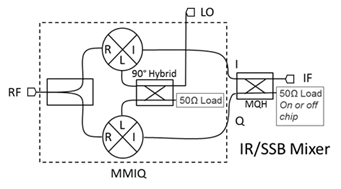
The primary application for the MQH and MQS series is as IF or LO quadrature signal splitter/combiners. They can be used in combination with the MMIQ series of IQ mixers to create broadband single sideband and image reject mixers. Either 90˚ Splitter/Combiners or quadrature hybrids can be used as the IF hybrid, but if a 90˚ Splitter/Combiner is used only one sideband (or image) is accessible, whereas if a quadrature hybrid is used than both sidebands are accessible.

If 90˚ Splitter/Combiner is used for a single sideband upconverter or image reject mixer, port 1 (or 2) should be used as the IF input/output and ports 2 and 3 (or 1 and 4) should be connected to the I and Q ports. Selecting port 1 or 2 to terminate will select which sideband of the mixer to reject.

Balanced Amplifiers

Mqs 0518 Sm Balanced Amplifiers

In a balanced amplifier, the poor return loss of an amplifier is compensated for with a quadrature hybrid. In this application, the reflections from the input or output are collected at the isolated port of the quadrature hybrid and terminated.

Since a 90˚ Splitter/Combiner is not completely symmetric, reflected signals will not terminate as well as with a quadrature hybrid. An MQH option is recommended for this application. If a 90˚ Splitter/Combiner is used for a single sideband upconverter or image reject mixer, port 1 (or 2) should be used as the IF input/output and ports 2 and 3 (or 1 and 4) should be connected to the I and Q ports. Selecting port 1 or 2 to terminate will select which sideband of the mixer to reject. Testing/simulation is recommended when considering if a 90° Splitter/Combiner is suitable.

Reflectionless Filter

Mqs 0518 Sm Reflectionless Filter

Similar to a balanced amplifier, a reflectionless filter will terminate reflections that are out of band for a filter (but in band for the quadrature hybrid) at the isolated port.

Since a 90˚ Splitter/Combiner is not completely symmetric, reflected signals will not terminate as well as with a quadrature hybrid. An MQH option is recommended for this application. If a 90˚ Splitter/Combiner is used for a single sideband upconverter or image reject mixer, port 1 (or 2) should be used as the IF input/output and ports 2 and 3 (or 1 and 4) should be connected to the I and Q ports. Selecting port 1 or 2 to terminate will select which sideband of the mixer to reject. Testing/simulation is recommended when considering if a 90° Splitter/Combiner is suitable.

Reflective Applications

Mqs 0518 Sm Reflective Phase Shifter Mqs 0518 Sm Reflective Attenuator

Unlike in the previous applications, reflective applications only work well with a quadrature hybrid (not a 90˚ Splitter/Combiner). In these applications a signal is reflected off of two identical structures (typically a PIN diode) and the output signal is collected at the isolated port. In this case the desired signal is deliberately reflected.

Since a 90˚ Splitter/Combiner is not completely symmetric, you will have poor results if you use these for reflective applications.

Mechanical Data

Outline Drawing

Download : Outline 2D Drawing Outline 3D Drawing Outline 3D STP

Outline Drawing

Evaluation Board

Evaluation Board - Outline Drawing

Outline Drawing

Revision History

Revision CodeRevision DateComment
-2020-06-01Initial Datasheet Release

DISCLAIMER

MARKI MICROWAVE, LLC., (“MARKI”) PROVIDES TECHNICAL SPECIFICATIONS AND DATA (INCLUDING DATASHEETS), APPLICATION OR OTHER DESIGN ADVICE, WEB TOOLS, AND OTHER INFORMATION AND RESOURCES “AS IS” AND WITH ALL FAULTS. MARKI DISCLAIMS ALL WARRANTIES, EXPRESS OR IMPLIED, INCLUDING, WITHOUT LIMITATION, ANY IMPLIED WARRANTIES OF MERCHANTABILITY, FITNESS FOR A PARTICULAR PURPOSE, OR NON-INFRINGEMENT.

These resources are intended for developers skilled in the art designing with Marki products. You are solely responsible for (1) selecting the appropriate products for your application, (2) designing, validating, and testing your application, and (3) ensuring your application meets applicable standards and other requirements. Marki makes no guarantee regarding the suitability of its products for any particular purpose, nor does Marki assume any liability whatsoever arising out of your use or application of any Marki product.

Marki grants you permission to use these resources only for development of an application that uses Marki products. Other reproduction or use of these resources is strictly prohibited. No license is granted to any other Marki intellectual property or to any third-party intellectual property. Marki reserves the right to make changes to the product(s) or information contained herein without notice.

MARKI MICROWAVE, M wave logo, FastSwitch, and T3 MIXER are trademarks or registered trademarks of Marki Microwave, LLC. All other trademarks used are the property of their respective owners.

© 2020, Marki Microwave, LLC