Port Diagram
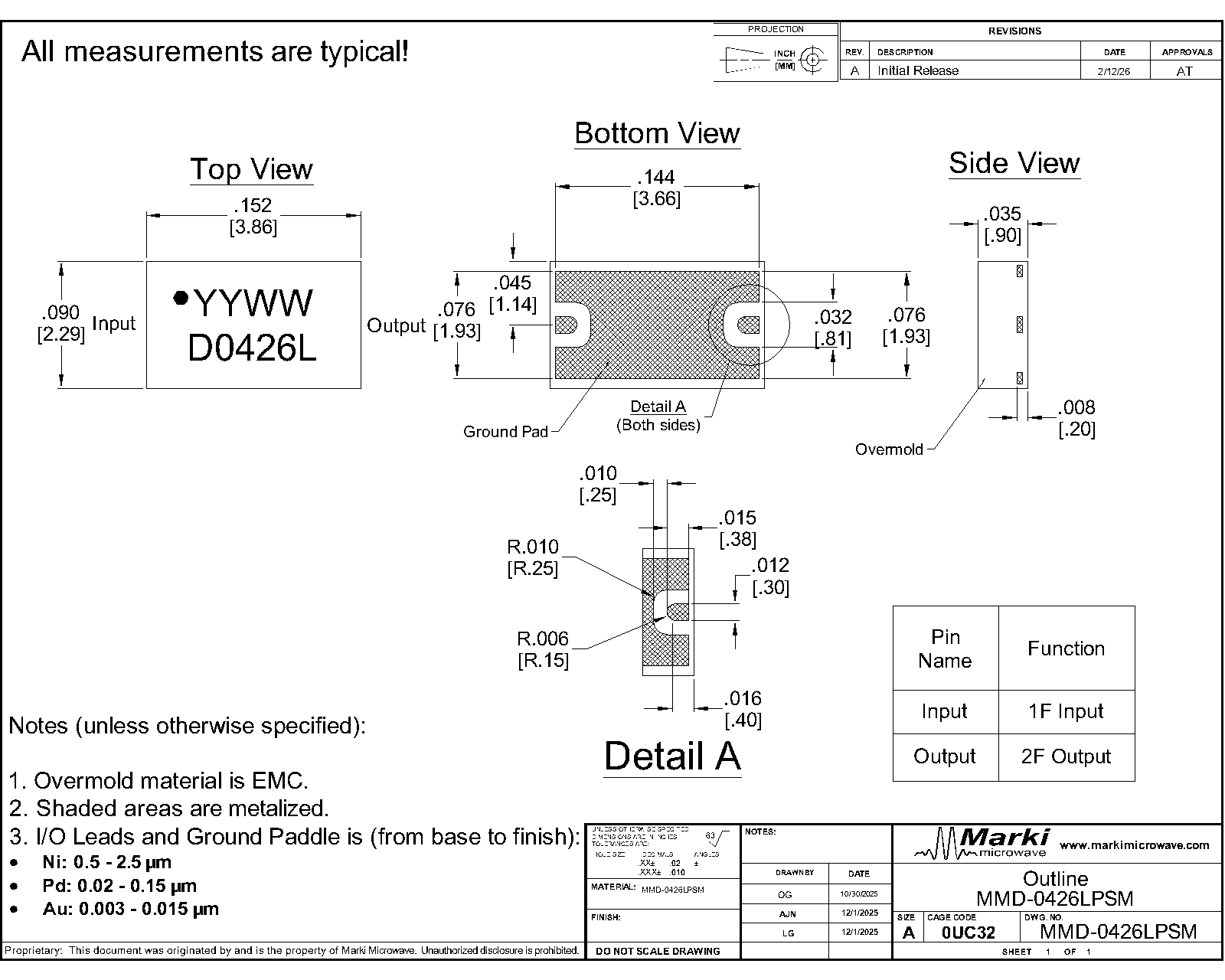
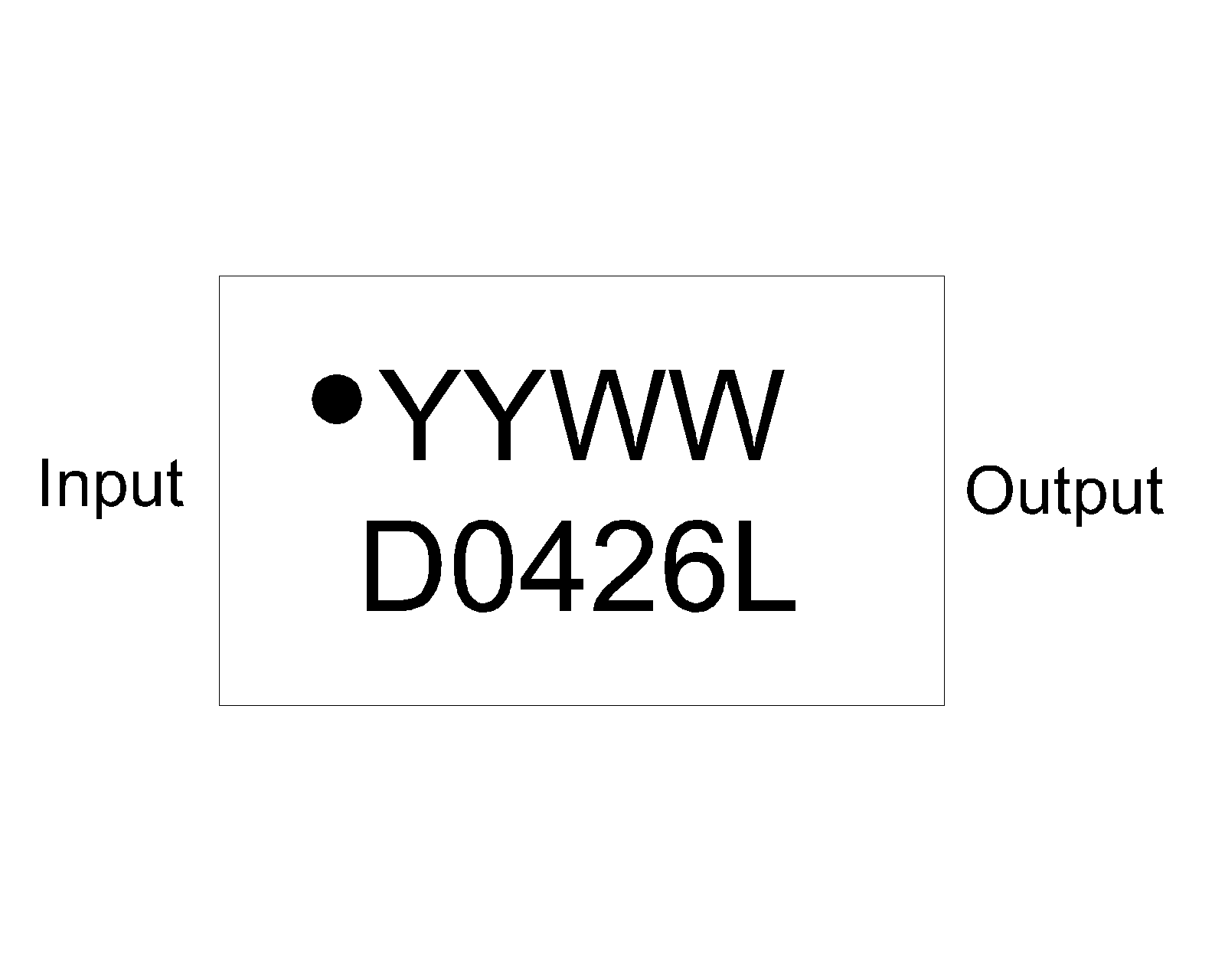
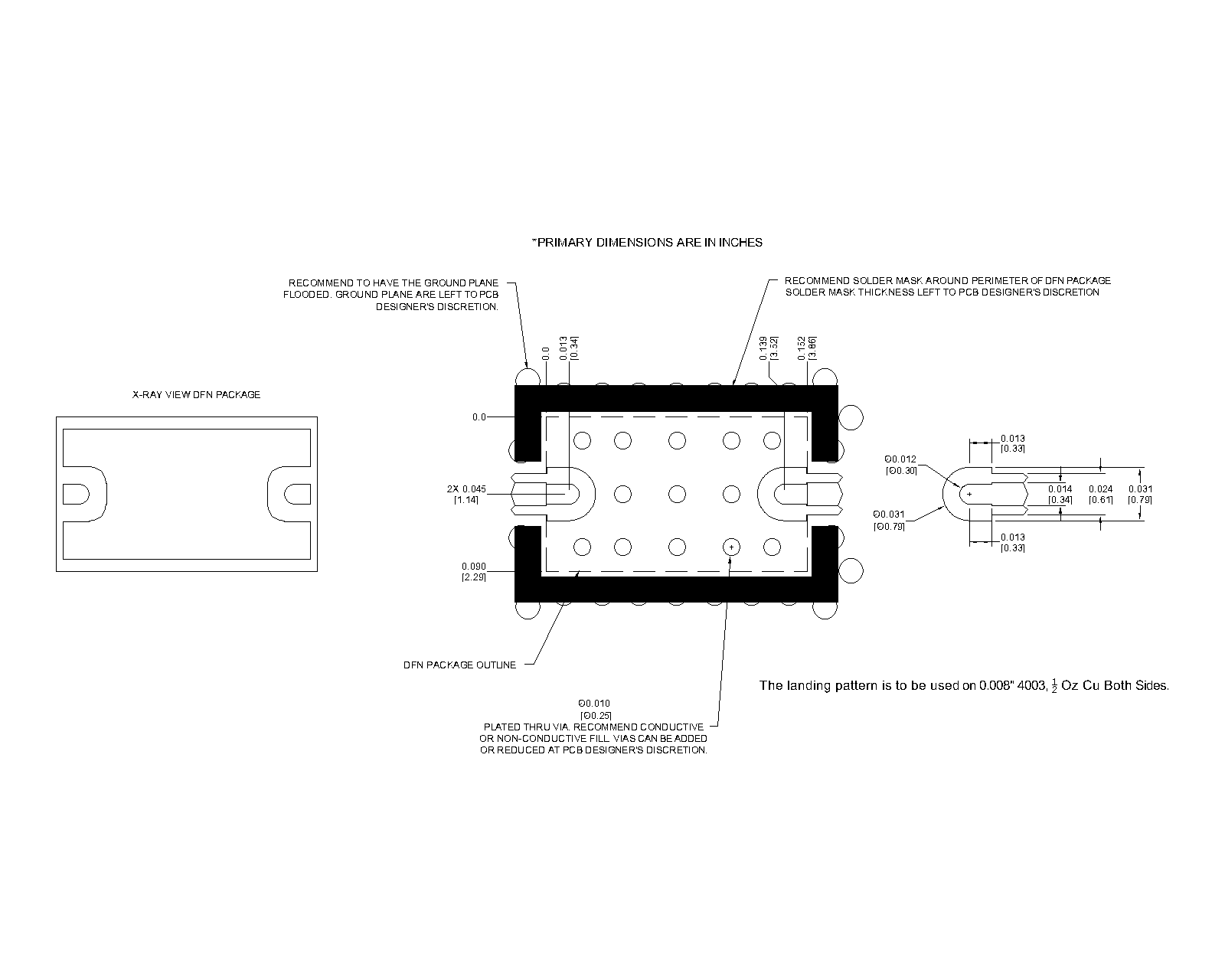
A top-down x-ray view of the MMD-0426LPSM’s PSM package outline drawing is shown below. The MMD-0426LPSM should only be used in the forward direction, with the input and output ports given in Port Functions.

Sales: 408-778-9952 | General: 408-778-4200 | Fax: 408-778-4300
Sales & Customer Support: [email protected]
Tech Support: [email protected]
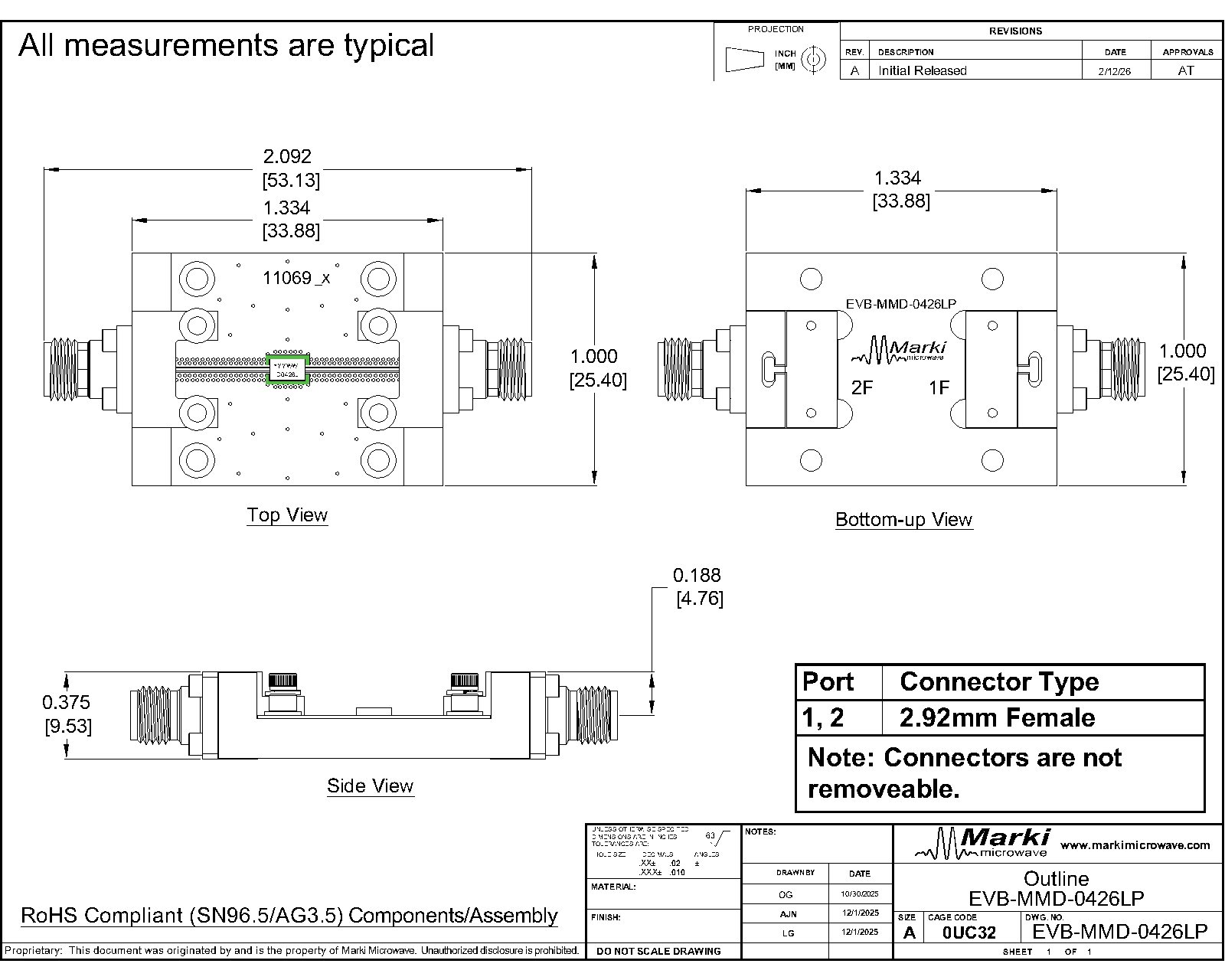
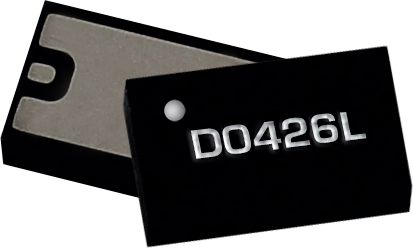
The MMD-0426LPSM is a MMIC doubler fabricated with GaAs Schottky diodes. This part operates from 2 to 13 GHz input frequency range or a doubled output frequency range of 4 to 26 GHz. It features excellent conversion loss, fantastic isolation, and great harmonic suppressions across a broad bandwidth. It is available as a 2.29 x 3.86mm DFN and connectorized evaluation board.

| Part Number | Description | Package | Green Status | Product Lifecycle | Export Classification |
|---|---|---|---|---|---|
| MMD-0426LPSM | GaAs MMIC Doubler 4 to 26 GHz Output Frequency | DFN | REACH RoHS | Released | EAR99 |
| EVB-MMD-0426LP | Evaluation Board, GaAs MMIC 4 - 26 GHz Doubler | EVB | REACH RoHS | Released | EAR99 |
| Part Number | Description | Package | Green Status | Product Lifecycle | Export Classification |
|---|---|---|---|---|---|
| MMD-0426LPSM | GaAs MMIC Doubler 4 to 26 GHz Output Frequency | DFN | REACH RoHS | Released | EAR99 |
| EVB-MMD-0426LP | Evaluation Board, GaAs MMIC 4 - 26 GHz Doubler | EVB | REACH RoHS | Released | EAR99 |
MMD-0426LPSM
GaAs MMIC Doubler 4 to 26 GHz Output Frequency
| Revision Code | Revision Date | Comment |
|---|---|---|
| - | 2026-04-21 | Initial Release |
MMD-0426LPSM
GaAs MMIC Doubler 4 to 26 GHz Output Frequency
A top-down x-ray view of the MMD-0426LPSM’s PSM package outline drawing is shown below. The MMD-0426LPSM should only be used in the forward direction, with the input and output ports given in Port Functions.
| Port | Function | Description | DC Equivalent Circuit |
|---|---|---|---|
| GND | Ground | PSM package ground path is provided through the ground paddle. |  |
| Input | 1F Input | Input 1x Frequency input port. This pin is DC open for the PSM package. | 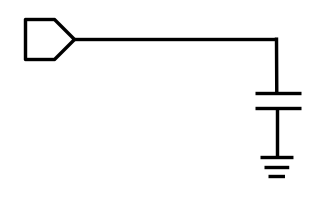 |
| Output | 2F Output | Output 2x Frequency output port. This pin is DC open for the PSM package. | |
MMD-0426LPSM
GaAs MMIC Doubler 4 to 26 GHz Output Frequency
The Absolute Maximum Ratings indicate limits beyond which damage may occur to the device. All Absolute Maximum Ratings are individual and should not be met in parallel. If these limits are exceeded or multiple are met in parallel the device may be inoperable or have a reduced lifetime.
| Parameter | Maximum Rating | Unit |
|---|---|---|
| Maximum Operating Temperature | 100 | °C |
| Maximum Storage Temperature | 125 | °C |
| Minimum Operating Temperature | -55 | °C |
| Minimum Storage Temperature | -65 | °C |
| Power Handling, at any Port (25°C) | 27 | dBm |
| Parameter | Details | Rating |
|---|---|---|
| ESD | 250 to < 500 Volts | HBM Class 1A |
| Dimensions | - | 2.29 x 3.86 mm |
| Moisture Sensitivity Level | - | MSL 1 |
The Recommended Operating Conditions indicate the limits, inside which the device should be operated, to guarantee the performance given in Electrical Specifications Operating outside these limits may not necessarily cause damage to the device, but the performance may degrade outside the limits of the electrical specifications. For limits, above which damage may occur, see Absolute Maximum Ratings.
| Parameter | Min | Nominal | Max | Unit |
|---|---|---|---|---|
| Ambient Temperature | -55 | 25 | 100 | °C |
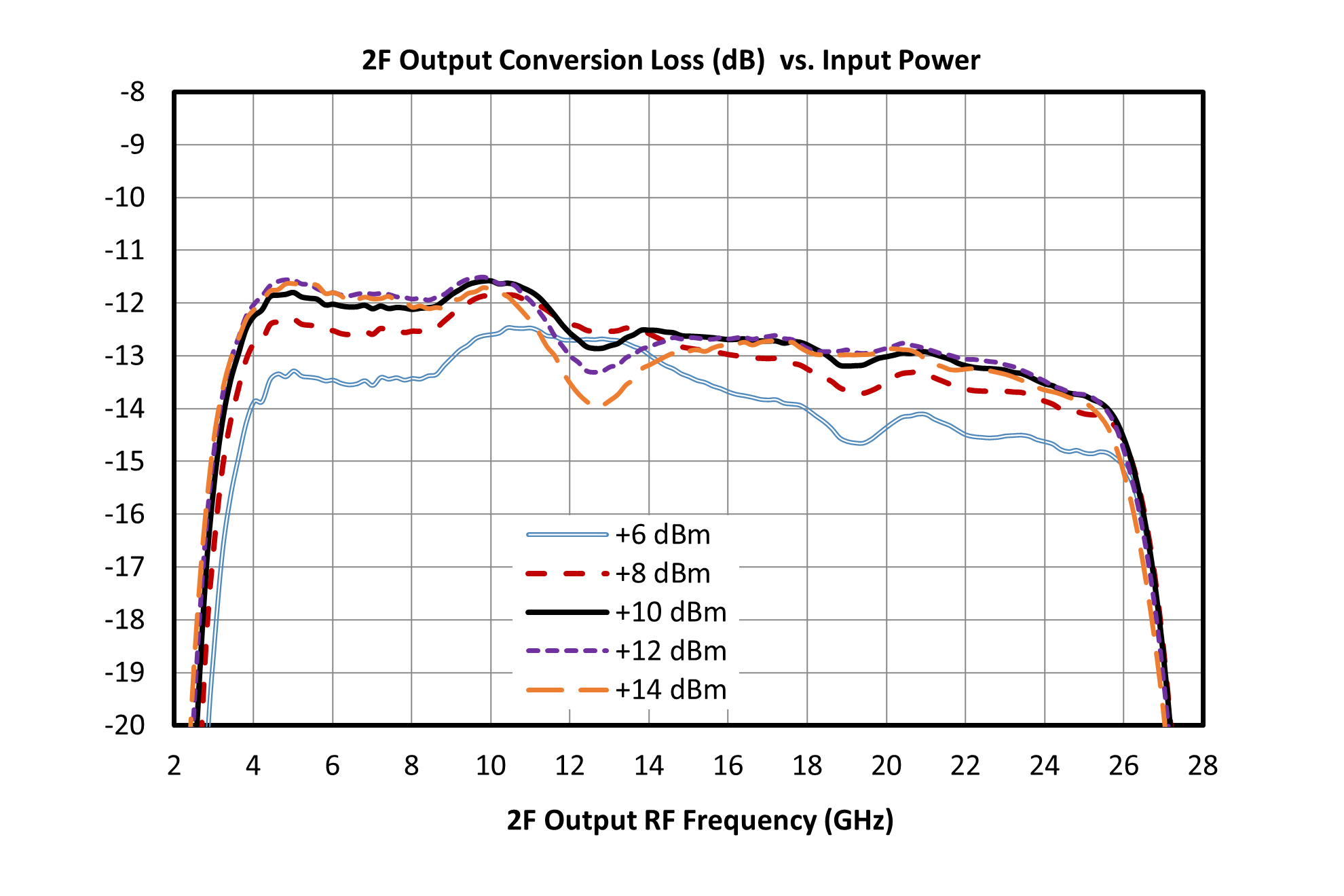
| Input Power | 6 | 10 | 14 | dBm |
MMD-0426LPSM
GaAs MMIC Doubler 4 to 26 GHz Output Frequency
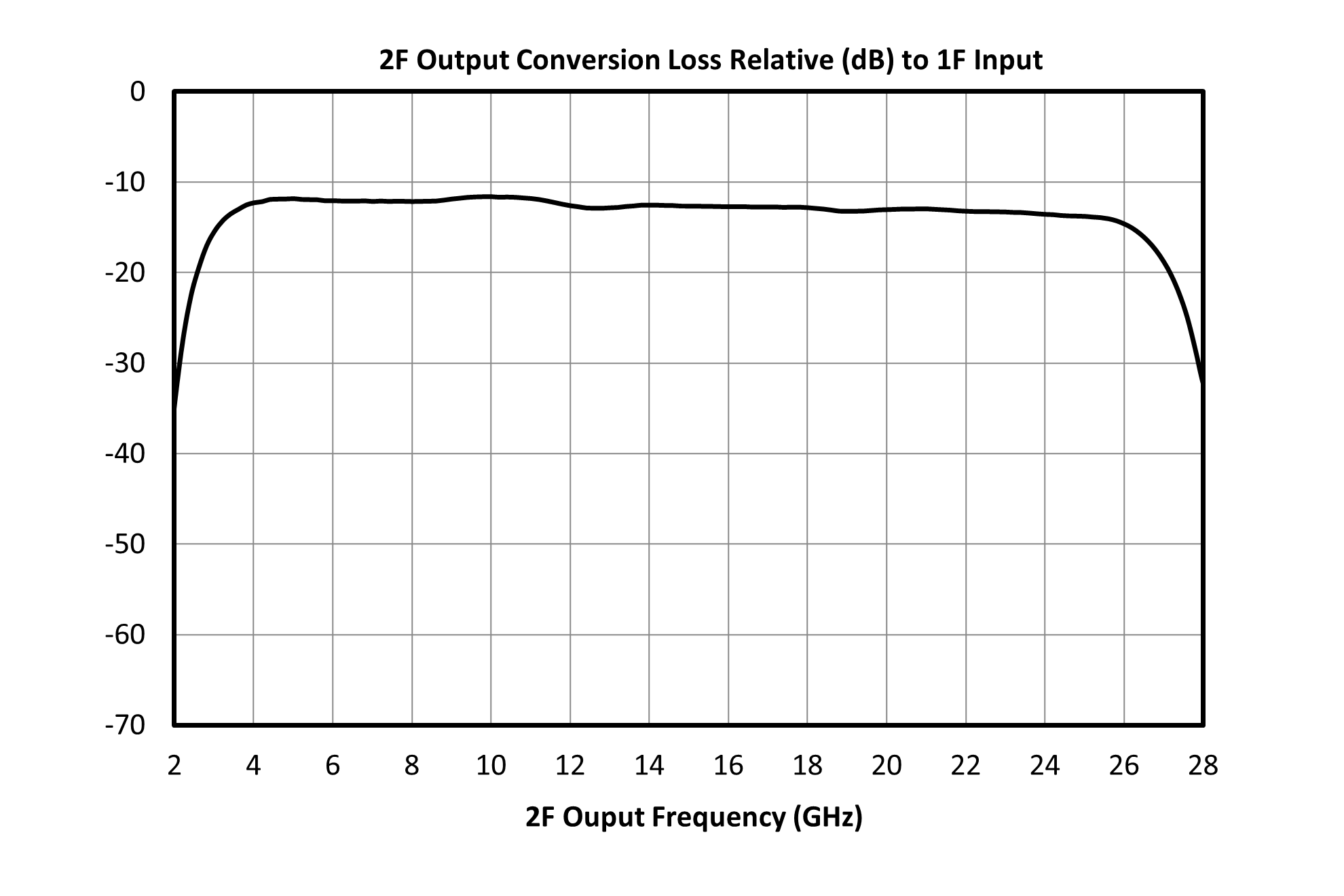
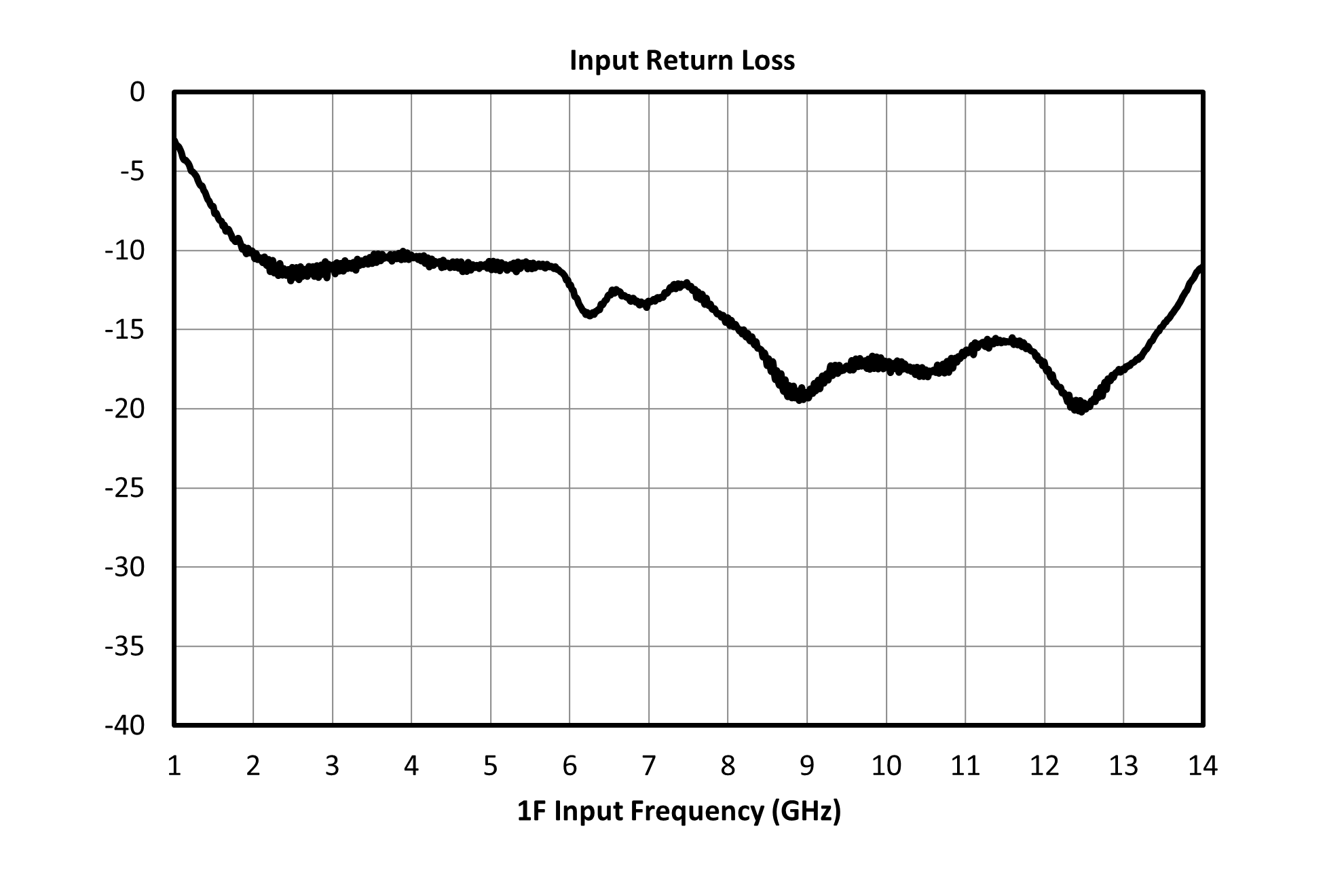
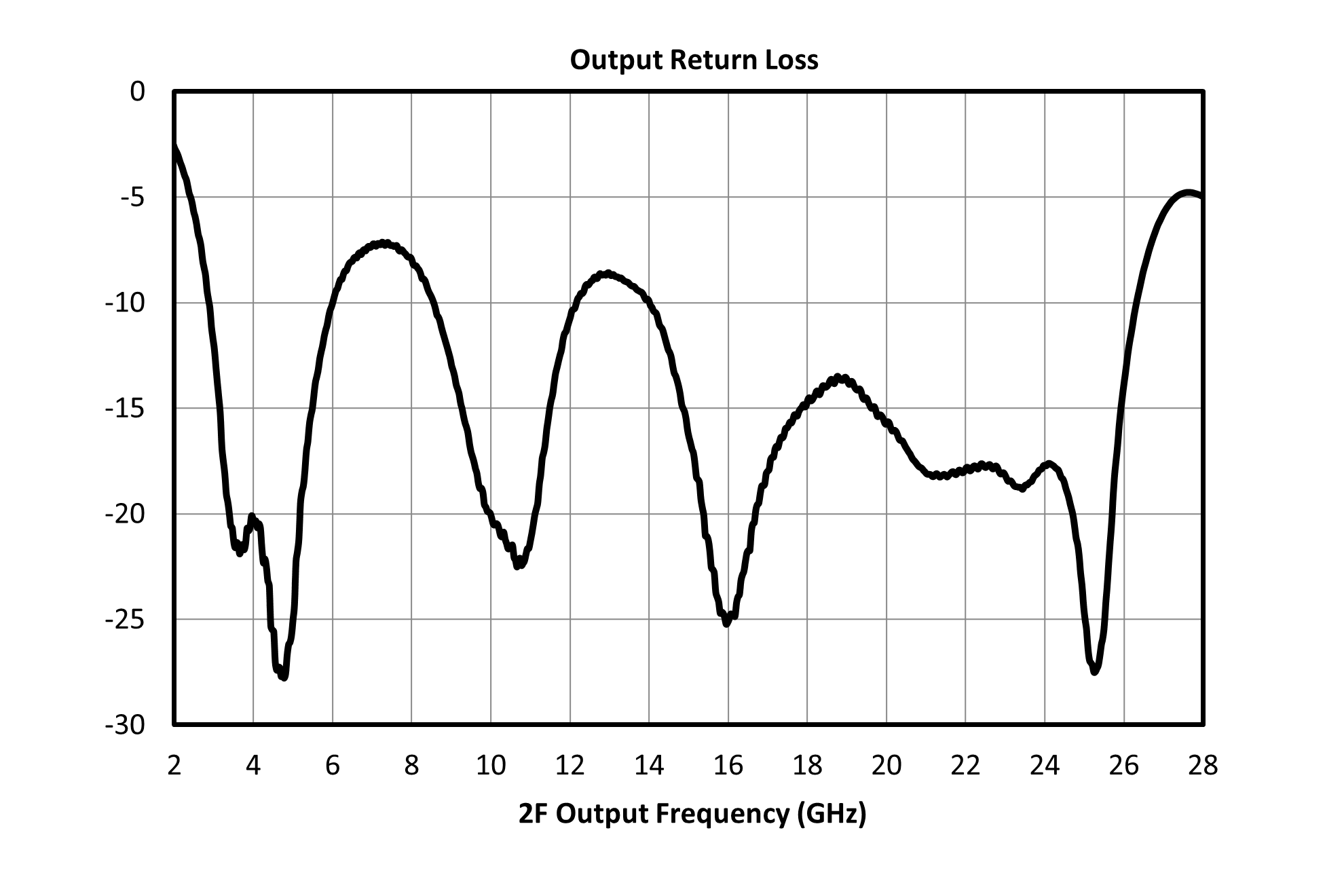
The electrical specifications apply at TA=+25°C in a 50Ω system. Typical data shown is for the connectorized EVB package doubler used in the forward direction with a +10 dBm sine wave input. Min and Max limits apply only to our connectorized units and are guaranteed at TA=+25°C.
| Parameter | Test Conditions | Minimum Frequency (GHz) | Maximum Frequency (GHz) | Min | Typ | Max | Unit |
|---|---|---|---|---|---|---|---|
| Input Frequency Range | - | - | - | 2 | - | 13 | GHz |
| Output Frequency Range | - | - | - | 4 | - | 26 | GHz |
| Input Power | - | - | - | 6 | 10 | 14 | dBm |
| Conversion Loss 1 | Second Harmonic Output | 4 | 26 | - | 13 | - | dB |
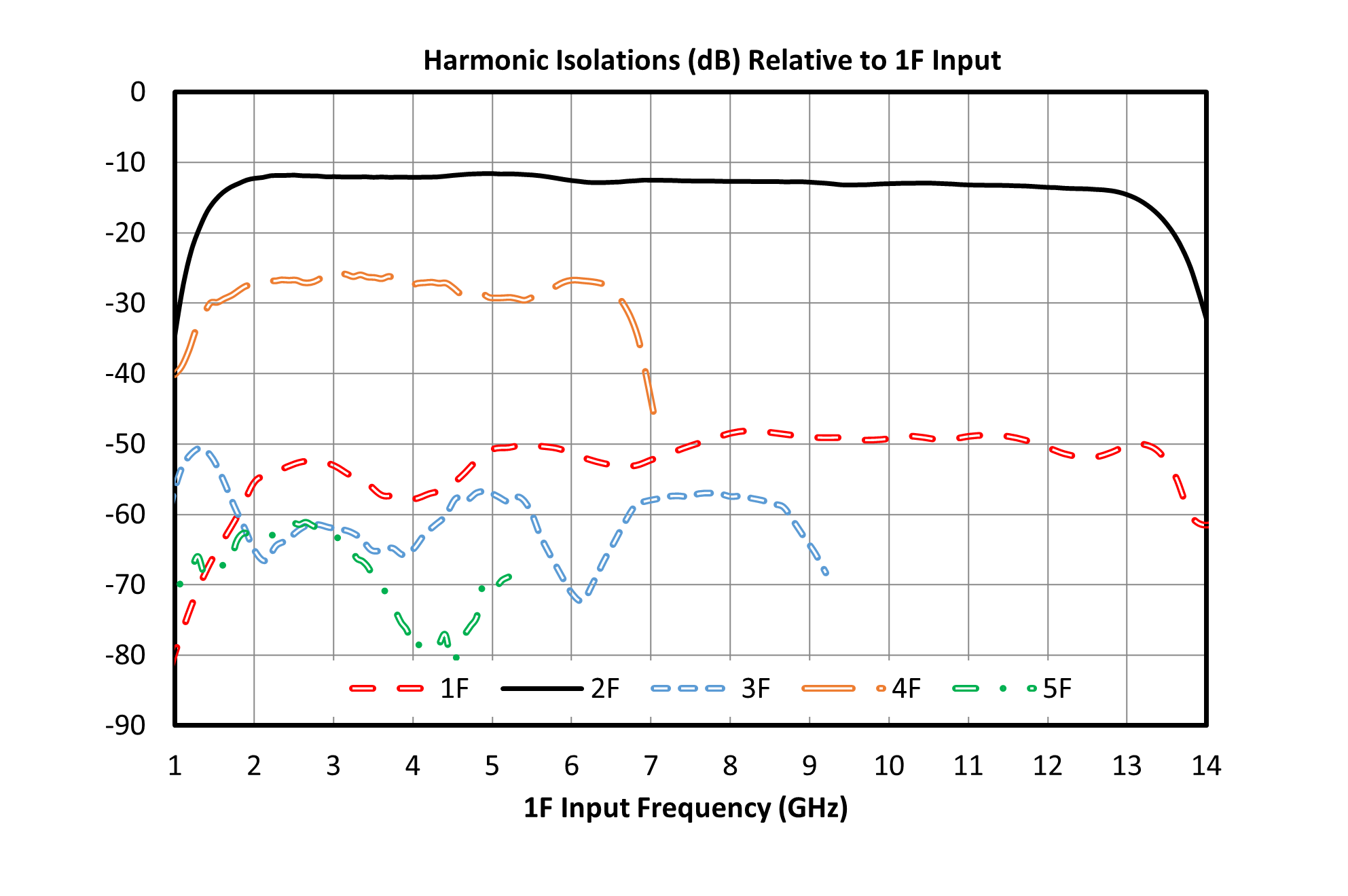
| Isolation, 1F 2 | Input = 2 – 13 GHz Output = 2 – 13 GHz | 2 | 13 | - | 50 | - | dB |
| Isolation, 3F 3 | Input = 2 – 8.66 GHz Output = 6 - 26 GHz | 6 | 26 | - | 62 | - | dB |
| Isolation, 4F 4 | Input = 2 – 6.5 GHz Output = 8 - 26 GHz | 8 | 26 | - | 27 | - | dB |
| Isolation, 5F 5 | Input = 2 – 5.2 GHz Output = 10 - 26 GHz | 10 | 26 | - | 70 | - | dB |
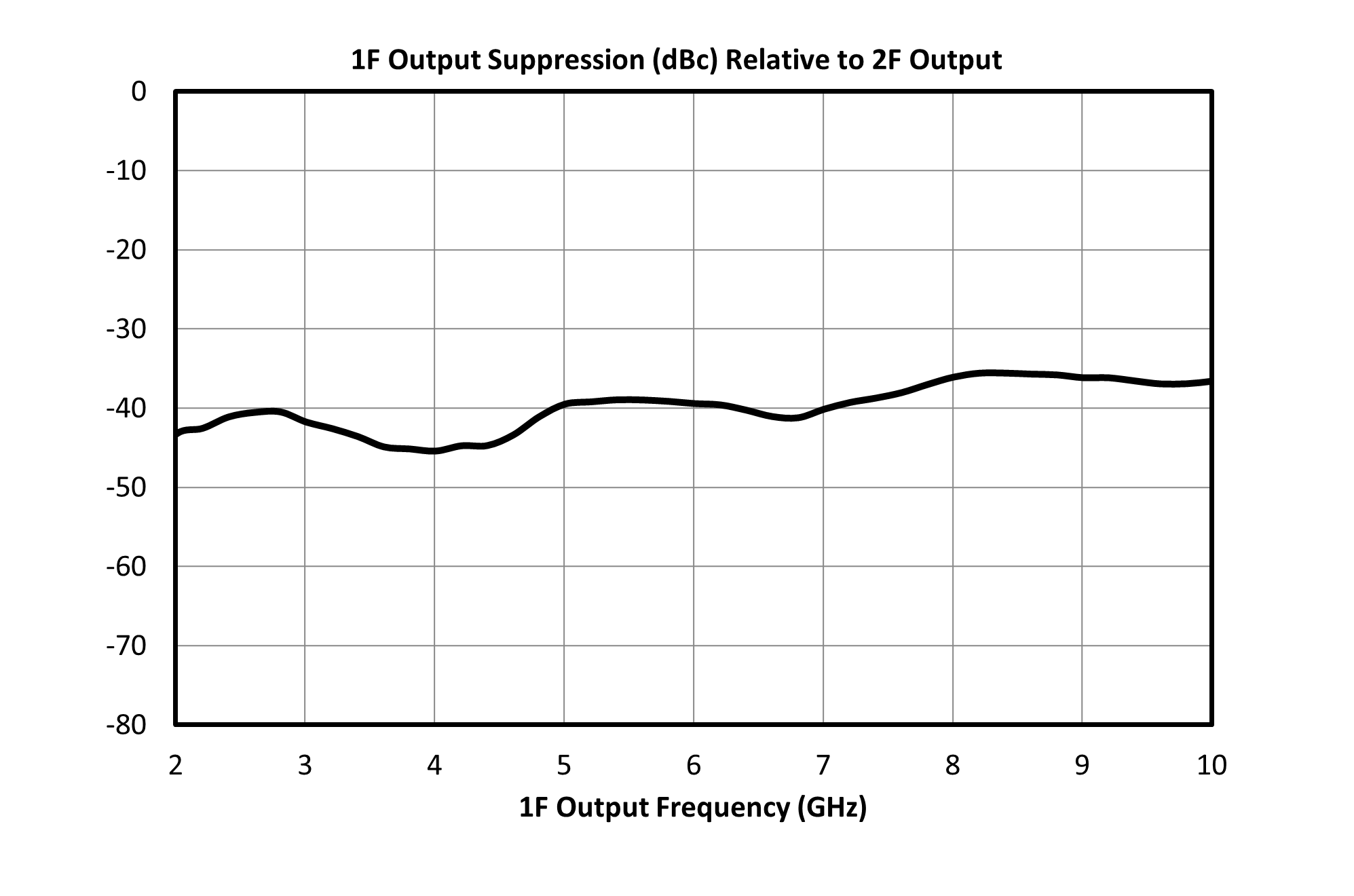
| Suppression, 1F 6 | Input = 2 – 13 GHz Output = 2 – 13 GHz | 2 | 13 | - | 37 | - | dBc |
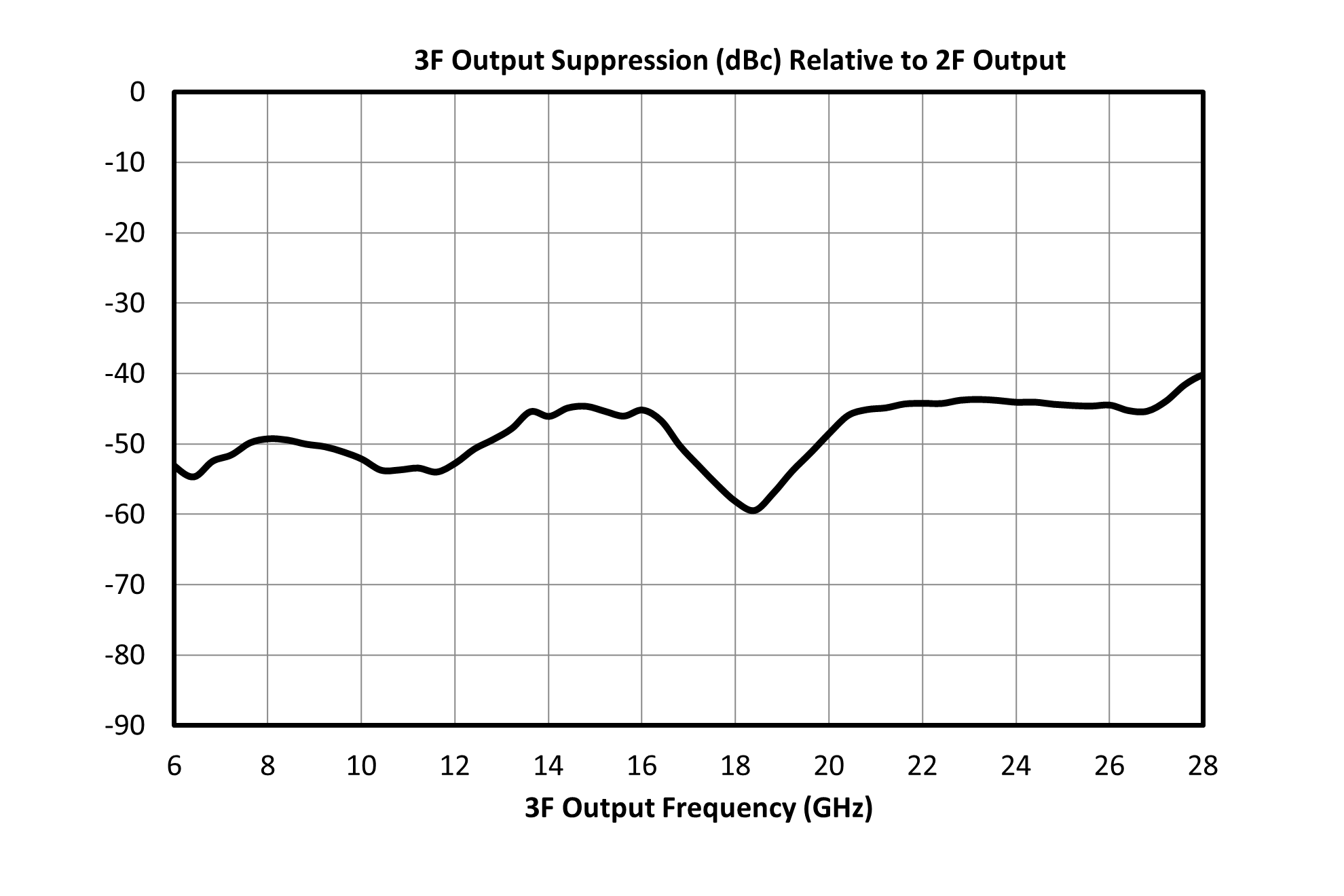
| Suppression, 3F 7 | Input = 2 – 8.66 GHz Output = 6 - 26 GHz | 6 | 26 | - | 50 | - | dBc |
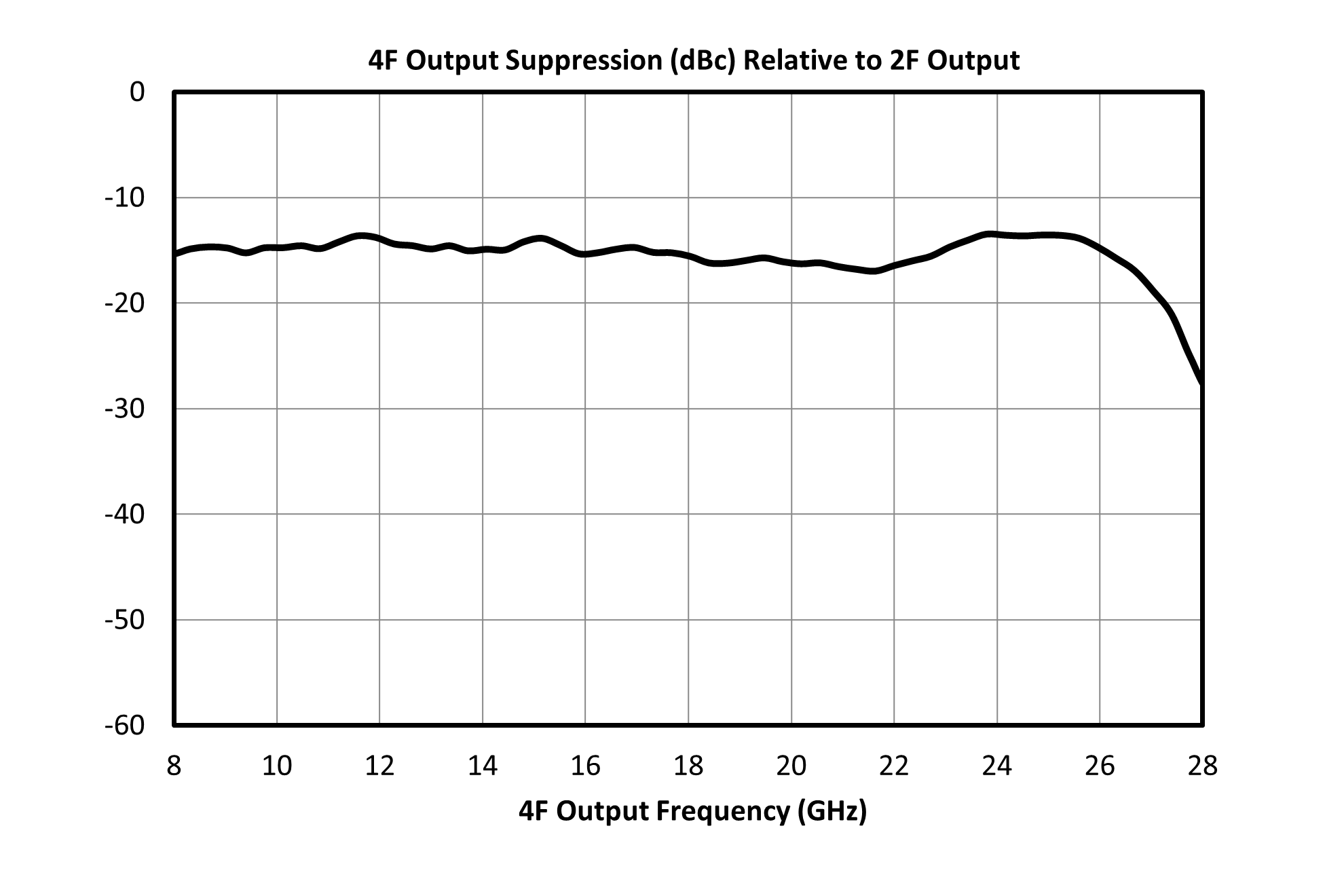
| Suppression, 4F 8 | Input = 2 – 6.5 GHz Output = 8 - 26 GHz | 8 | 26 | - | 14 | - | dBc |
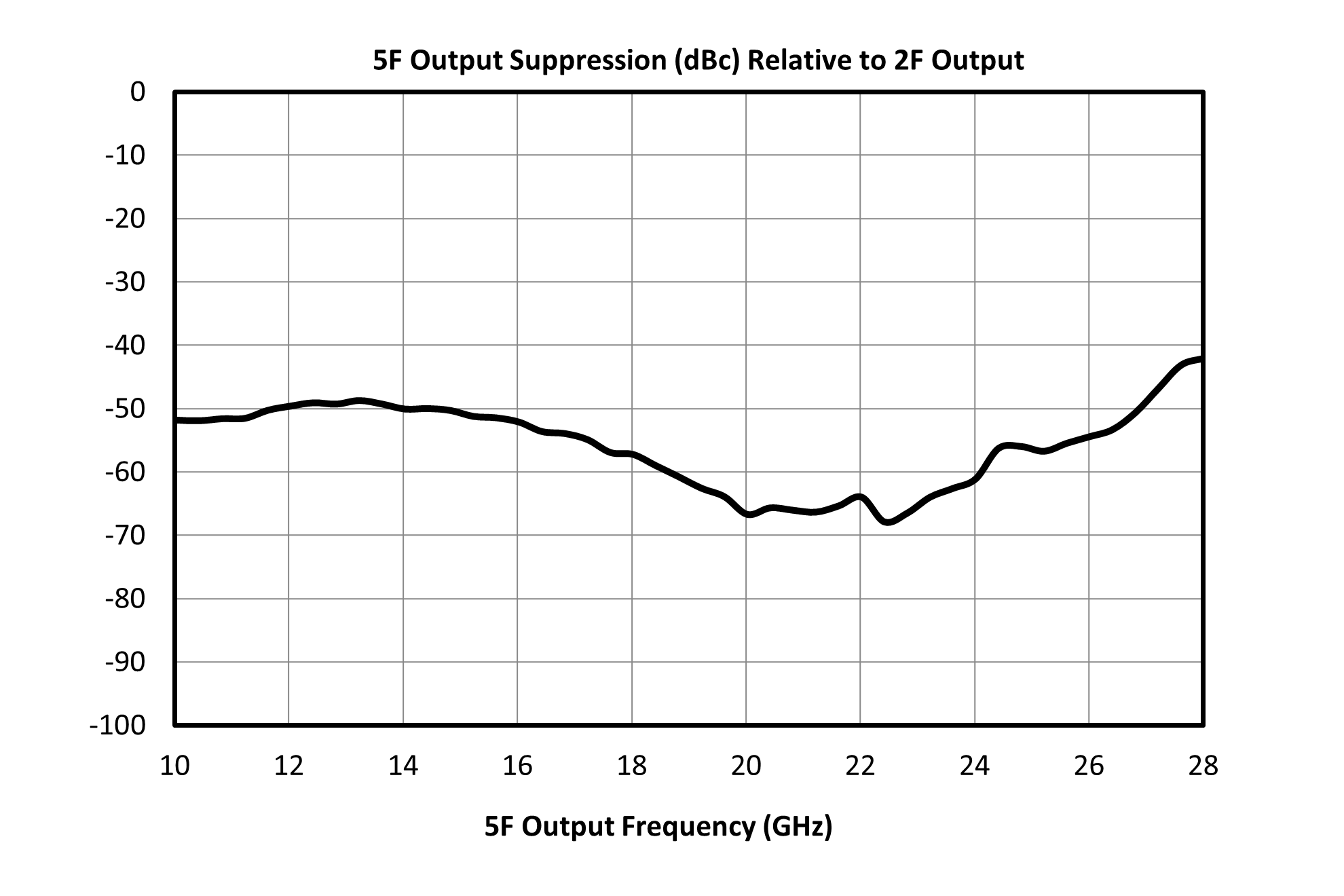
| Suppression, 5F 9 | Input = 2 – 5.2 GHz Output = 10 - 26 GHz | 10 | 26 | - | 55 | - | dBc |
| Parameter | Test Conditions | Minimum Frequency (GHz) | Maximum Frequency (GHz) | Min | Typ | Max | Unit |
|---|---|---|---|---|---|---|---|
| Input Frequency Range | - | - | - | 2 | - | 13 | GHz |
| Output Frequency Range | - | - | - | 4 | - | 26 | GHz |
| Input Power | - | - | - | 6 | 10 | 14 | dBm |
| Conversion Loss 1 | Second Harmonic Output | 4 | 26 | - | 13 | - | dB |
| Isolation, 1F 2 | Input = 2 – 13 GHz Output = 2 – 13 GHz | 2 | 13 | - | 50 | - | dB |
| Isolation, 3F 3 | Input = 2 – 8.66 GHz Output = 6 - 26 GHz | 6 | 26 | - | 62 | - | dB |
| Isolation, 4F 4 | Input = 2 – 6.5 GHz Output = 8 - 26 GHz | 8 | 26 | - | 27 | - | dB |
| Isolation, 5F 5 | Input = 2 – 5.2 GHz Output = 10 - 26 GHz | 10 | 26 | - | 70 | - | dB |
| Suppression, 1F 6 | Input = 2 – 13 GHz Output = 2 – 13 GHz | 2 | 13 | - | 37 | - | dBc |
| Suppression, 3F 7 | Input = 2 – 8.66 GHz Output = 6 - 26 GHz | 6 | 26 | - | 50 | - | dBc |
| Suppression, 4F 8 | Input = 2 – 6.5 GHz Output = 8 - 26 GHz | 8 | 26 | - | 14 | - | dBc |
| Suppression, 5F 9 | Input = 2 – 5.2 GHz Output = 10 - 26 GHz | 10 | 26 | - | 55 | - | dBc |
[1] with +10 dBm RF Input
[2][3][4][5] Isolation is defined as the harmonic power relative to the 1F fundamental input power.
[6][7][8][9] Suppressions and isolations measured with an input source with >60dBc (relative to fundamental input) harmonic suppression. Suppression is defined as the harmonic power relative to the 2F doubled output power.
MMD-0426LPSM
GaAs MMIC Doubler 4 to 26 GHz Output Frequency
The EVB trace losses are de-embedded for the metrics has shown here.
MMD-0426LPSM
GaAs MMIC Doubler 4 to 26 GHz Output Frequency
MMD-0426LPSM
GaAs MMIC Doubler 4 to 26 GHz Output Frequency
MMD-0426LPSM
GaAs MMIC Doubler 4 to 26 GHz Output Frequency
MMD-0426LPSM
GaAs MMIC Doubler 4 to 26 GHz Output Frequency