Device Overview

General Description

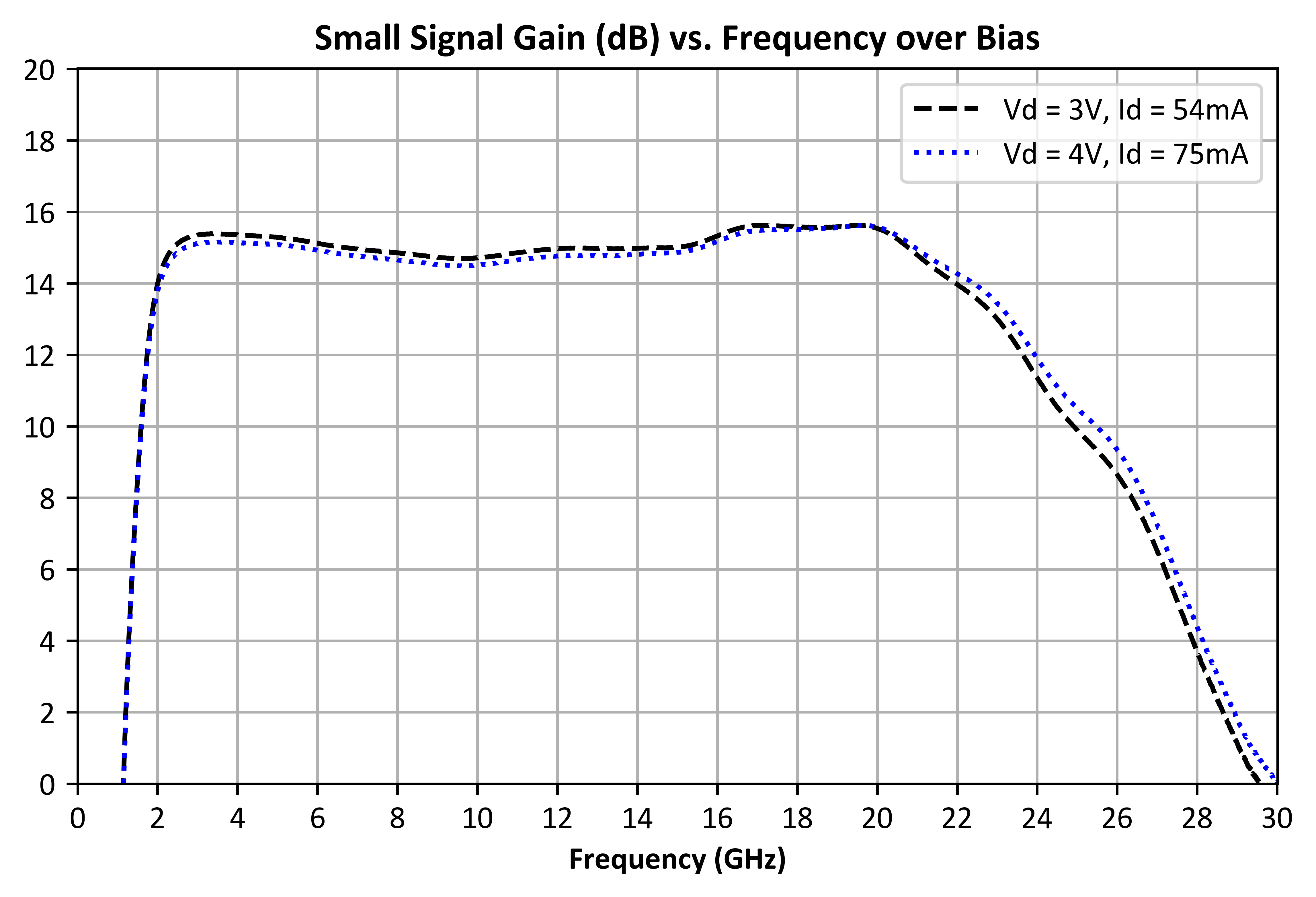
The ADM-10699PSM is a broadband low noise amplifier covering 2 GHz to 20 GHz. Optimized for low power operation in space-constrained designs, it runs on a single 3 V supply at 54 mA bias current, providing 15.1 dB of small-signal gain with a typical noise figure of 2.3 dB. The ADM-10699PSM requires no application circuit other than bypass capacitors on the DC supply lines, which simplifies integration and minimizes board footprint. Packaged in a compact 3 mm QFN, it is ideal for wideband front-end applications where moderate gain and low added noise are critical. Measured small-signal S-parameters are available to support accurate system simulation.

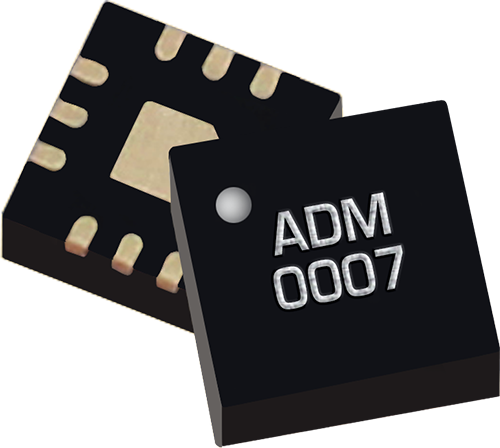
Photo of ADM-10699PSM

Features

  • Broadband Operation, 2 to 20 GHz
  • Low Noise Figure, 2.3 dB Typical
  • Single Supply Voltage
  • Small 3x3mm QFN package
  • Simple Application Circuit

Applications

  • SATCOM
  • Phased Array Systems

Functional Block Diagram

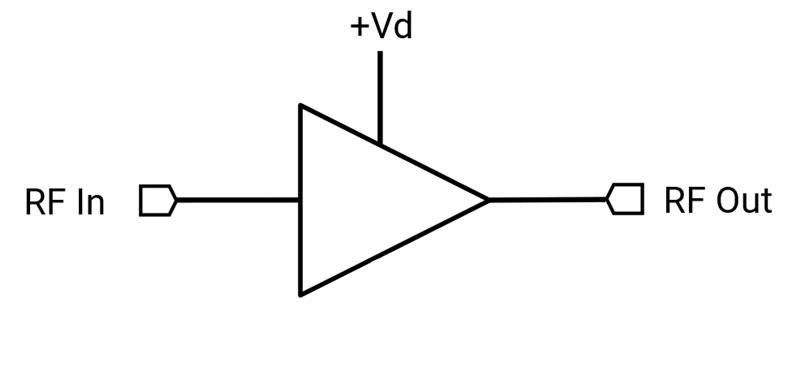
Block Diagram

Part Ordering Options

Part NumberDescriptionPackageGreen StatusProduct LifecycleExport Classification
ADM-10699PSM2-20 GHz Broadband, Low DC Power, Low Noise Amplifier Plastic QFN

REACH

RoHS

ReleasedEAR99
EVB-ADM-10699PEvaluation Board, 2 - 20 GHz Broadband Low Noise AmplifierEVB

REACH

RoHS

ReleasedEAR99

Table Of Contents

Revision History

Revision CodeRevision DateComment
-2025-10-20Initial Release

Rev: - | Copyright © 2025 Marki Microwave LLC.

2

Port Configuration and Functions

Port Diagram

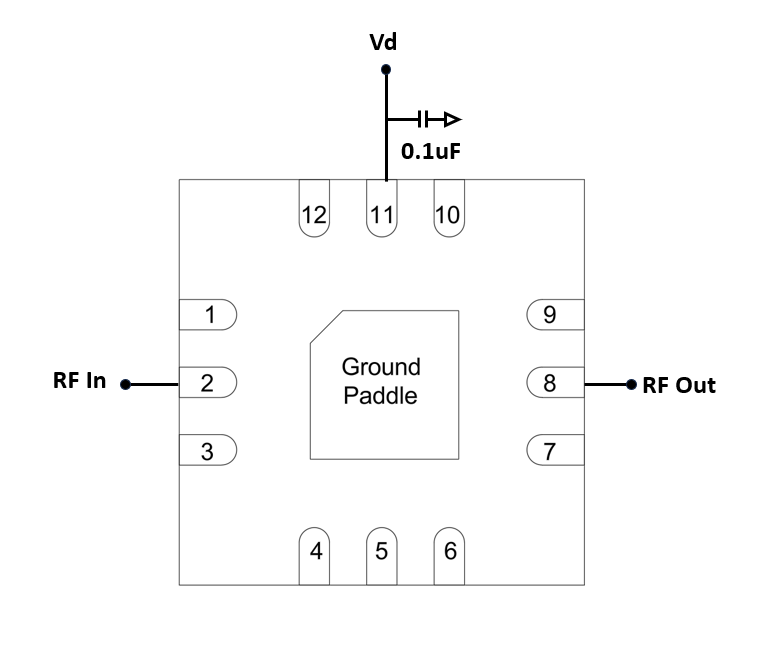
Below is the recommended application circuit for the ADM-10699PSM. This is the configuration that is used to characterize this device. However, each PCB layout and environment are different which may require minor modifications of the biasing network. Please contact [email protected] for more information.
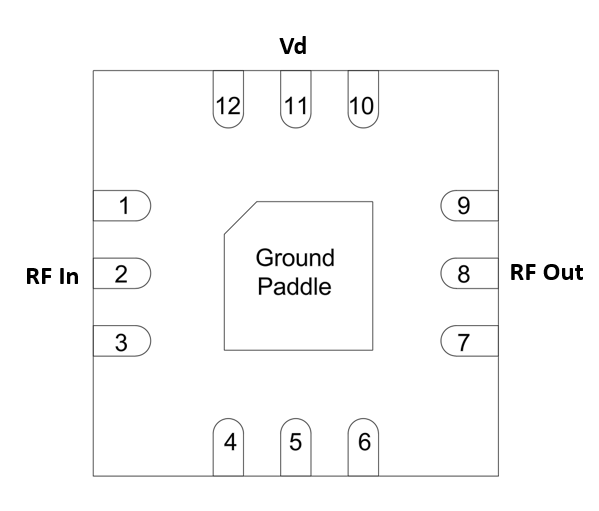
Diagram of the port configuration for ADM-10699PSM

Port Functions

PortFunctionDescriptionDC Equivalent
Circuit
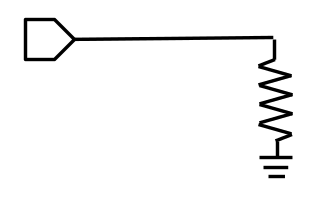
GNDGround Ground paddle and non-connected pins must be connected to a DC/RF ground potential with high thermal and electrical conductivity, and low inductance.Equivalent circuit for the Ground
Pin 11Vd Pin 11 is the DC bias supply for the amplifier. The voltage at this pin should be set to 3V for normal operation. This part requires an off-chip bypass capacitor of 0.1uF installed at this pin as close to the IC as possible. See applications circuit.Equivalent circuit for the Vd
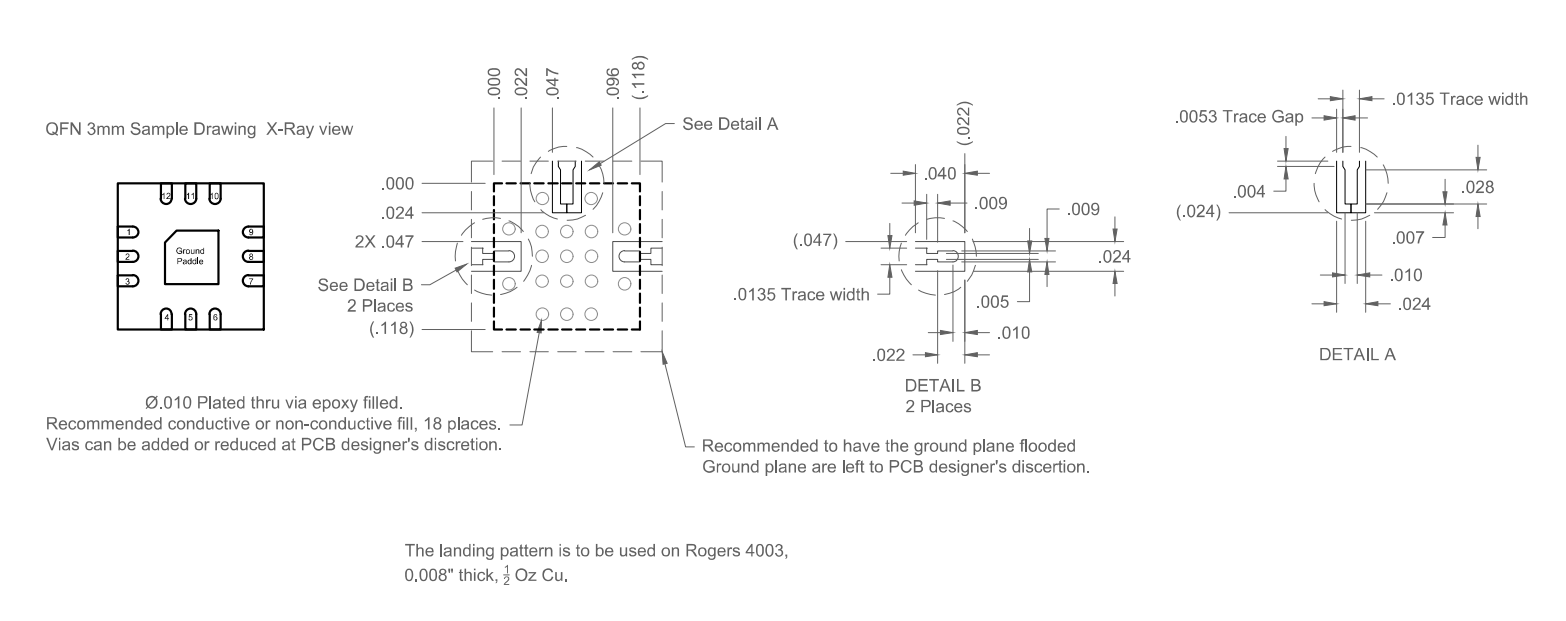
Pin 1,3,4,5,6,7,9,10,12Ground These pins are not internally connected to the amplifier die. It is recommended to connect these pins to ground to provide RF isolation and mechanical stability. See the recommended landing pattern for details. Datasheet performance was measured with these pins connected to GND. -
Pin 2RF Input Pin 2 is the amplifier's RF input pin. This port is internally matched to 50 Ohms and is internally DC shorted to GND. This pin may be left floating if no DC is present on the line but should be DC blocked otherwise.Equivalent circuit for the RF Input
Pin 8RF Output Pin 8 is the amplifier's RF output pin. This port is internally matched to 50 Ohms and is internally DC shorted to GND. This pin may be left floating if no DC is present on the line but should be DC blocked otherwise.Equivalent circuit for the RF Output

Rev: - | Copyright © 2025 Marki Microwave LLC.

3

Specifications

Absolute Maximum Ratings

The Absolute Maximum Ratings indicate limits beyond which damage may occur to the device. If these limits are exceeded, the device may be inoperable or have a reduced lifetime. This amplifier is designed and characterized in a 50Ω system, and operation in a reflective environment can cause performance degradation.

ParameterMaximum RatingUnit
Maximum Operating Temperature 85°C
Maximum Storage Temperature 150°C
Max Junction Temperature for MTTF > 1E6 hours 175°C
Minimum Operating Temperature -40°C
Minimum Storage Temperature -65°C
Positive Drain Supply Current (with RF Input) 110mA
Positive Drain Supply Voltage (Vd) 6V
RF Input Power 10dBm
Thermal Resistance, θJC 1100ºC/W

[1] TBD

Package Information

ParameterDetailsRating
ESD250 to < 500 VoltsHBM Class 1A
Dimensions-3 x 3 mm
Moisture Sensitivity Level-MSL 1

The Recommended Operating Conditions indicate the limits, inside which the device should be operated, to guarantee the performance given in Electrical Specifications. Operating outside these limits may not necessarily cause damage to the device, but the performance may degrade outside the limits of the Electrical Specifications. For limits, above which damage may occur, see Absolute Maximum Ratings .

ParameterMinNominalMaxUnit
Ambient Temperature -402585°C
Positive DC Current (Id) (No RF Input) 545495mA
Power Supply DC Voltage 335V

Rev: - | Copyright © 2025 Marki Microwave LLC.

4

Electrical Specifications

The electrical specifications apply at TA=+25°C in a 50Ω system. QFNs are 100% RF tested.

ParameterTest ConditionsMinimum
Frequency
(GHz)
Maximum
Frequency
(GHz)
MinTypMaxUnit
Small Signal Gain 3V bias, -30 dBm Input Power
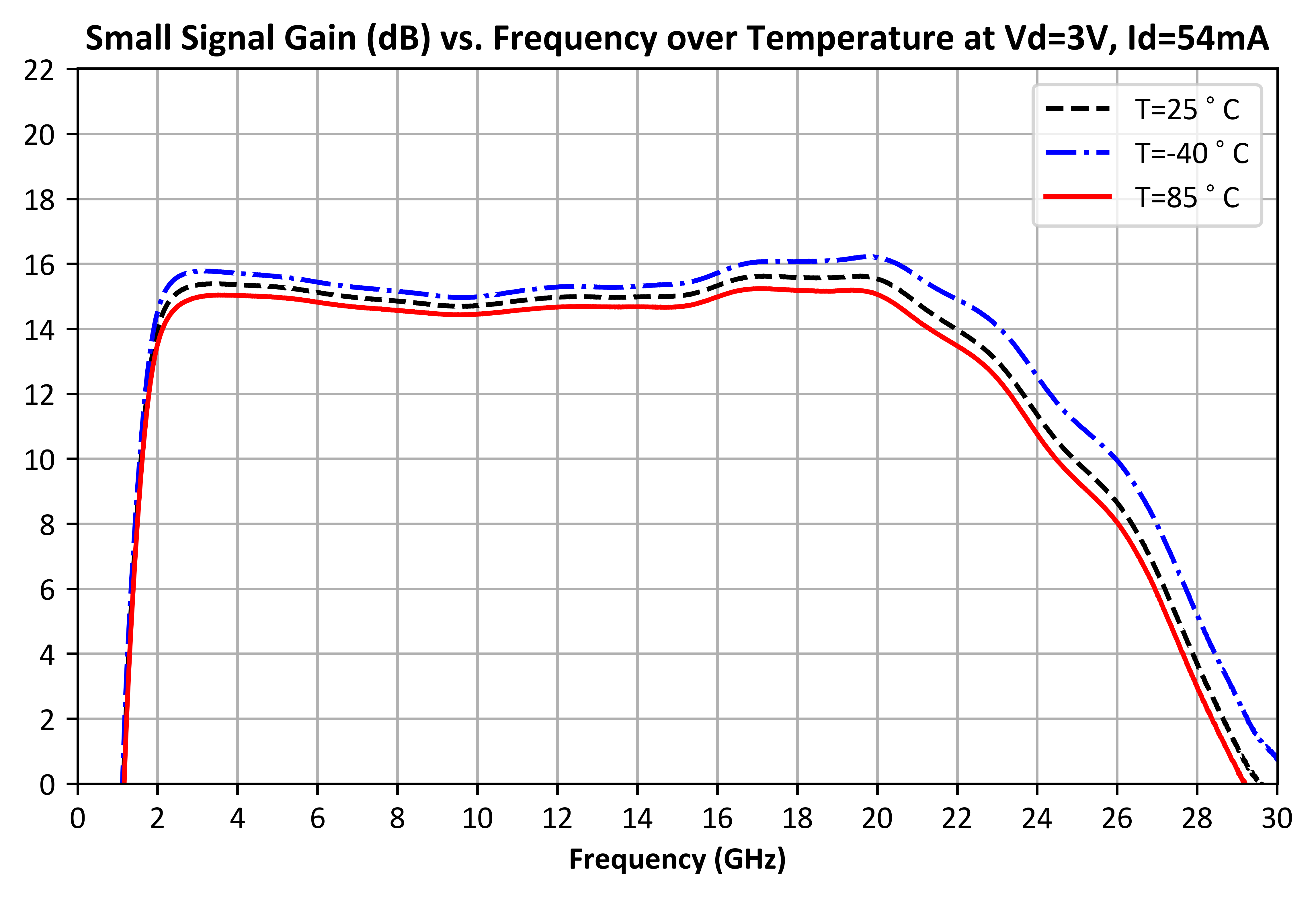
2 20-15.1-dB
Input Return Loss 3V bias, -30 dBm Input Power
2 20-12-dB
Output Return Loss 3V bias, -30 dBm Input Power
2 20-14-dB
Reverse Isolation 3V bias, -30dBm Input Power
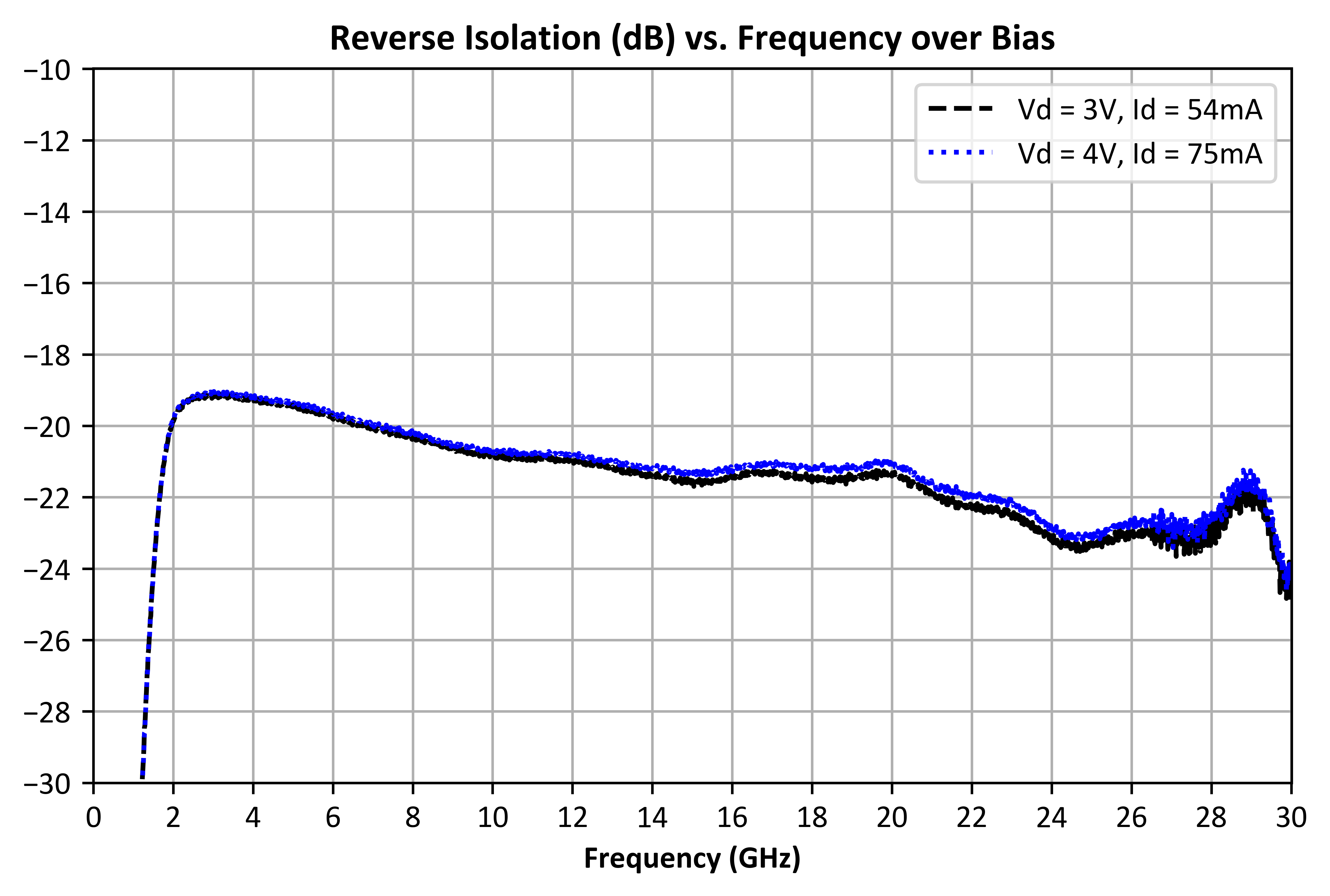
2 20-21-dB
Noise Figure 3V bias, -30 dBm Input Power
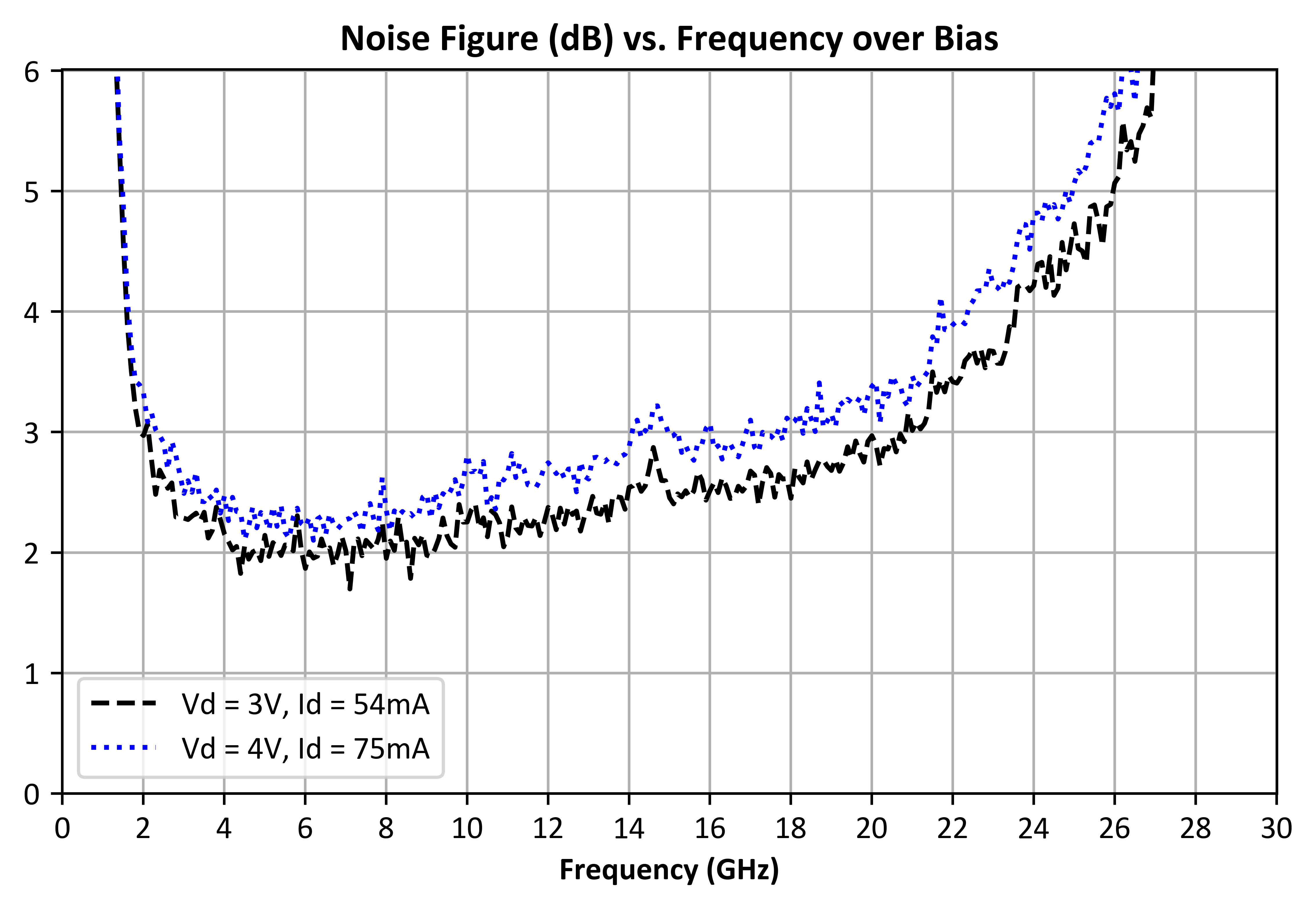
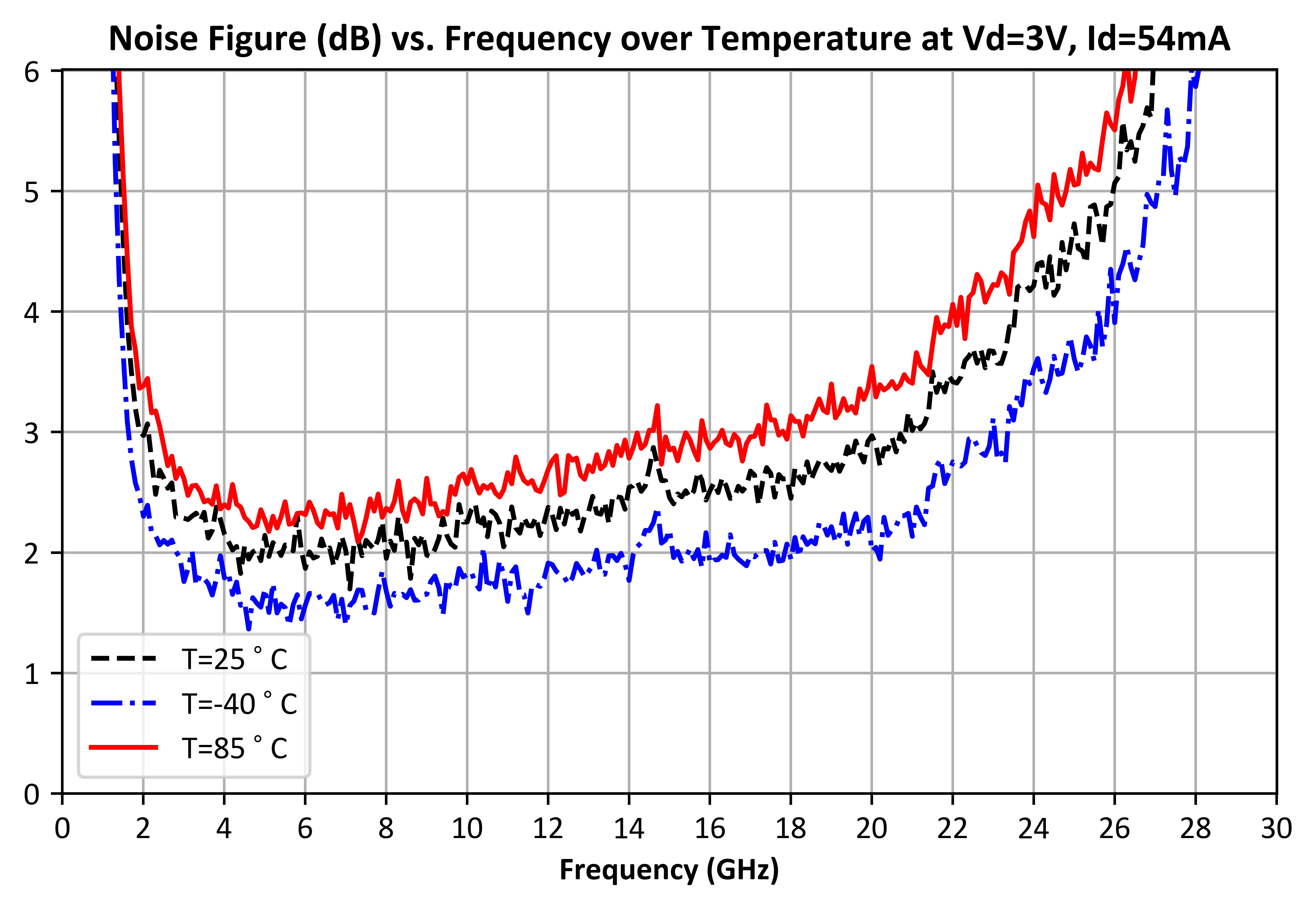
2 20-2.3-dB
Output P1dB 3V bias
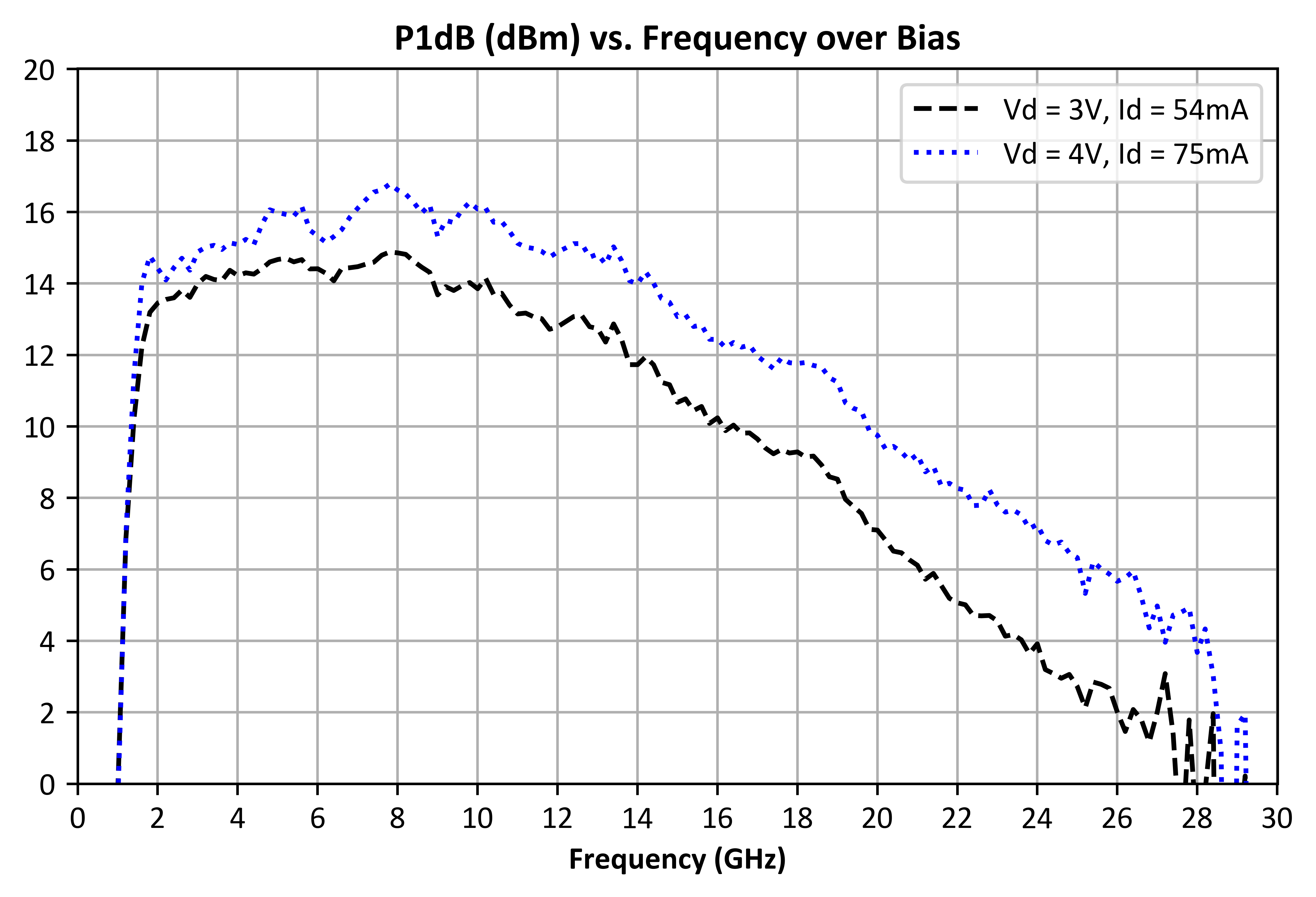
2 20-12.5-dBm
Output IP3 3V bias
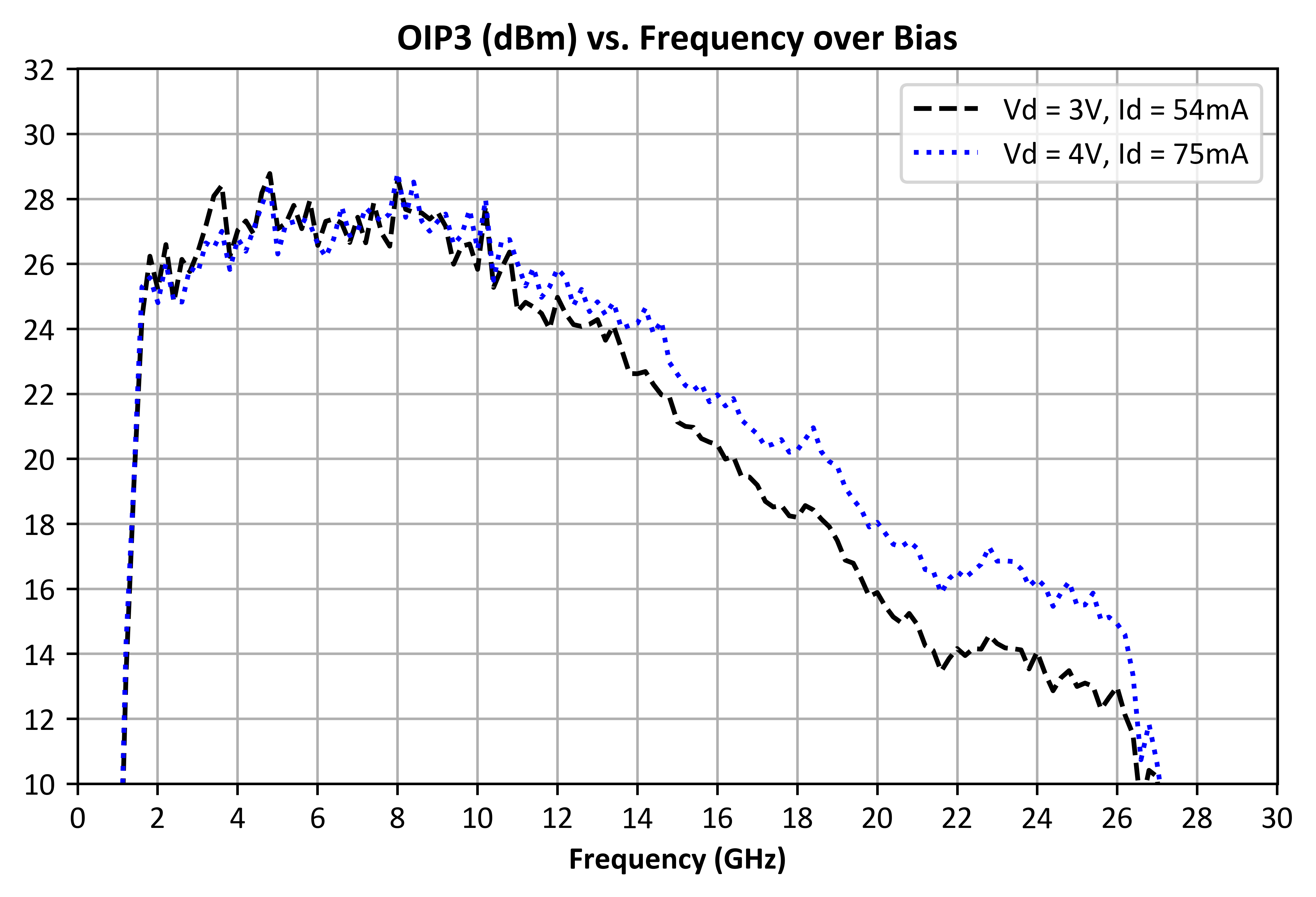
2 20-24-dBm
Current Consumption 13V bias
- --54-mA

[1] Bias conditions for Id tested with no RF input power. Bias conditions presented as Vd.

Rev: - | Copyright © 2025 Marki Microwave LLC.

5

Typical Performance Plots (vs Bias)

Measurement data de-embedded using standard evaluation board and external wideband test equipment bias tees.

Small Signal Gain (dB) vs. Frequency, over Bias graph for ADM-10699PSM
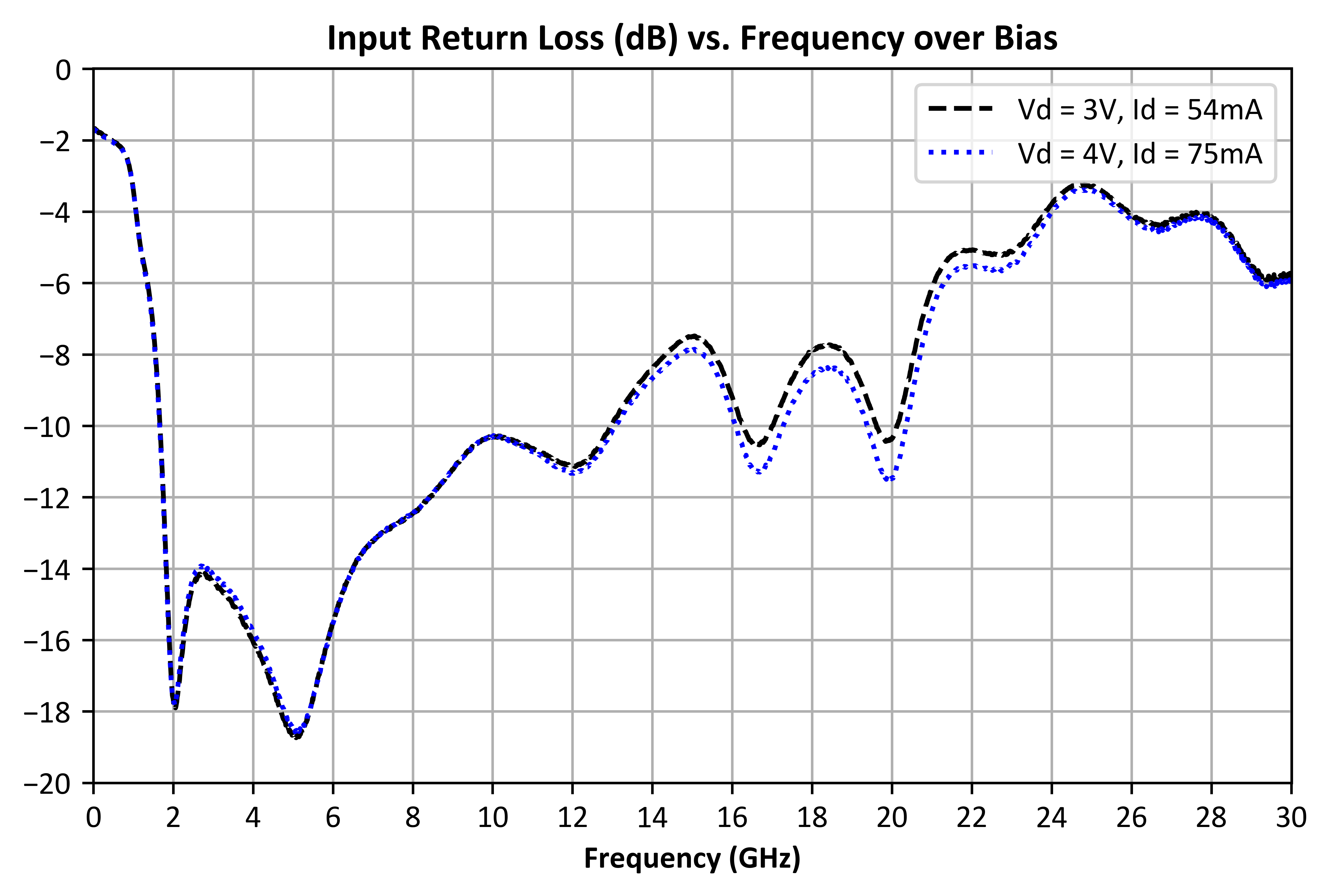
Input Return Loss vs Frequency and Bias graph for ADM-10699PSM
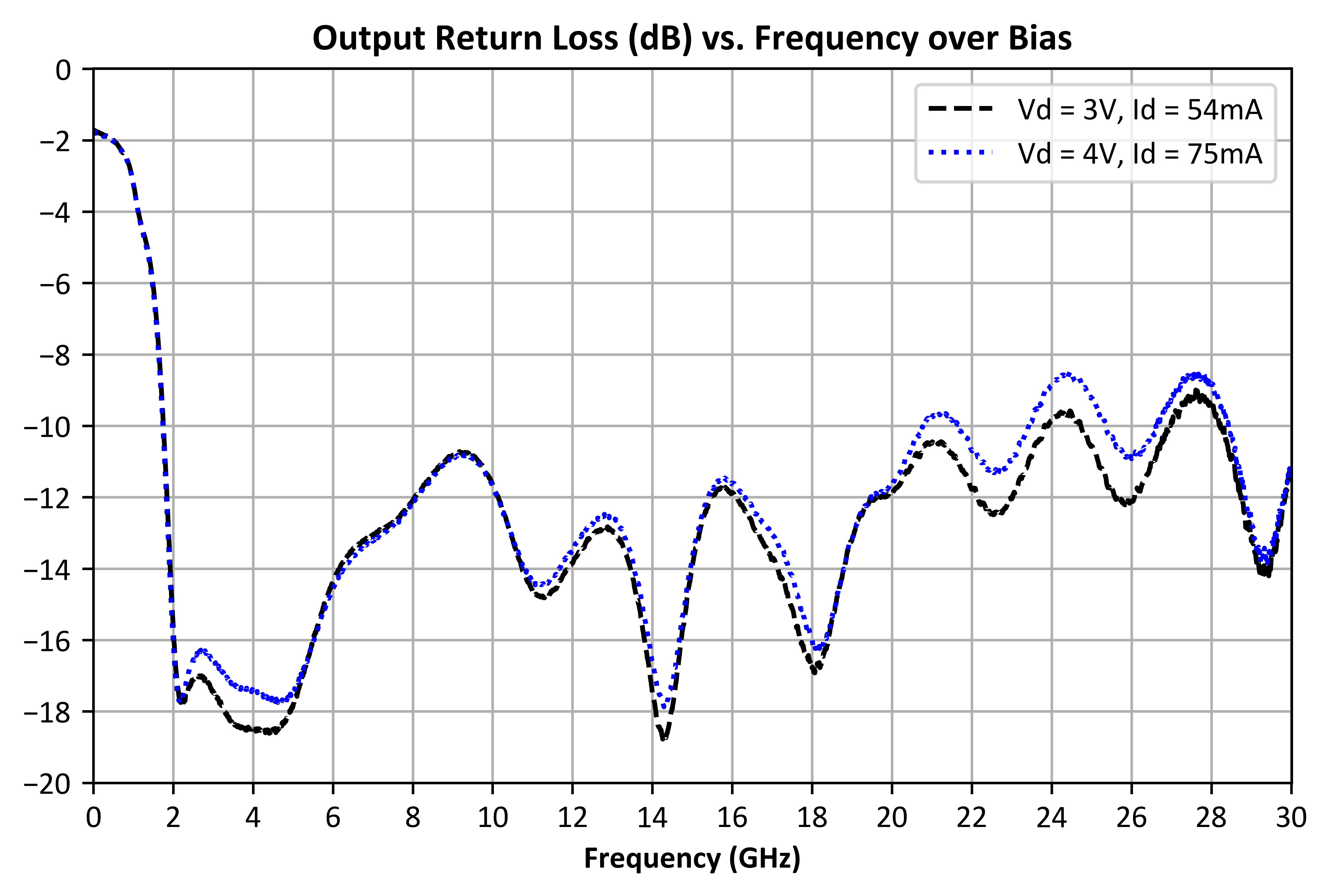
Output Return Loss (dB) vs. Freq, Over Bias graph for ADM-10699PSM
Reverse Isolation (dB) vs. Freq, Over Bias graph for ADM-10699PSM
Noise Figure vs Frequency and Bias graph for ADM-10699PSM
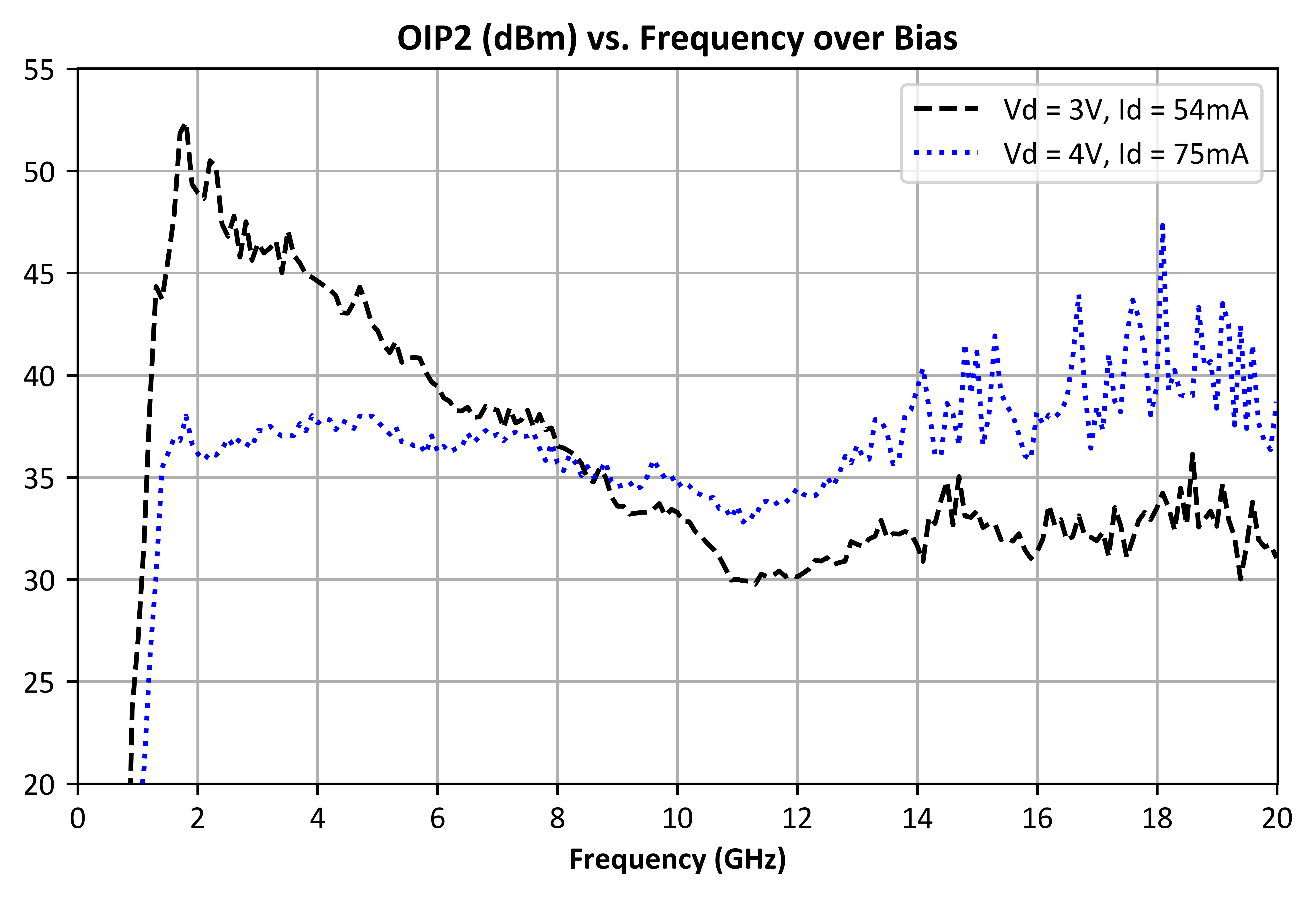
OIP2 (dBm) vs. Frequency, over Bias graph for ADM-10699PSM
OIP3 (dBm) vs. Frequency graph for ADM-10699PSM
Output P1dB vs Frequency and Bias graph for ADM-10699PSM

Rev: - | Copyright © 2025 Marki Microwave LLC.

6

Typical Performance Plots (vs Temperature)

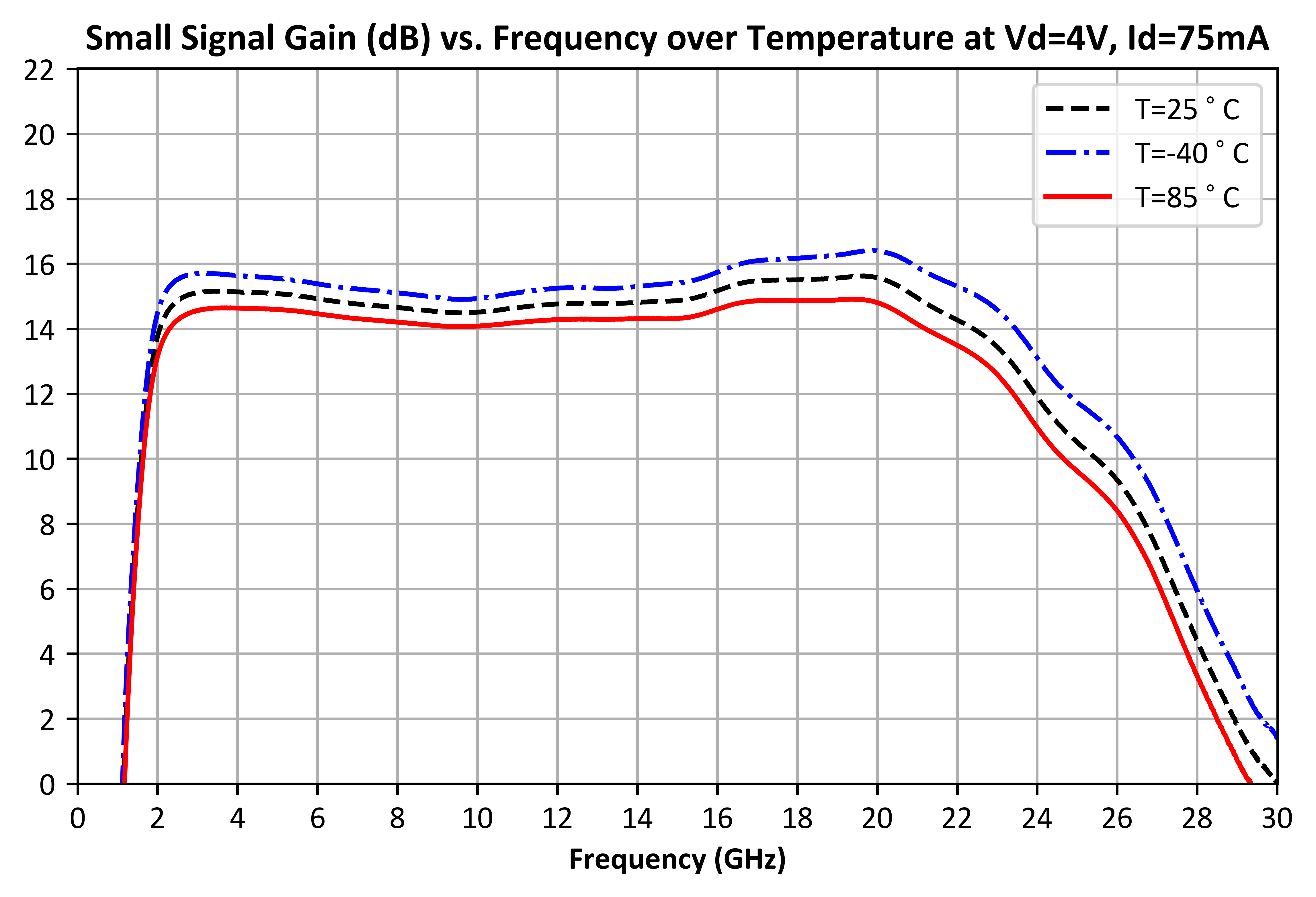
Small Signal Gain Over Temperature (dB) Vd = 3V graph for ADM-10699PSM
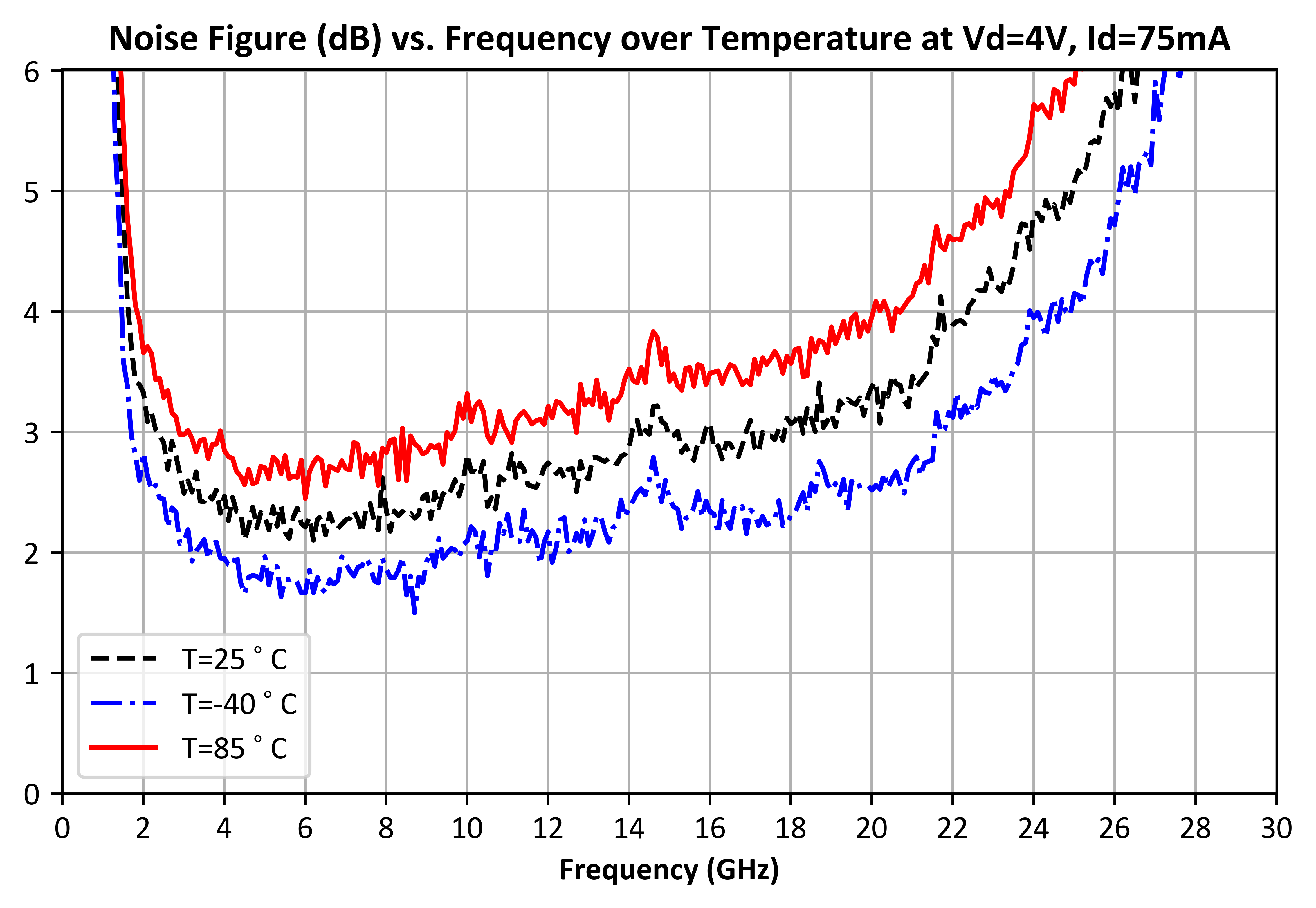
Noise Figure vs Frequency, Over Temp Vd = 3V graph for ADM-10699PSM

Rev: - | Copyright © 2025 Marki Microwave LLC.

7

Application Circuit

Application Circuit for ADM-10699PSM

Rev: - | Copyright © 2025 Marki Microwave LLC.

8

Mechanical Data

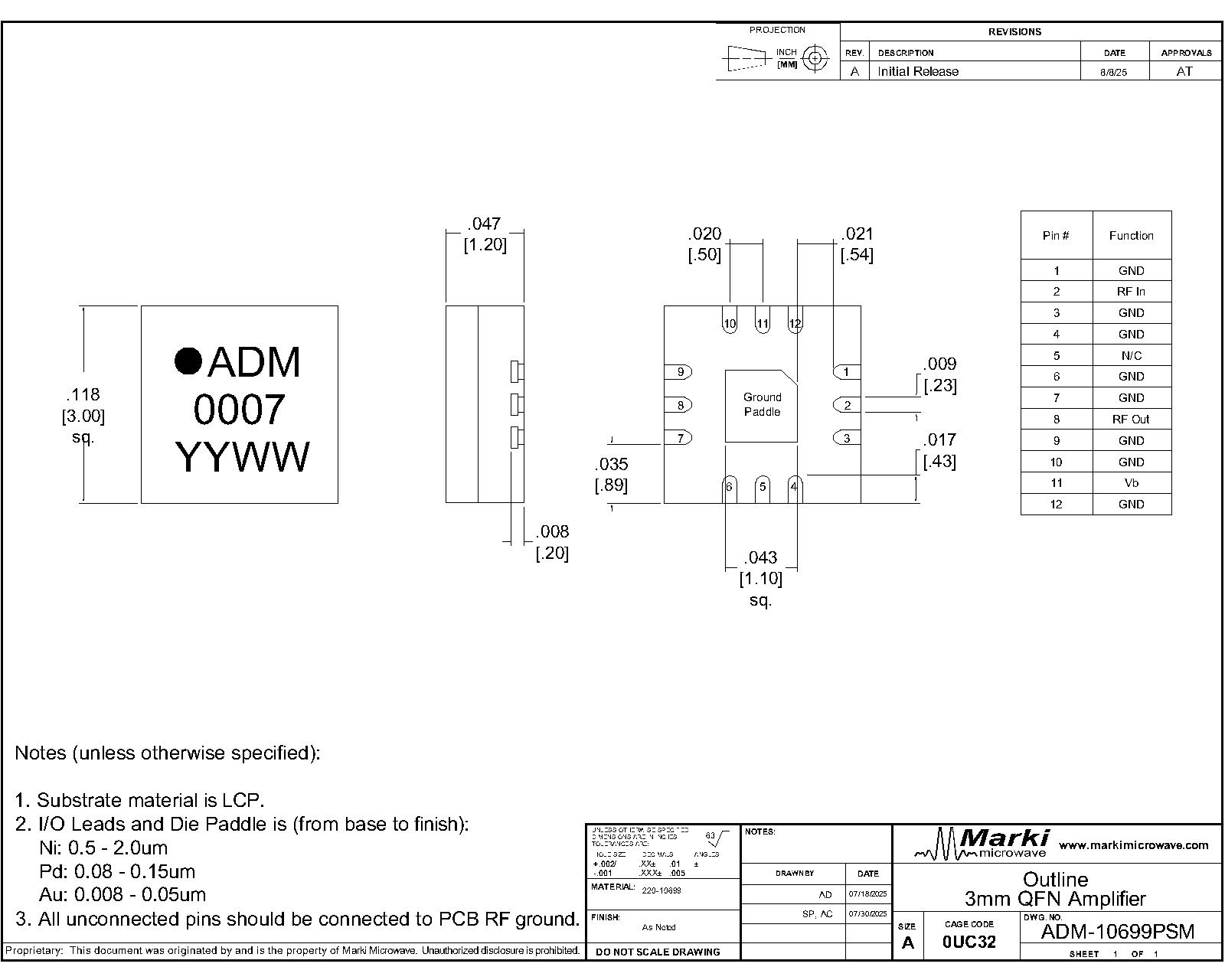
Outline Drawing

Download : Outline 2D Drawing

Outline Drawing

Rev: - | Copyright © 2025 Marki Microwave LLC.

9

Rev: - | Copyright © 2025 Marki Microwave LLC.

10

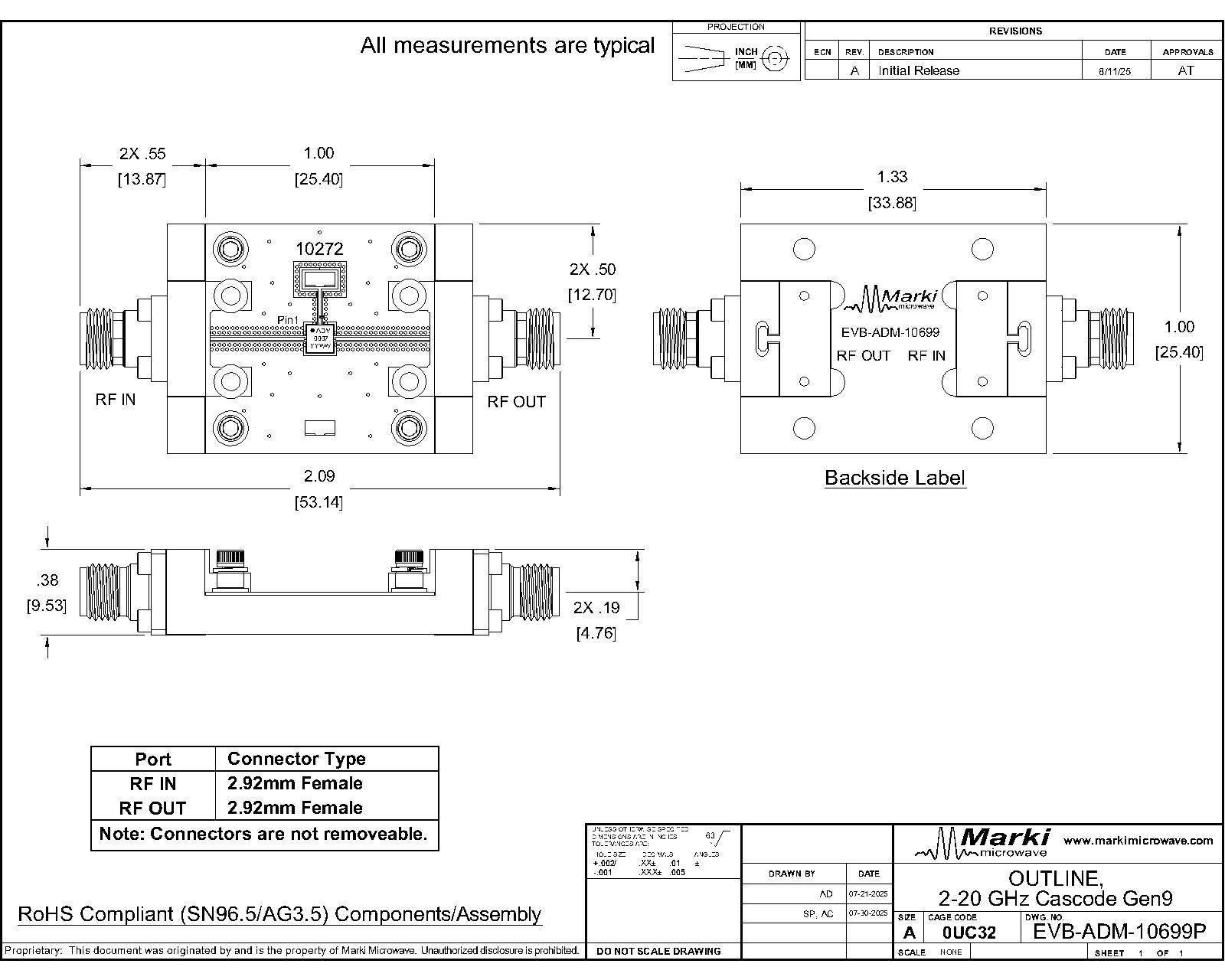
Evaluation Board - Outline Drawing

Outline Drawing

Rev: - | Copyright © 2025 Marki Microwave LLC.

11