Port Diagram
A port diagram of the ADM-8624PC is shown below.


Sales: 408-778-9952 | General: 408-778-4200 | Fax: 408-778-4300
Sales & Customer Support: [email protected]
Tech Support: [email protected]
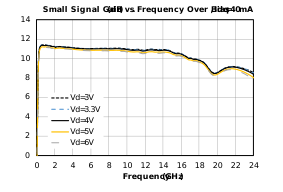
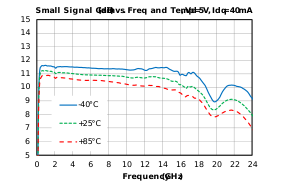
The ADM-8624PC is a high-linearity, low noise amplifier capable of providing 10.5 dB gain and +26 dBm OIP3 across a broad 0.2-20 GHz bandwidth. The amplifier’s low power consumption, high dynamic range and ease of use make it an ideal choice for RF front end and signal chain applications.

§ 10.5 dB flat gain response
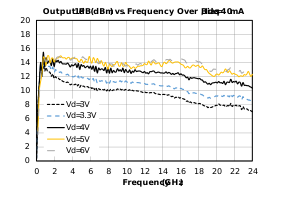
§ +26 dBm output IP3
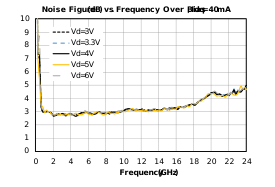
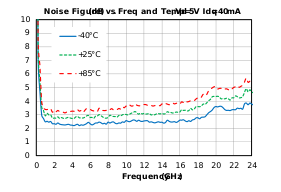
§ 3.0 dB noise figure
§ Excellent return losses
§ No negative bias or bias tee required

| Part Number | Description | Package | Connectors | Green Status | Product Lifecycle | Export Classification |
|---|---|---|---|---|---|---|
| ADM-8624PC | 0.2 - 20 GHz High Dynamic Range Gain Block | PC | Standard | REACH RoHS | Released | EAR99 |
| Part Number | Description | Package | Connectors | Green Status | Product Lifecycle | Export Classification |
|---|---|---|---|---|---|---|
| ADM-8624PC | 0.2 - 20 GHz High Dynamic Range Gain Block | PC | Standard | REACH RoHS | Released | EAR99 |
ADM-8624PC
0.2 - 20 GHz High Dynamic Range Gain Block
| Revision Code | Revision Date | Comment |
|---|---|---|
| - | 2023-08-01 | Initial Release |
ADM-8624PC
0.2 - 20 GHz High Dynamic Range Gain Block
A port diagram of the ADM-8624PC is shown below.
| Port | Function | Connector Type | Description | DC Equivalent Circuit |
|---|---|---|---|---|
| GND | Ground | - | The housing or outside of the coaxial cables must be connected to a DC/RF ground potential with high thermal and electrical conductivity. |  |
| RF In | RF Input | - | The amplifier’s RF Input port is matched to 50 Ω and has built-in DC blocking capacitors. |  |
| RF Out | RF Output | - | The amplifier’s RF Output port is matched to 50 Ω and has built-in DC blocking capacitors. | |
| Vd | Positive DC Supply Vd | - | The VD pin supplies DC voltage to the drain of the amplifier IC. |  |
| Vg | Gate Bias Pin | - | VG provides bias for an internal current mirror that sets the current draw for the amplifier. Current is limited by an internal series resistor. Increasing voltage on this pin will increase gain at the expense of efficiency. | 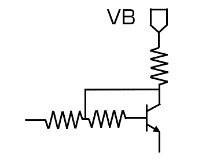 |
ADM-8624PC
0.2 - 20 GHz High Dynamic Range Gain Block
The Absolute Maximum Ratings indicate limits beyond which damage may occur to the device. If these limits are exceeded, the device may become inoperable or have a reduced lifetime. Reliability limits are individual, instantaneous catastrophic limits only. Functional operation limits are indicated below. Operation of the device at multiple absolute maximum limits or for extended periods at a single limit can cause degradation and damage to the device.
| Parameter | Maximum Rating | Unit |
|---|---|---|
| Drain Current (RF Applied) | 60 | mA |
| Drain Supply Voltage (Vd) | 8 | V |
| Maximum Operating Temperature for MTTF > 1E6 hours | 85 | °C |
| Maximum Storage Temperature | 125 | °C |
| Minimum Operating Temperature for MTTF > 1E6 hours | -40 | °C |
| Minimum Storage Temperature | -55 | °C |
| Reference Bias Current (Ig) | 15 | mA |
| Reference Bias Voltage (Vg) | 6.5 | V |
| RF Input Power | 20 | dBm |
| Parameter | Details | Rating |
|---|---|---|
| Dimensions | - | 21.85 x 13.21 mm |
The Recommended Operating Conditions indicate the limits, inside which the device should be operated, to guarantee the performance given in Electrical Specifications. Operating outside these limits may not necessarily cause damage to the device, but the performance may degrade outside the limits of the Electrical Specifications. For limits, above which damage may occur, see Absolute Maximum Ratings.
| Parameter | Min | Nominal | Max | Unit |
|---|---|---|---|---|
| Ambient Temperature | -40 | 25 | 85 | °C |
| Power Supply DC Voltage (Vd) | 4 | 5 | 6 | V |
| Power Supply DC Voltage (Vg) 1 | - | 5 | - | V |
| Power Supply DC Current (Idq) (No RF Input) 2 | - | 40 | - | mA |
| Input Power for Saturation | - | 9 | - | - |
[1] Voltage Vg controls current Id and should be set for nominal operation at Idq=40mA.
[2] Recommended operating current conditions without RF input applied.
ADM-8624PC
0.2 - 20 GHz High Dynamic Range Gain Block
Unless otherwise specified, electrical specifications apply at TA=+25°C and Vd,Vg = 5V.
| Parameter | Test Conditions | Minimum Frequency (GHz) | Maximum Frequency (GHz) | Min | Typ | Max | Unit |
|---|---|---|---|---|---|---|---|
| Current Consumption | Vd,Vg = 5 V,
no RF input | 0.2 | 20 | - | 40 | - | mA |
| Input IP2 | Vd,Vg = 5 V,
Idq = 40mA,
Pin = -18 dBm per tone, 1 MHz tone spacing
| 0.2 | 20 | - | 21 | - | dBm |
| Input IP3 | Vd,Vg = 5 V,
Idq = 40mA,
Pin = -18 dBm per tone, 1 MHz tone spacing
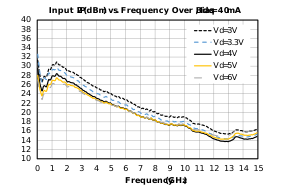
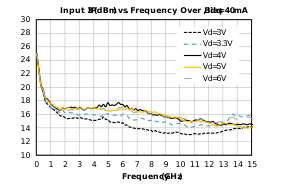
| 0.2 | 20 | - | 15.5 | - | dBm |
| Input Power for Saturation | Vd,Vg = 5V,
Idq = 40mA | 0.2 | 20 | - | 9 | - | dBm |
| Input Return Loss | Vd,Vg = 5 V,
Idq = 40mA,
Pin = -20 dBm
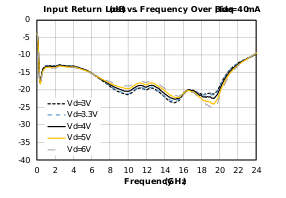
| 0.2 | 20 | - | 18 | - | dB |
| Noise Figure | Vd,Vg = 5 V,
Idq = 40mA,
Pin = -20 dBm
| 10 | 20 | - | 3.3 | - | dB |
| Noise Figure | Vd,Vg = 5 V,
Idq = 40mA,
Pin = -20 dBm
| 0.2 | 10 | - | 3 | - | dB |
| Output IP2 | Vd,Vg = 5 V,
Idq = 40mA,
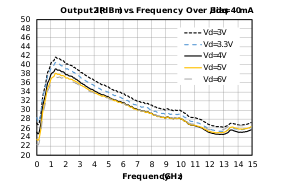
Pin = -18 dBm per tone, 1 MHz tone spacing | 0.2 | 20 | - | 32 | - | dBm |
| Output IP3 | Vd,Vg = 5 V,
Idq = 40mA,
Pin = -18 dBm per tone, 1 MHz tone spacing
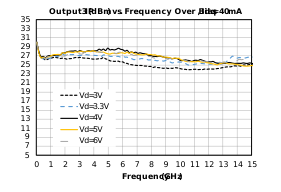
| 0.2 | 20 | - | 26 | - | dBm |
| Output P1dB | Vd,Vg = 5V,
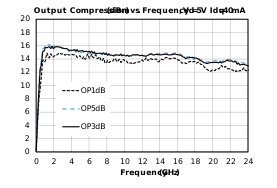
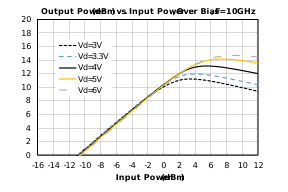
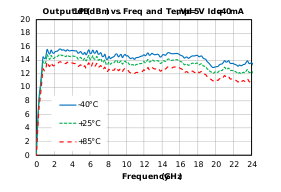
Idq = 40mA | 0.2 | 20 | - | 13.5 | - | dBm |
| Output Return Loss | Vd,Vg = 5 V,
Idq = 40mA,
Pin = -20 dBm
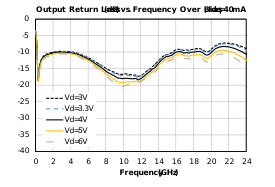
| 0.2 | 20 | - | 13 | - | dB |
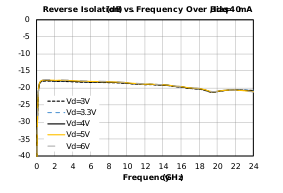
| Reverse Isolation | Vd,Vg = 5 V,
Idq = 40mA,
Pin = -20 dBm
| 0.2 | 20 | - | 19 | - | dB |
| Saturated Output Power | Vd,Vg = 5V,
Idq = 40mA
| 0.2 | 20 | - | 14.5 | - | dBm |
| Small Signal Gain | Vd,Vg = 5 V,
Idq = 40mA,
Pin = -20 dBm
| 0.2 | 20 | - | 10.5 | - | dB |
| Parameter | Test Conditions | Minimum Frequency (GHz) | Maximum Frequency (GHz) | Min | Typ | Max | Unit |
|---|---|---|---|---|---|---|---|
| Current Consumption | Vd,Vg = 5 V,
no RF input | 0.2 | 20 | - | 40 | - | mA |
| Input IP2 | Vd,Vg = 5 V,
Idq = 40mA,
Pin = -18 dBm per tone, 1 MHz tone spacing
| 0.2 | 20 | - | 21 | - | dBm |
| Input IP3 | Vd,Vg = 5 V,
Idq = 40mA,
Pin = -18 dBm per tone, 1 MHz tone spacing
| 0.2 | 20 | - | 15.5 | - | dBm |
| Input Power for Saturation | Vd,Vg = 5V,
Idq = 40mA | 0.2 | 20 | - | 9 | - | dBm |
| Input Return Loss | Vd,Vg = 5 V,
Idq = 40mA,
Pin = -20 dBm
| 0.2 | 20 | - | 18 | - | dB |
| Noise Figure | Vd,Vg = 5 V,
Idq = 40mA,
Pin = -20 dBm
| 10 | 20 | - | 3.3 | - | dB |
| Noise Figure | Vd,Vg = 5 V,
Idq = 40mA,
Pin = -20 dBm
| 0.2 | 10 | - | 3 | - | dB |
| Output IP2 | Vd,Vg = 5 V,
Idq = 40mA,
Pin = -18 dBm per tone, 1 MHz tone spacing | 0.2 | 20 | - | 32 | - | dBm |
| Output IP3 | Vd,Vg = 5 V,
Idq = 40mA,
Pin = -18 dBm per tone, 1 MHz tone spacing
| 0.2 | 20 | - | 26 | - | dBm |
| Output P1dB | Vd,Vg = 5V,
Idq = 40mA | 0.2 | 20 | - | 13.5 | - | dBm |
| Output Return Loss | Vd,Vg = 5 V,
Idq = 40mA,
Pin = -20 dBm
| 0.2 | 20 | - | 13 | - | dB |
| Reverse Isolation | Vd,Vg = 5 V,
Idq = 40mA,
Pin = -20 dBm
| 0.2 | 20 | - | 19 | - | dB |
| Saturated Output Power | Vd,Vg = 5V,
Idq = 40mA
| 0.2 | 20 | - | 14.5 | - | dBm |
| Small Signal Gain | Vd,Vg = 5 V,
Idq = 40mA,
Pin = -20 dBm
| 0.2 | 20 | - | 10.5 | - | dB |
ADM-8624PC
0.2 - 20 GHz High Dynamic Range Gain Block
ADM-8624PC
0.2 - 20 GHz High Dynamic Range Gain Block

ADM-8624PC
0.2 - 20 GHz High Dynamic Range Gain Block
ADM-8624PC
0.2 - 20 GHz High Dynamic Range Gain Block
Download : Outline 2D Drawing Outline 3D Drawing Outline 3D STP
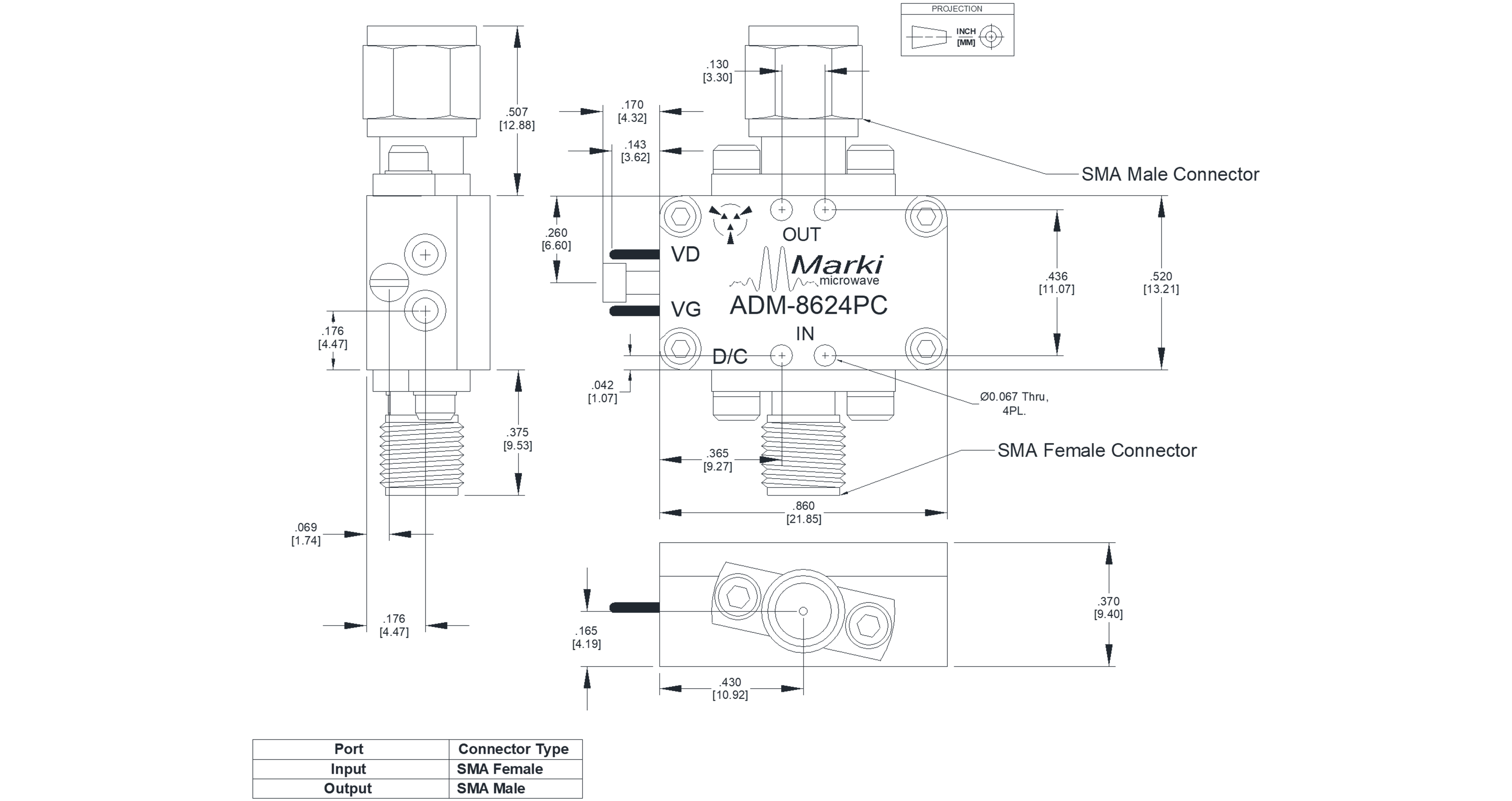
1) All dimensions are typical.
2) Ground lug and bias pins are solderable.