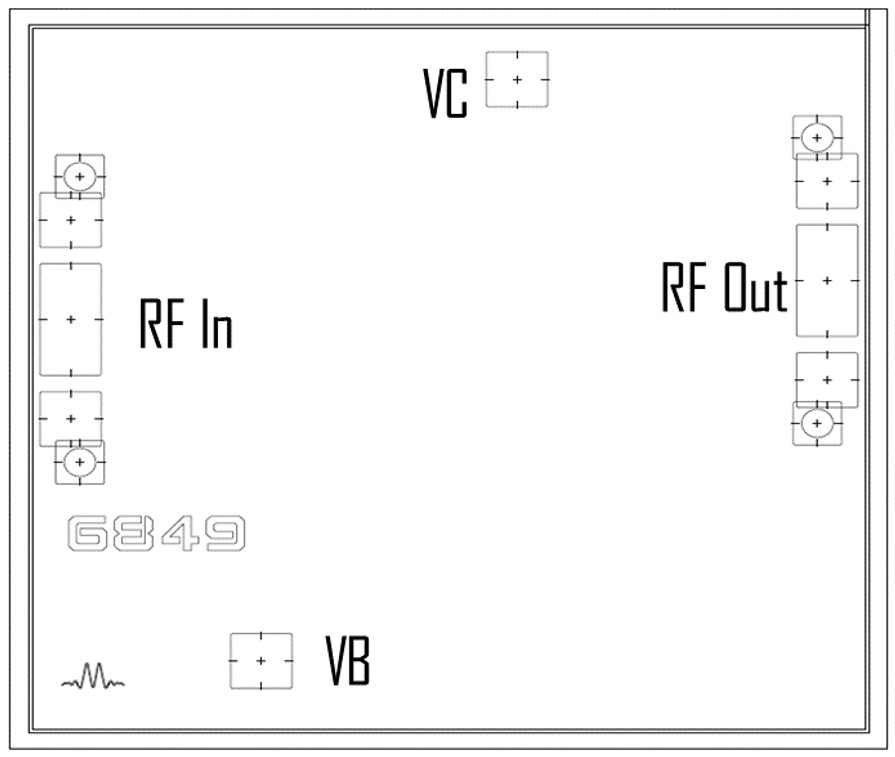
Port Diagram
A port diagram of the APM-6849CH is shown below.

Sales: 408-778-9952 | General: 408-778-4200 | Fax: 408-778-4300
Sales & Customer Support: [email protected]
Tech Support: [email protected]
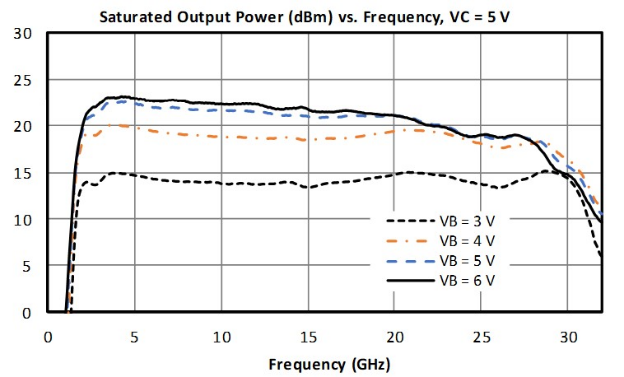
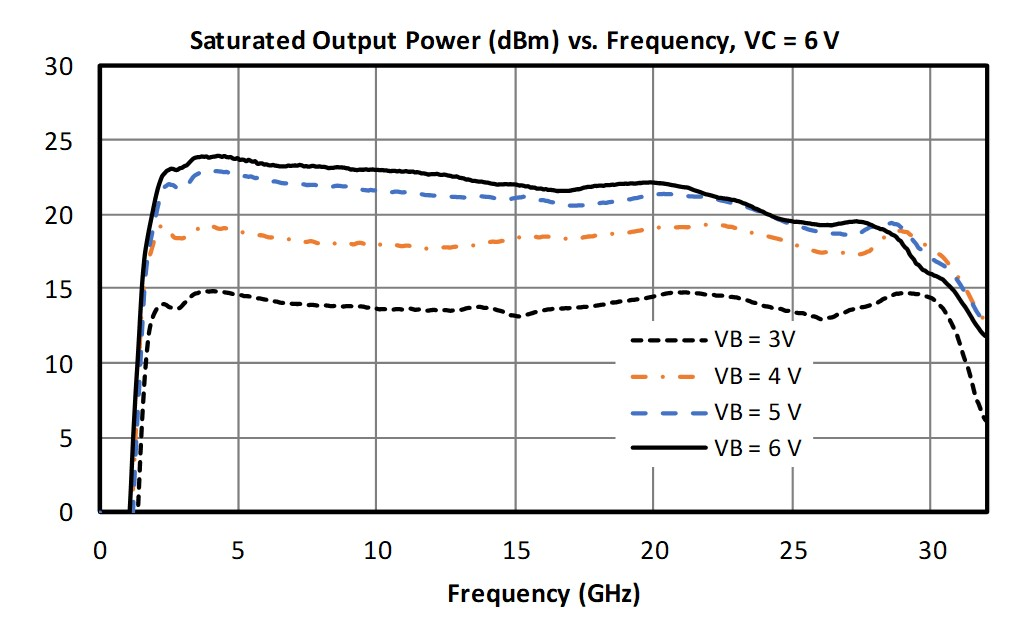
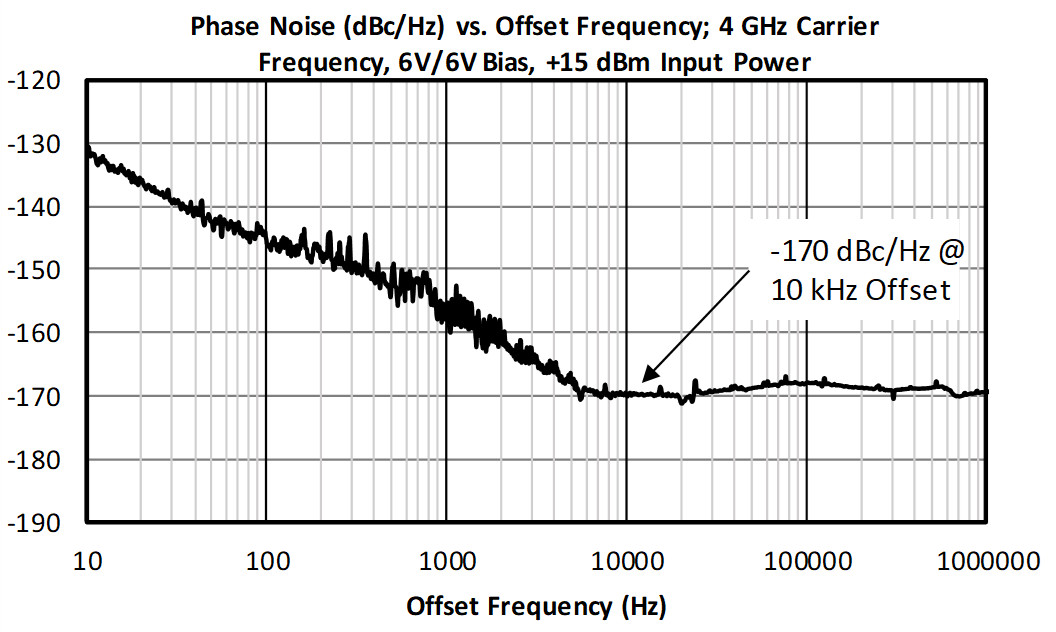
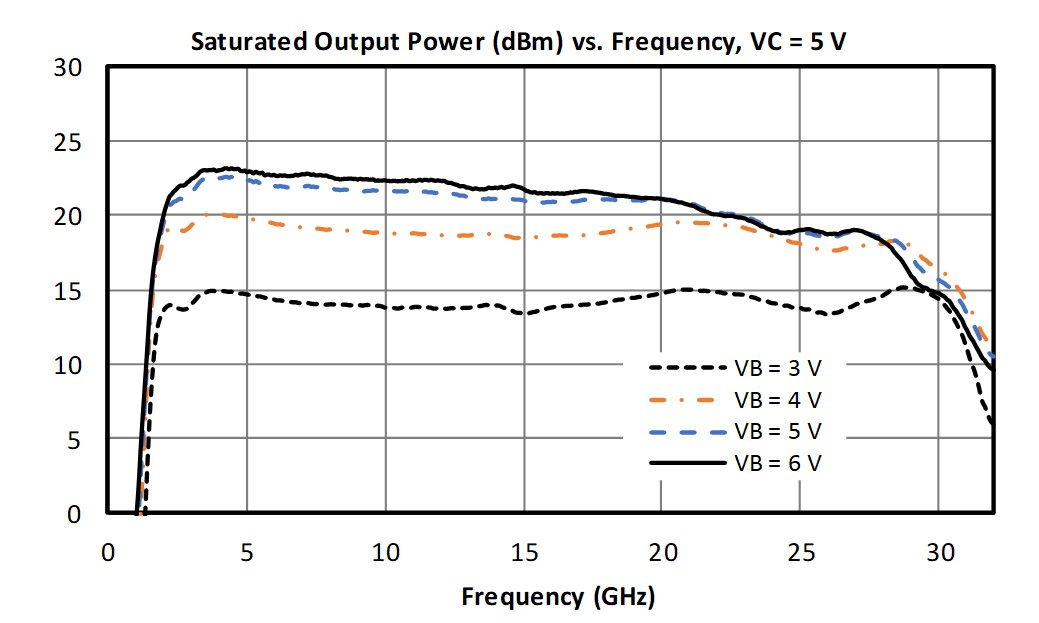
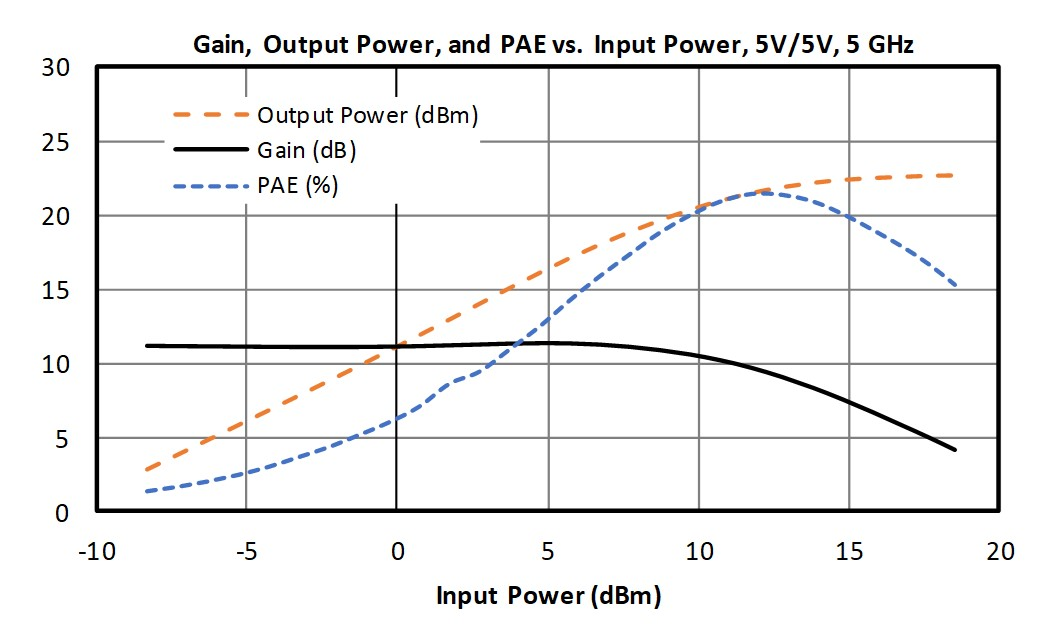
The APM-6849 is a single stage broadband, low phase noise LO driver amplifier designed to provide saturated +21 dBm output power. This amplifier uses GaAs HBT technology for low phase noise, and provides industry leading -170 dBc/Hz at 10 kHz offset from carrier frequency. The amplifier is also highly efficient with 21% peak PAE at 5 GHz input frequency and low DC current draw. It is optimized to provide enough power to drive the LO port of an S-diode mixer (2 – 20 GHz) and an H/L-diode mixer (2 - 32 GHz). This amplifier is operational with a variety of bias conditions for both low and high-power applications.


| Part Number | Description | Package | Connectors | Green Status | Product Lifecycle | Export Classification |
|---|---|---|---|---|---|---|
| APM-6849PA | GaAs Broadband Low Phase Noise Amplifier | PA | Standard | REACH RoHS | Released | EAR99 |
| APM-6849CH | GaAs Broadband Low Phase Noise Amplifier | CH | - | REACH RoHS | Released | EAR99 |
| Part Number | Description | Package | Connectors | Green Status | Product Lifecycle | Export Classification |
|---|---|---|---|---|---|---|
| APM-6849PA | GaAs Broadband Low Phase Noise Amplifier | PA | Standard | REACH RoHS | Released | EAR99 |
| APM-6849CH | GaAs Broadband Low Phase Noise Amplifier | CH | - | REACH RoHS | Released | EAR99 |
APM-6849CH
GaAs Broadband Low Phase Noise Amplifier
| Revision Code | Revision Date | Comment |
|---|---|---|
| - | 2019-11-01 | Datasheet Initial Release |
| A | 2020-01-01 | Added Time Domain Plots |
| B | 2020-07-01 | Updated Max Operating Temperature |
| C | 2020-07-01 | Updated Thermal Resistance Specification |
| D | 2020-10-01 | Updated Thermal Specs, Updated Min Specs |
| E | 2022-12-01 | Added Input/Output Power Plots in Sect 3.6 |
APM-6849CH
GaAs Broadband Low Phase Noise Amplifier
A port diagram of the APM-6849CH is shown below.
| Port | Function | Description | DC Equivalent Circuit |
|---|---|---|---|
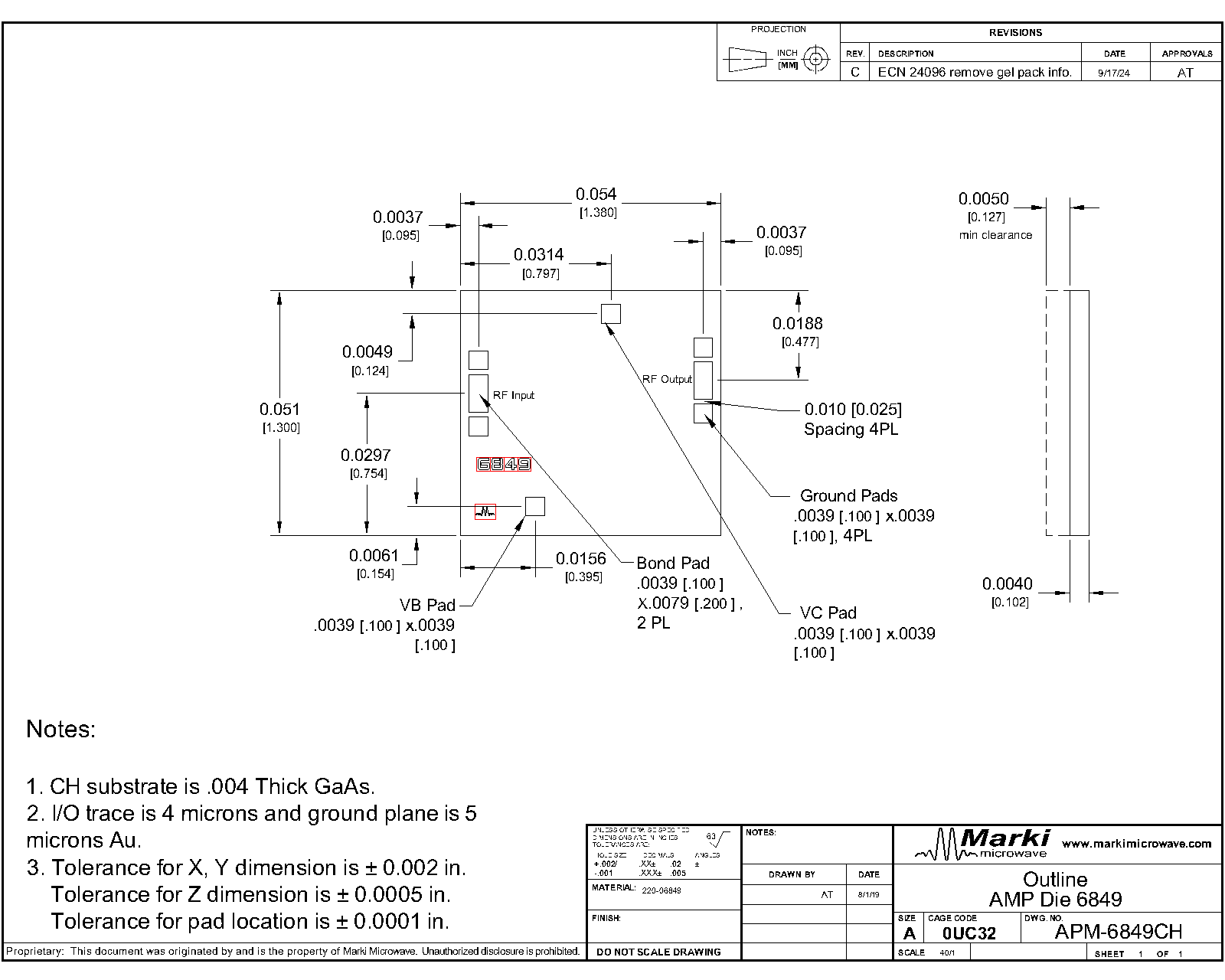
| GND | Ground | IC backside must be connected to a DC/RF ground with high thermal and electrical conductivity. |  |
| RF In | RF Input | This is the amplifier die RF Input port. It is internally DC blocked and RF matched to 50 Ω. RF input pad is GSG with 175 µm pitch. |  |
| RF Out | RF Output | This is the amplifier die RF Output port. It is internally DC blocked and RF matched to 50 Ω. The RF output pad is GSG with 175 µm pitch. Must have less than 7:1 VSWR when operating with voltage greater than +5V on port VC. |  |
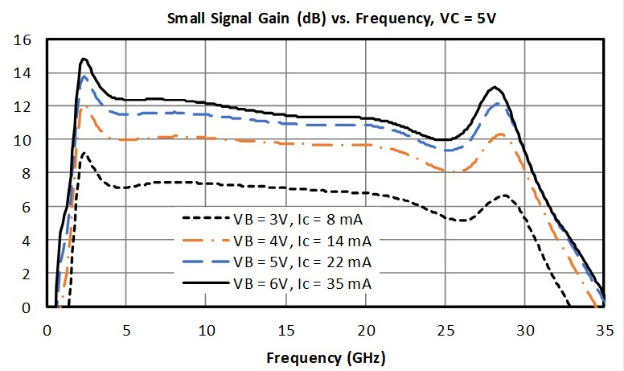
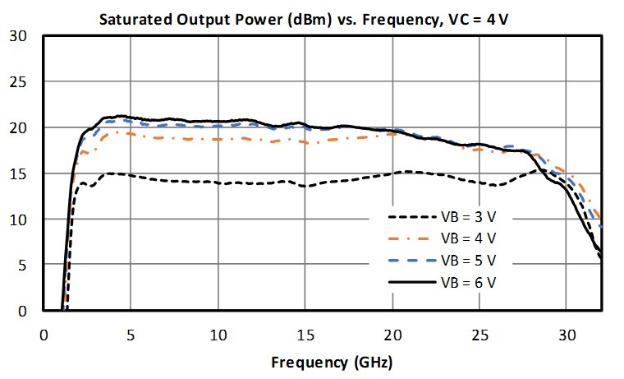
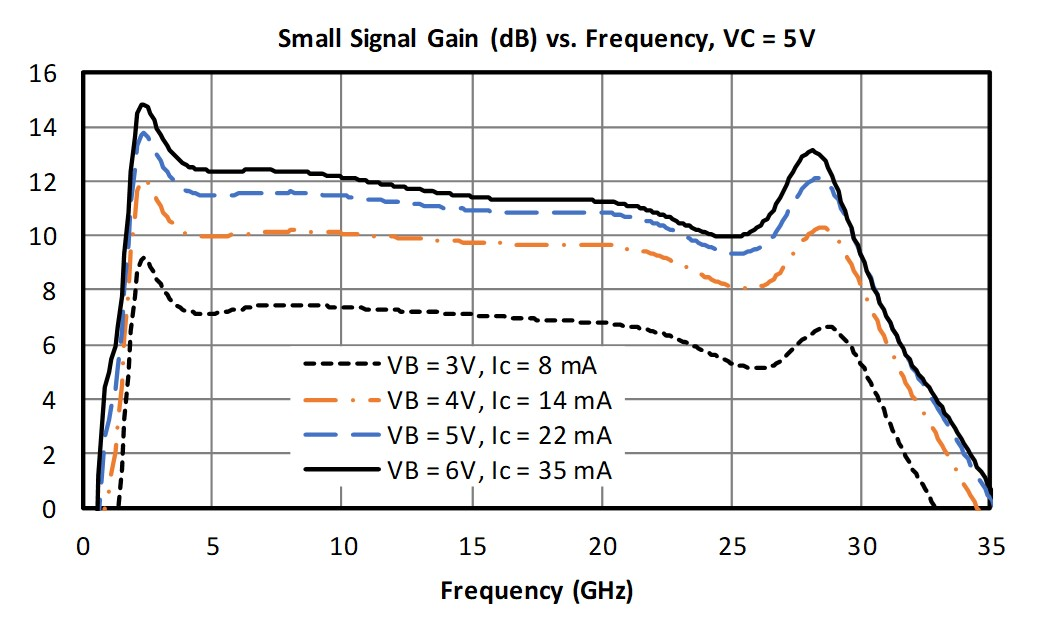
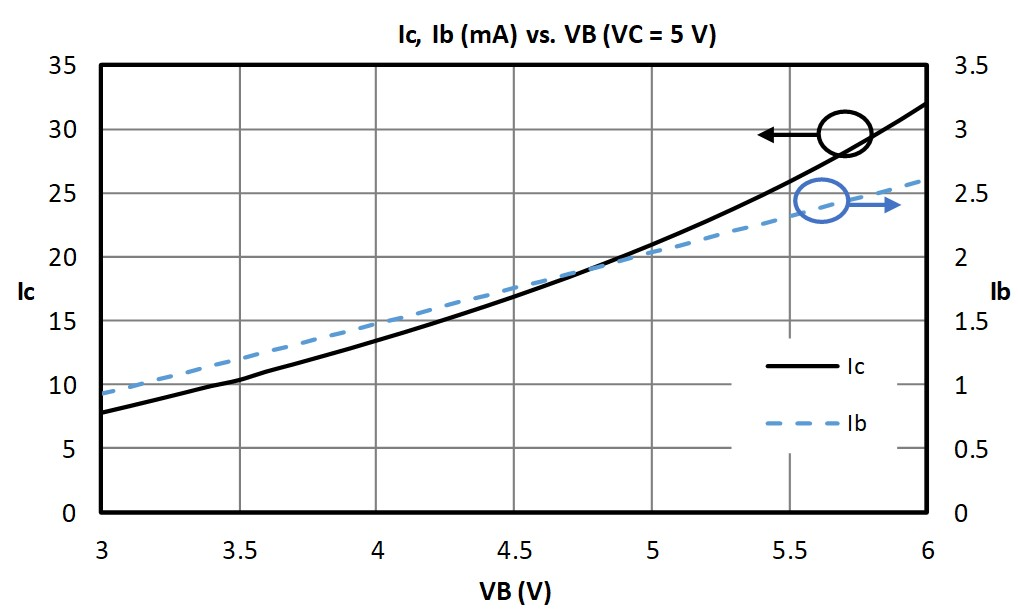
| VB | Base Supply Port | Port VB is the current mirror DC voltage supply port that controls the collector current supplied to the amplifier. VB port voltage is proportional to VC port collector current. VB effectively functions as a gain control pin. See Typical Performance Plots for performance at different bias conditions. |  |
| VC | Collector Supply Port | Pad VC is the amplifier IC’s DC voltage supply pad. See section 3.6 for performance at different bias conditions. |  |
APM-6849CH
GaAs Broadband Low Phase Noise Amplifier
The Absolute Maximum Ratings indicate limits beyond which damage may occur to the device. If these limits are exceeded, the device may become inoperable or have a reduced lifetime.
| Parameter | Maximum Rating | Unit |
|---|---|---|
| Collector Positive Bias Voltage (Vc) | 7 | V |
| Current Mirror Positive Bias Current (Ib) | 4 | mA |
| Current Mirror Positive Bias Voltage (VB) | 7 | V |
| Maximum Operating Temperature | 85 | °C |
| Maximum Storage Temperature | 150 | °C |
| Max Junction Temperature for MTTF > 1E6 Hours | 125 | °C |
| Minimum Operating Temperature | -40 | °C |
| Minimum Storage Temperature | -65 | °C |
| Output Load VSWR | 7 | - |
| Positive Bias Current (Ic) | 90 | mA |
| RF Input Power | 16 | dBm |
| θJC, Junction to Case Thermal Resistance | 78 | ºC/W |
| Parameter | Details | Rating |
|---|---|---|
| Dimensions | - | 1.38 x 1.3 mm |
The Recommended Operating Conditions indicate the limits, inside which the device should be operated, to guarantee the performance given in Electrical Specifications Operating outside these limits may not necessarily cause damage to the device, but the performance may degrade outside the limits of the electrical specifications. For limits, above which damage may occur, see Absolute Maximum Ratings.
| Parameter | Min | Nominal | Max | Unit |
|---|---|---|---|---|
| Ambient Temperature | -40 | 25 | 85 | °C |
| Positive DC Voltage (VC) | 3 | 5 | 6 | V |
| Positive DC Current (Ic) | 8 | 21 | 32 | mA |
| Positive DC Current Mirror Voltage (VB) | 3 | 5 | 6 | V |
| Positive DC Current Mirror Current (Ib) | 0.9 | 2 | 2.6 | mA |
APM-6849CH
GaAs Broadband Low Phase Noise Amplifier
The electrical specifications apply at TA=+25°C in a 50Ω system. Min and Max limits apply only to our connectorized units and are guaranteed at TA=+25°C. Die are 100% DC tested and RF tested on a per lot basis.
| Parameter | Test Conditions | Minimum Frequency (GHz) | Maximum Frequency (GHz) | Min | Typ | Max | Unit |
|---|---|---|---|---|---|---|---|
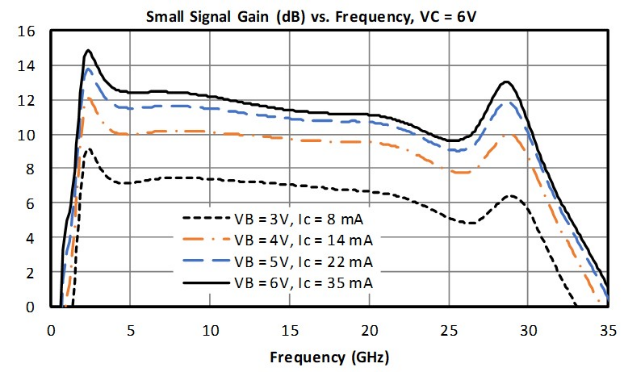
| Small Signal Gain | 5V/5V bias, -25 dBm Input Power | 2 | 20 | 9 | 11 | - | dB |
| Small Signal Gain | 5V/5V bias, -25 dBm Input Power | 20 | 29 | - | 10 | - | dB |
| Input Return Loss | 5V/5V bias, -25 dBm Input Power | 2 | 20 | - | 15 | - | dB |
| Input Return Loss | 5V/5V bias, -25 dBm Input Power | 20 | 29 | - | 8 | - | dB |
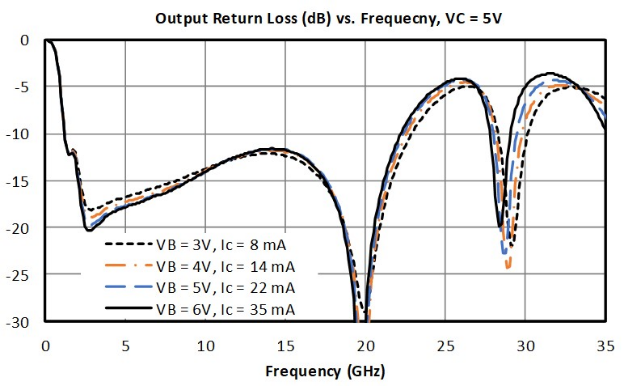
| Output Return Loss | 5V/5V bias, -25 dBm Input Power | 2 | 20 | - | 15 | - | dB |
| Output Return Loss | 5V/5V bias, -25 dBm Input Power | 20 | 29 | - | 11 | - | dB |
| Reverse Isolation | 5V/5V bias, -25 dBm Input Power | 2 | 29 | - | 41 | - | dB |
| Noise Figure | 5V/5V bias, -25 dBm Input Power | 2 | 26.5 | - | 5 | - | dB |
| Output P1dB | 5V/5V bias | 2 | 20 | - | 20 | - | dBm |
| Output P1dB | 5V/5V bias | 20 | 29 | - | 15 | - | dBm |
| Input IP3 | 5V/5V bias, 15 dBm Input Power | 2 | 29 | - | 10 | - | dBm |
| Output IP3 | 5V/5V bias, 15 dBm Input Power | 2 | 29 | - | 21 | - | dBm |
| Input Power for Saturation | 5V/5V bias | 2 | 29 | - | 10 | - | dBm |
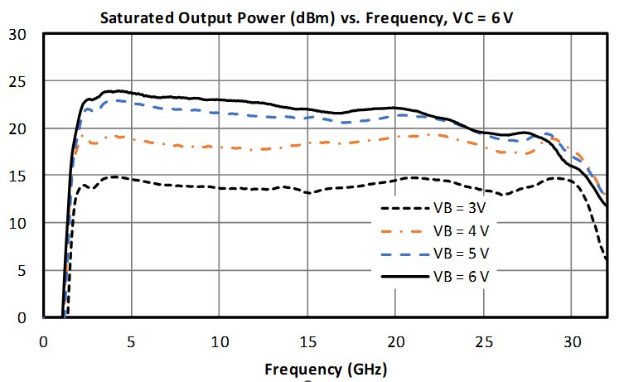
| Saturated Output Power 1 | 5V/5V Bias, Input Driver (See footnote) | 2 | 20 | 19 | 21 | - | dBm |
| Saturated Output Power 2 | 5V/5V Bias, Input Driver (See footnote) | 20 | 29 | - | 19 | - | dBm |
| Phase Noise @ 10 kHz Offset | 5V/5V bias, +9 dBm Input power | 2 | 29 | - | -170 | - | dBc/Hz |
| Current Consumption 3 | 5V/4V | - | - | - | 13 | - | mA |
| Current Consumption 4 | 5V/5V | - | - | - | 21 | - | mA |
| Current Consumption 5 | 5V/6V | - | - | - | 32 | - | mA |
| Current Mirror, Ib | 5V/4V | - | - | - | 1.5 | - | mA |
| Current Mirror, Ib | 5V/5V | - | - | - | 2 | - | mA |
| Current Mirror, Ib | 5V/6V | - | - | - | 2.6 | - | mA |
| Parameter | Test Conditions | Minimum Frequency (GHz) | Maximum Frequency (GHz) | Min | Typ | Max | Unit |
|---|---|---|---|---|---|---|---|
| Small Signal Gain | 5V/5V bias, -25 dBm Input Power | 2 | 20 | 9 | 11 | - | dB |
| Small Signal Gain | 5V/5V bias, -25 dBm Input Power | 20 | 29 | - | 10 | - | dB |
| Input Return Loss | 5V/5V bias, -25 dBm Input Power | 2 | 20 | - | 15 | - | dB |
| Input Return Loss | 5V/5V bias, -25 dBm Input Power | 20 | 29 | - | 8 | - | dB |
| Output Return Loss | 5V/5V bias, -25 dBm Input Power | 2 | 20 | - | 15 | - | dB |
| Output Return Loss | 5V/5V bias, -25 dBm Input Power | 20 | 29 | - | 11 | - | dB |
| Reverse Isolation | 5V/5V bias, -25 dBm Input Power | 2 | 29 | - | 41 | - | dB |
| Noise Figure | 5V/5V bias, -25 dBm Input Power | 2 | 26.5 | - | 5 | - | dB |
| Output P1dB | 5V/5V bias | 2 | 20 | - | 20 | - | dBm |
| Output P1dB | 5V/5V bias | 20 | 29 | - | 15 | - | dBm |
| Input IP3 | 5V/5V bias, 15 dBm Input Power | 2 | 29 | - | 10 | - | dBm |
| Output IP3 | 5V/5V bias, 15 dBm Input Power | 2 | 29 | - | 21 | - | dBm |
| Input Power for Saturation | 5V/5V bias | 2 | 29 | - | 10 | - | dBm |
| Saturated Output Power 1 | 5V/5V Bias, Input Driver (See footnote) | 2 | 20 | 19 | 21 | - | dBm |
| Saturated Output Power 2 | 5V/5V Bias, Input Driver (See footnote) | 20 | 29 | - | 19 | - | dBm |
| Phase Noise @ 10 kHz Offset | 5V/5V bias, +9 dBm Input power | 2 | 29 | - | -170 | - | dBc/Hz |
| Current Consumption 3 | 5V/4V | - | - | - | 13 | - | mA |
| Current Consumption 4 | 5V/5V | - | - | - | 21 | - | mA |
| Current Consumption 5 | 5V/6V | - | - | - | 32 | - | mA |
| Current Mirror, Ib | 5V/4V | - | - | - | 1.5 | - | mA |
APM-6849CH
GaAs Broadband Low Phase Noise Amplifier
| Parameter | Test Conditions | Minimum Frequency (GHz) | Maximum Frequency (GHz) | Min | Typ | Max | Unit |
|---|---|---|---|---|---|---|---|
| Current Mirror, Ib | 5V/5V | - | - | - | 2 | - | mA |
| Current Mirror, Ib | 5V/6V | - | - | - | 2.6 | - | mA |
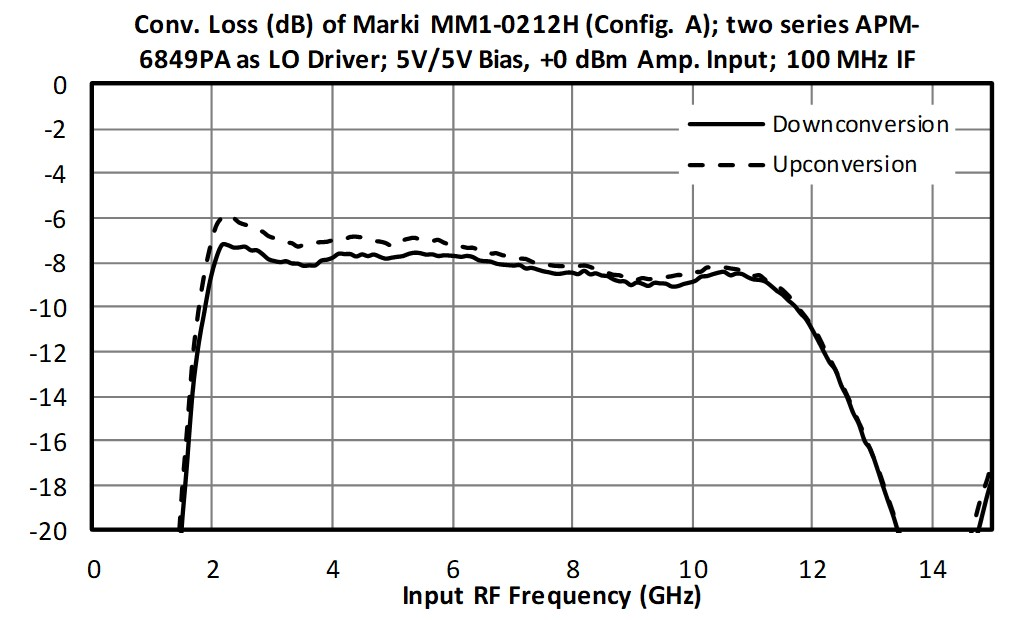
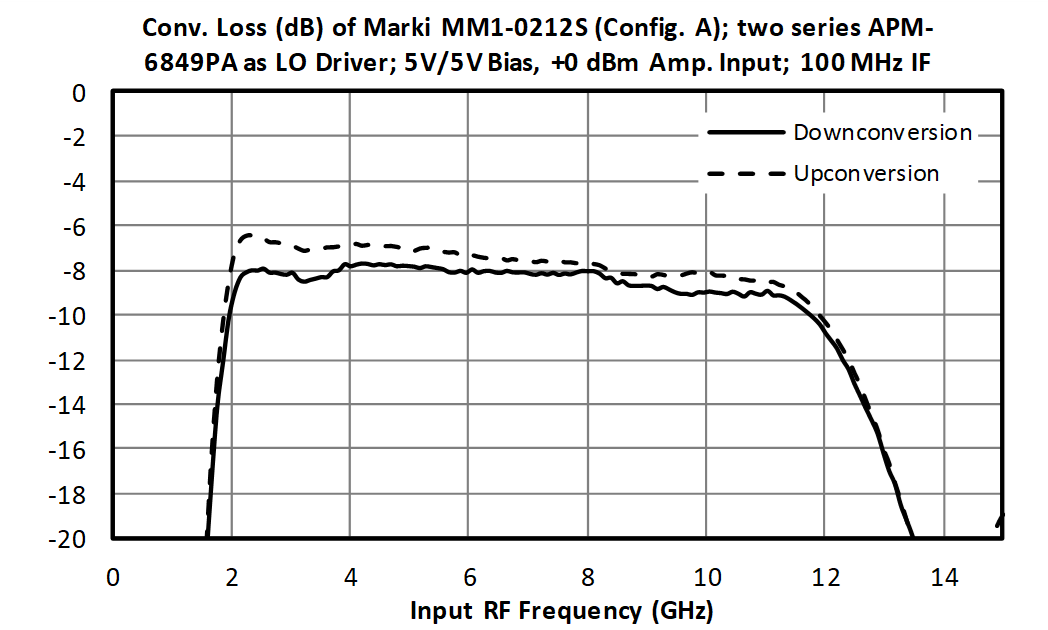
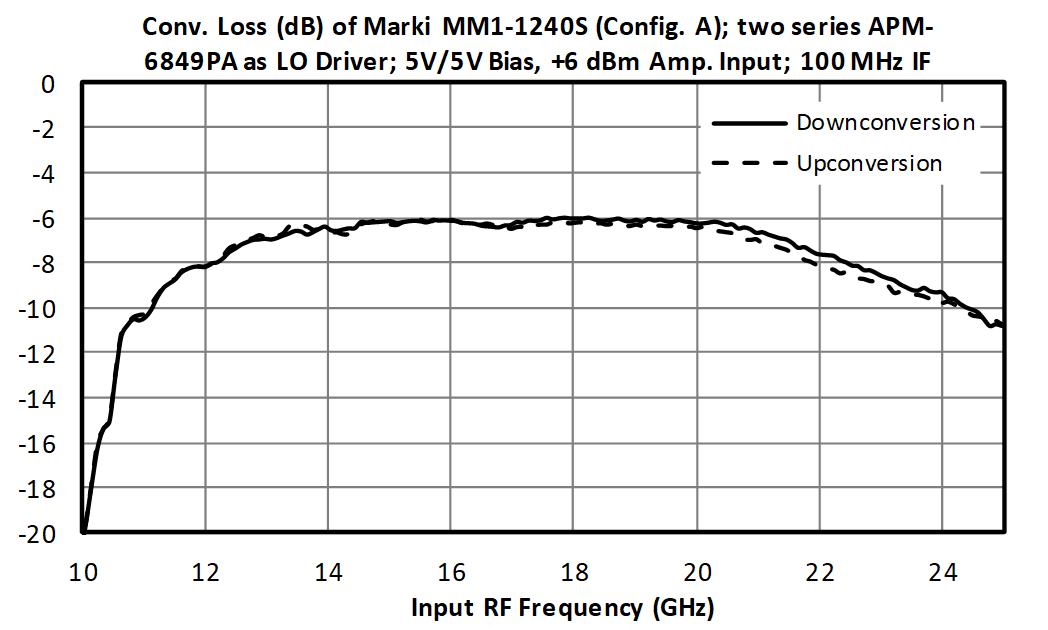
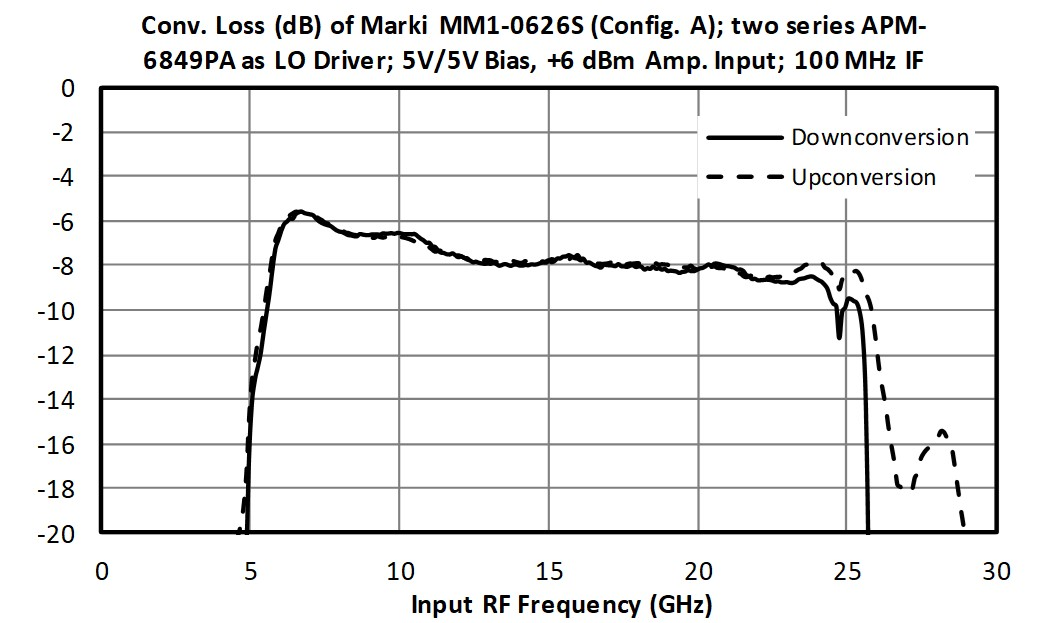
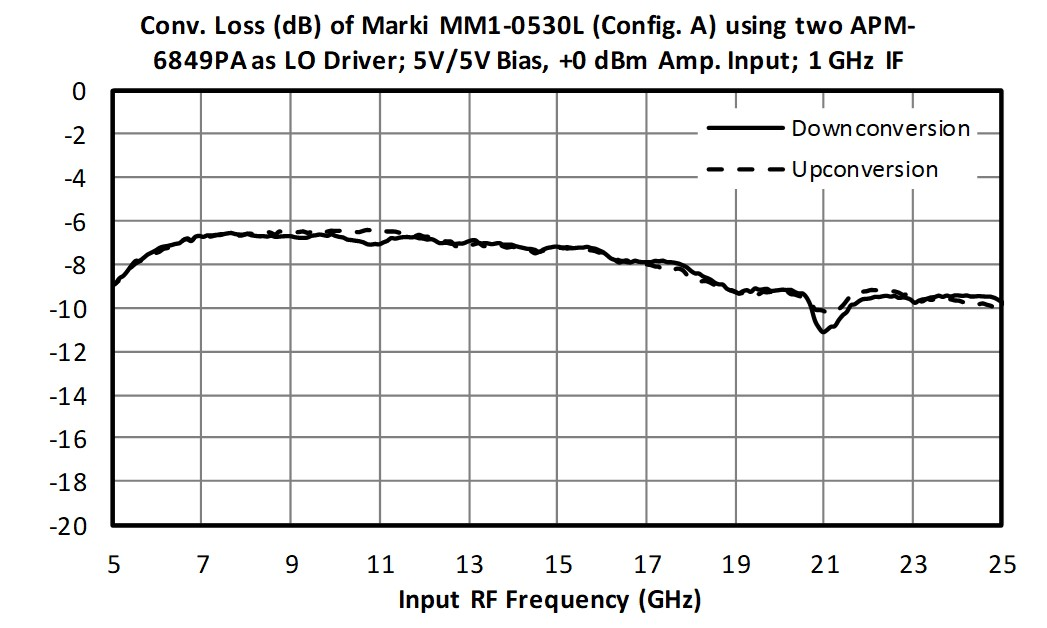
[1][2] Saturated Output Power tested with two APM-6849PA connected in series; +6 dBm RF input power, corresponding to ~+16 dBm into DUT.
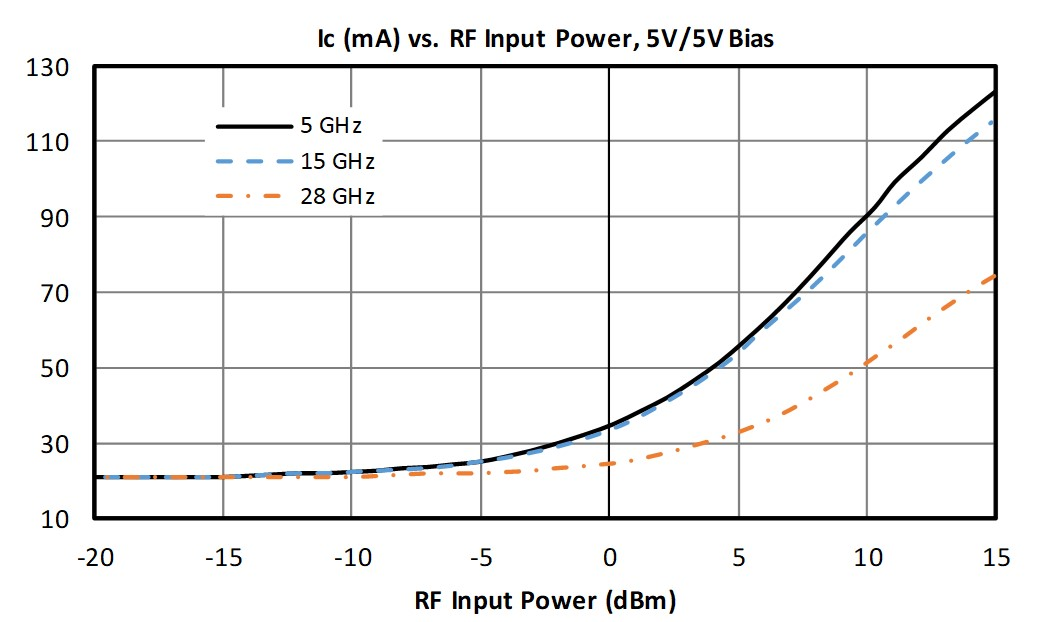
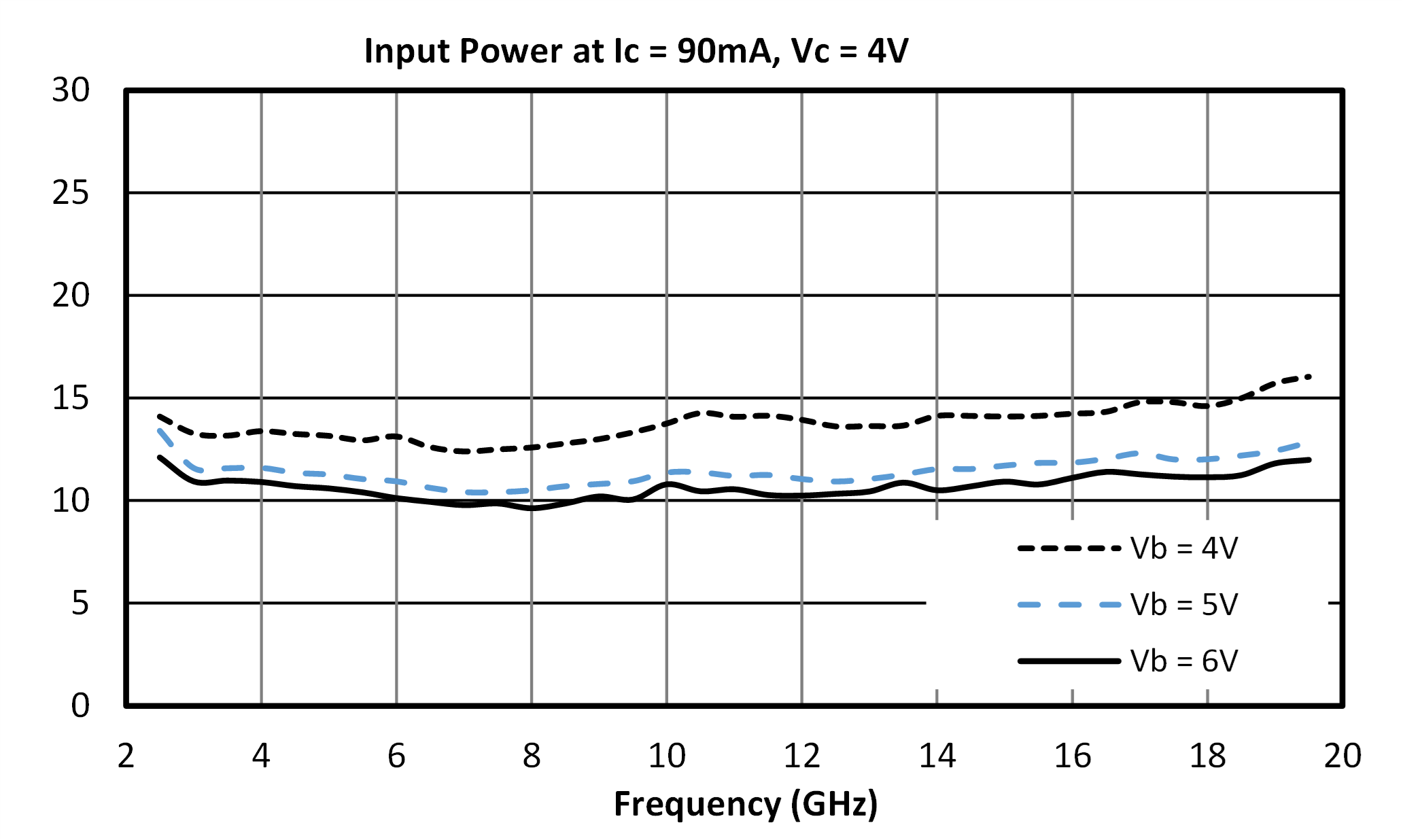
[3][4][5] Bias conditions for Ic and Ib tested with no RF input power. See section 3.6 for DC current vs. RF power. Bias conditions presented as VC/VB.
APM-6849CH
GaAs Broadband Low Phase Noise Amplifier
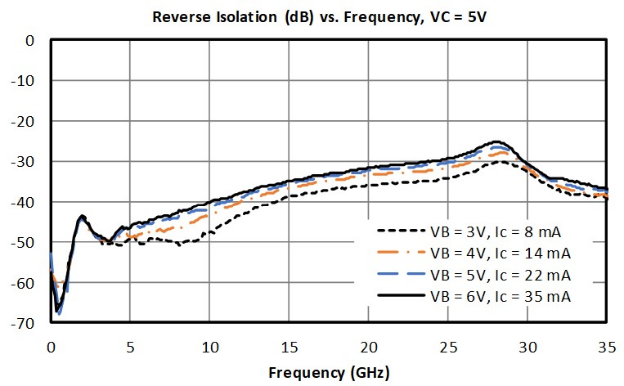
Probe tested on chip.

APM-6849CH
GaAs Broadband Low Phase Noise Amplifier
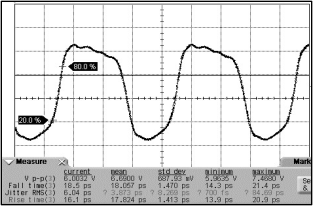
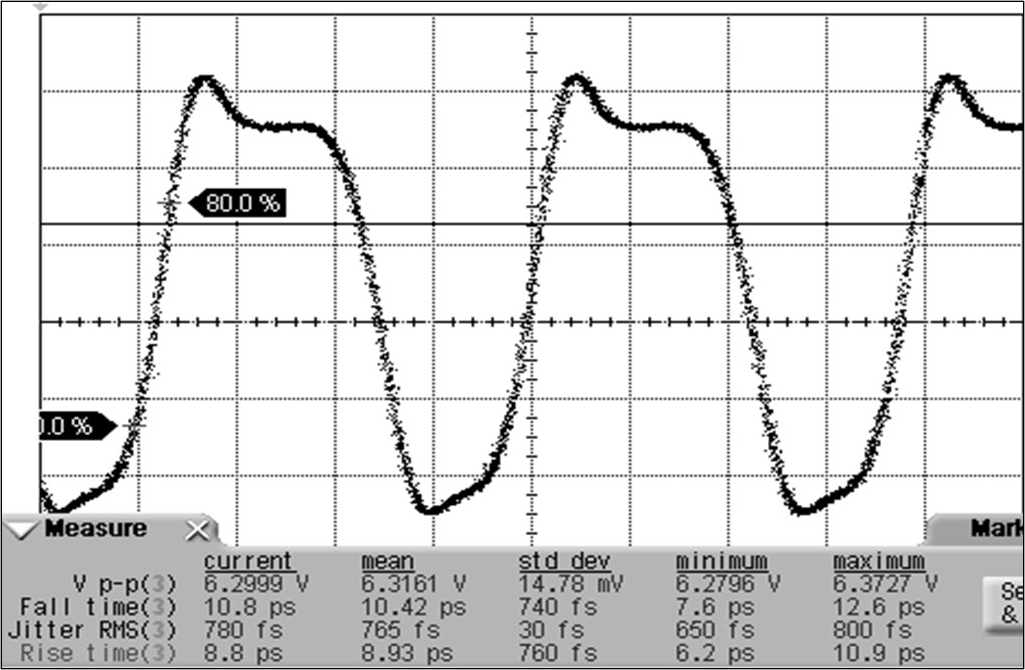
Fast rise time is desirable for linear Marki T3 mixer operation.
APM-6849CH
GaAs Broadband Low Phase Noise Amplifier

APM-6849CH
GaAs Broadband Low Phase Noise Amplifier
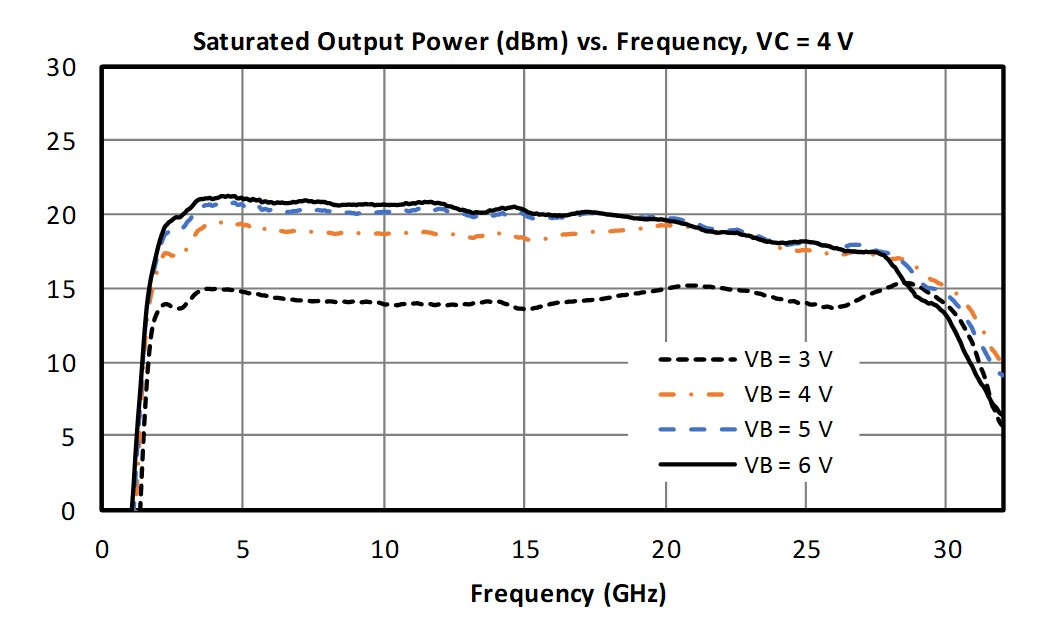
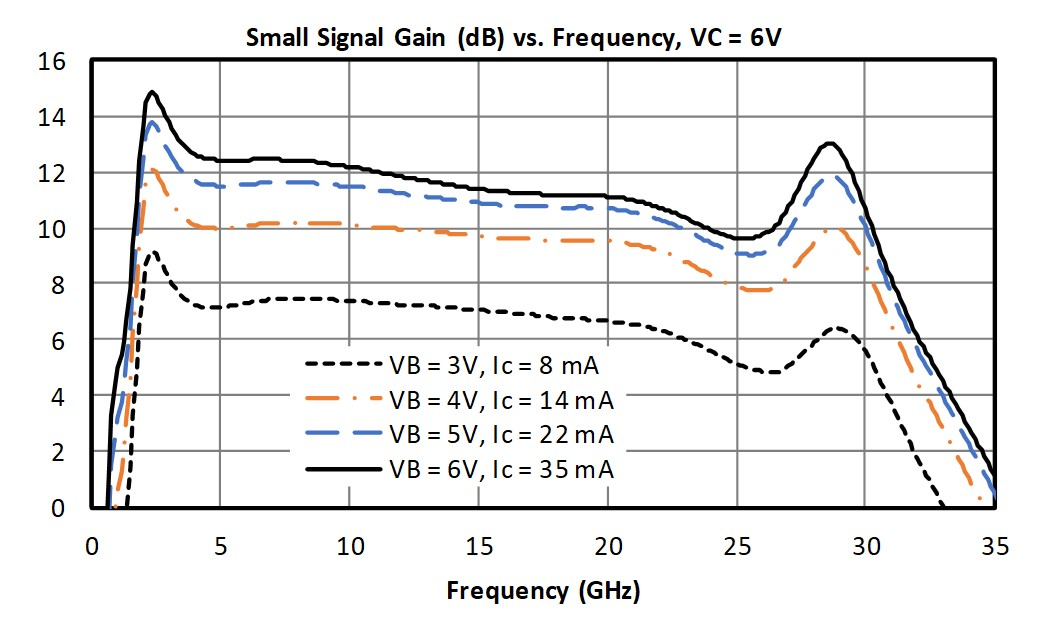
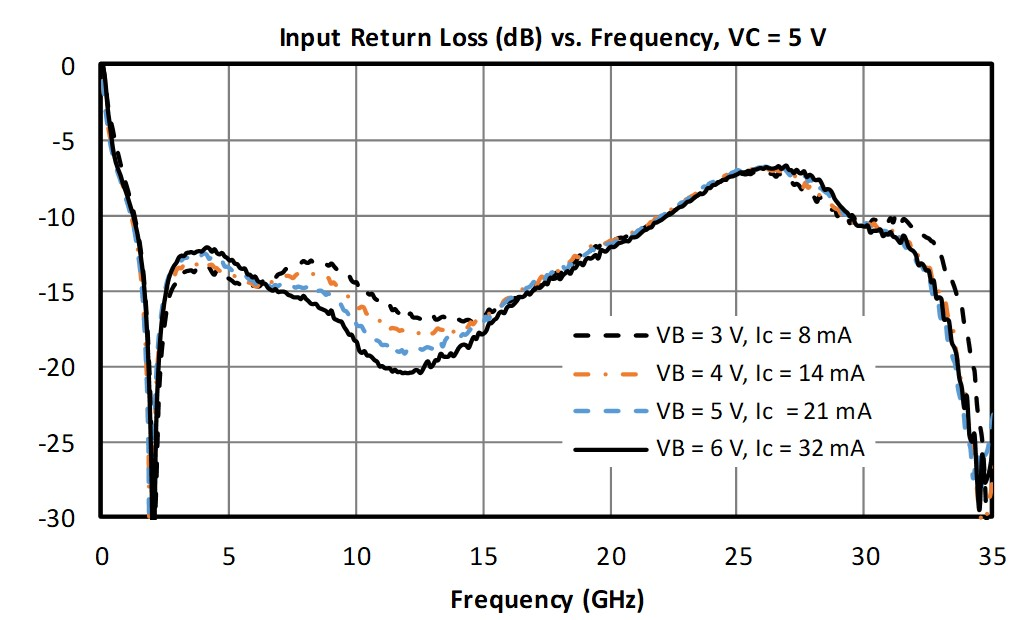
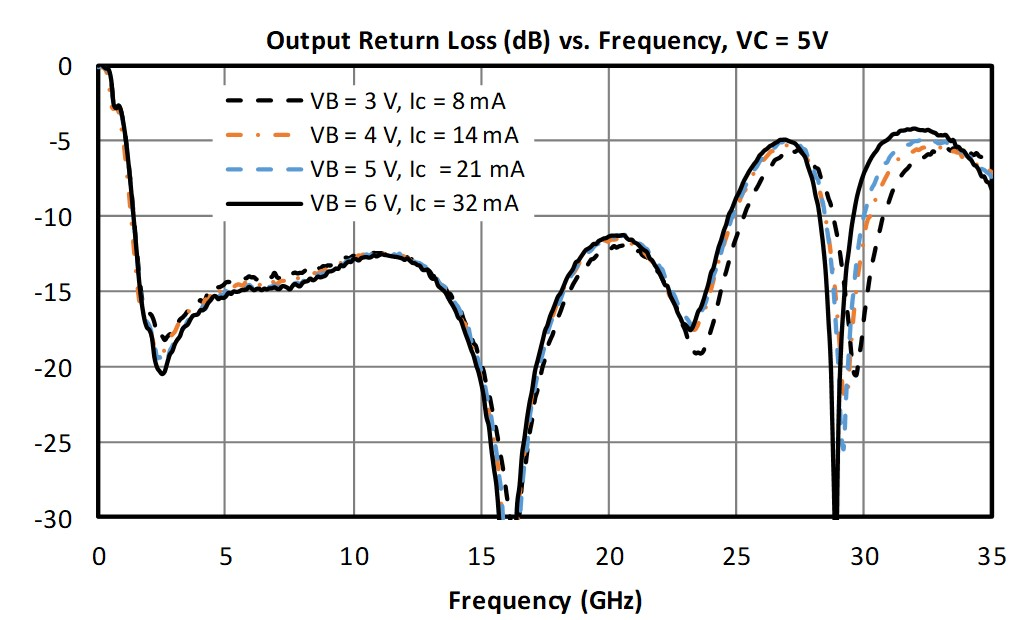
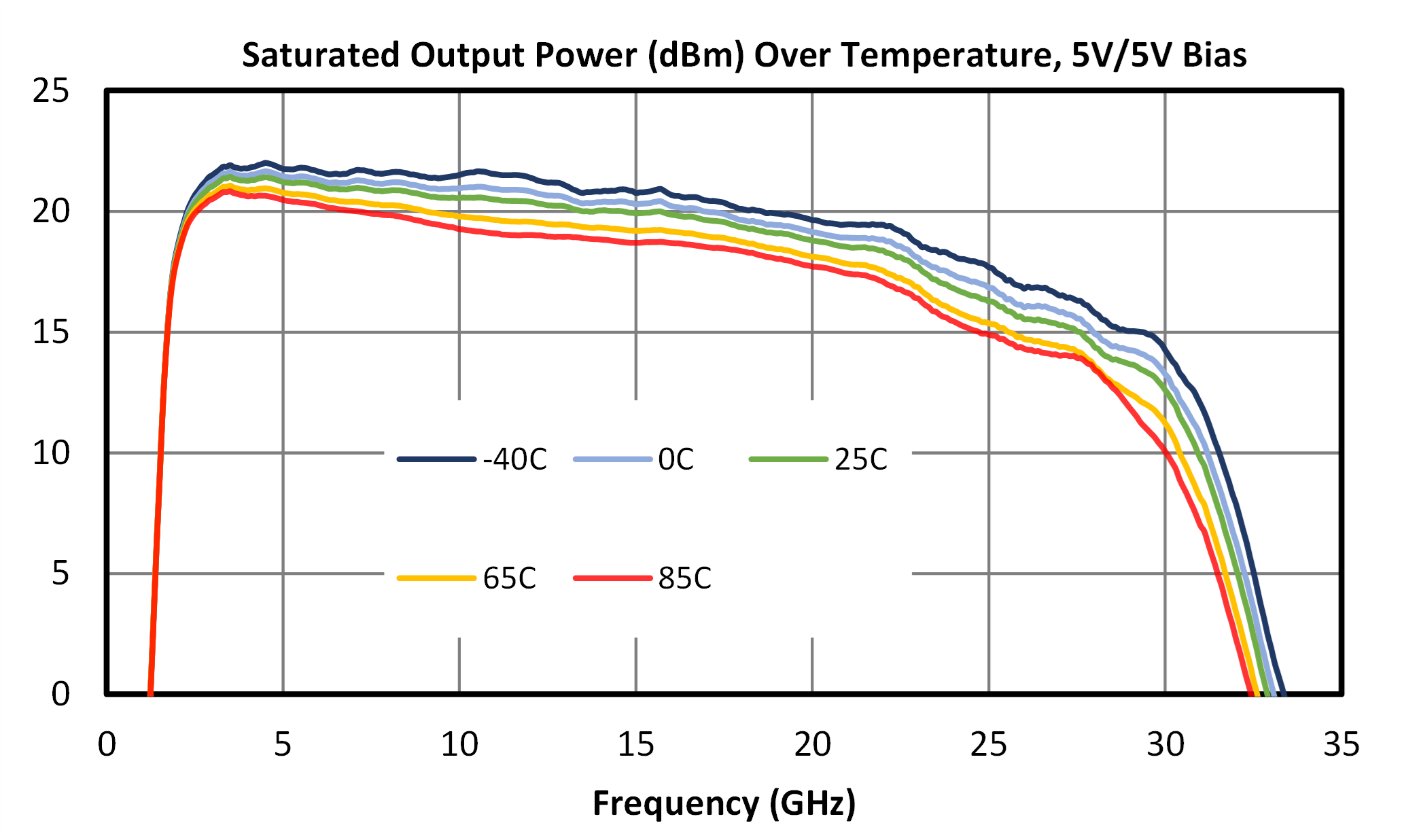
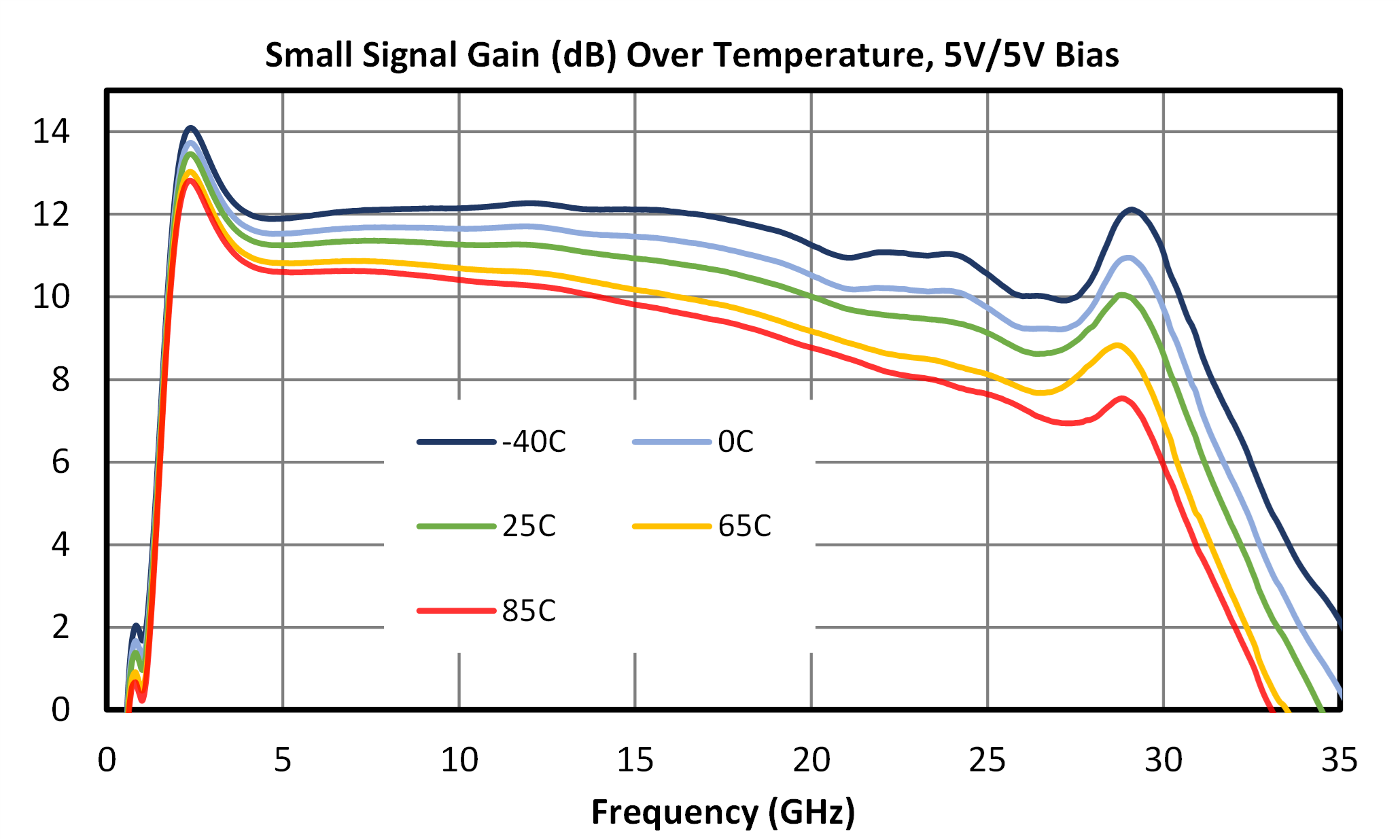
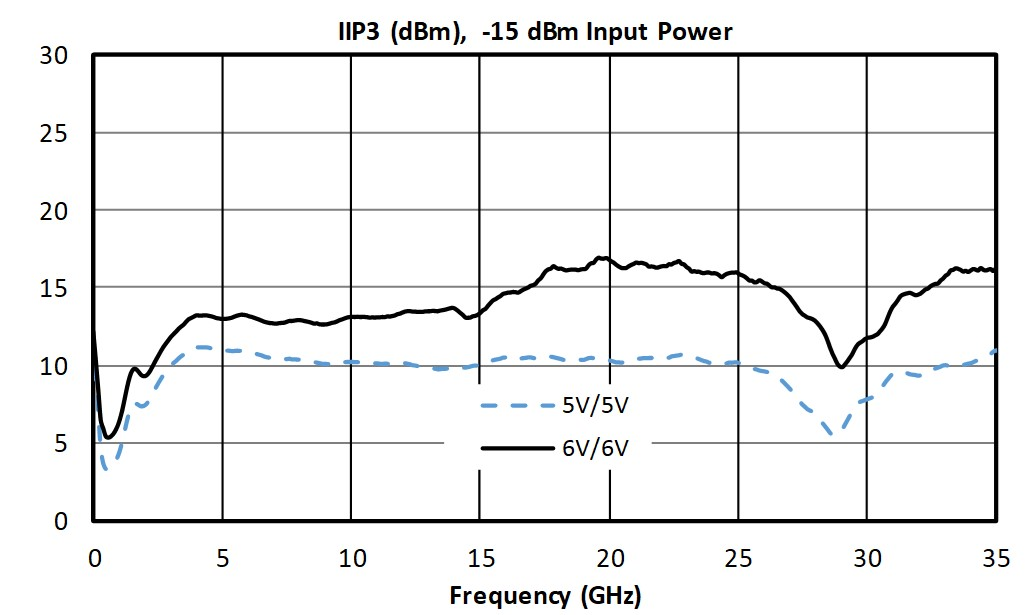
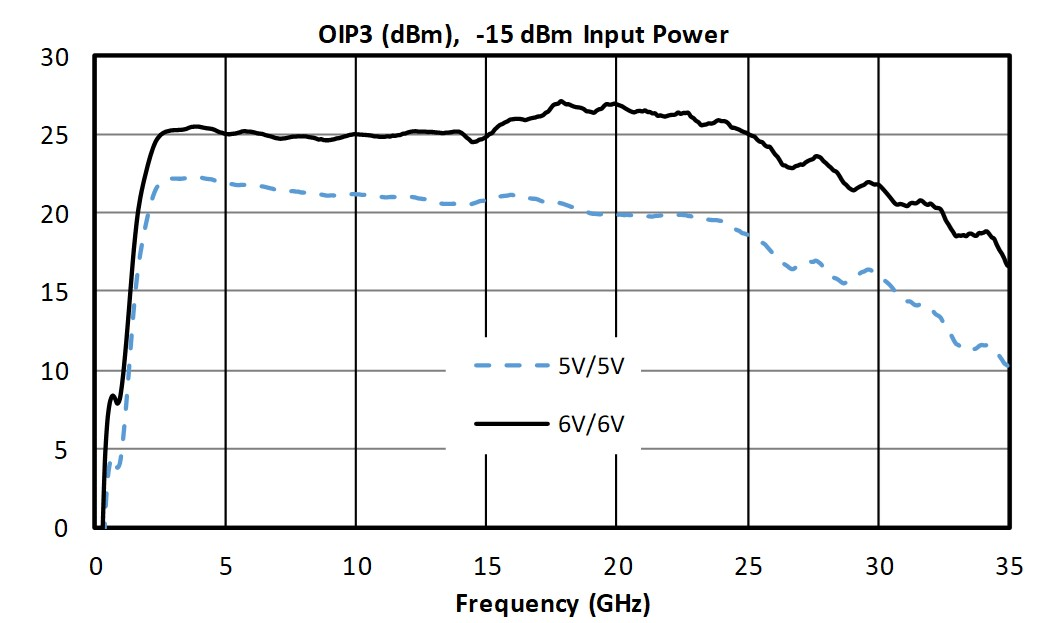
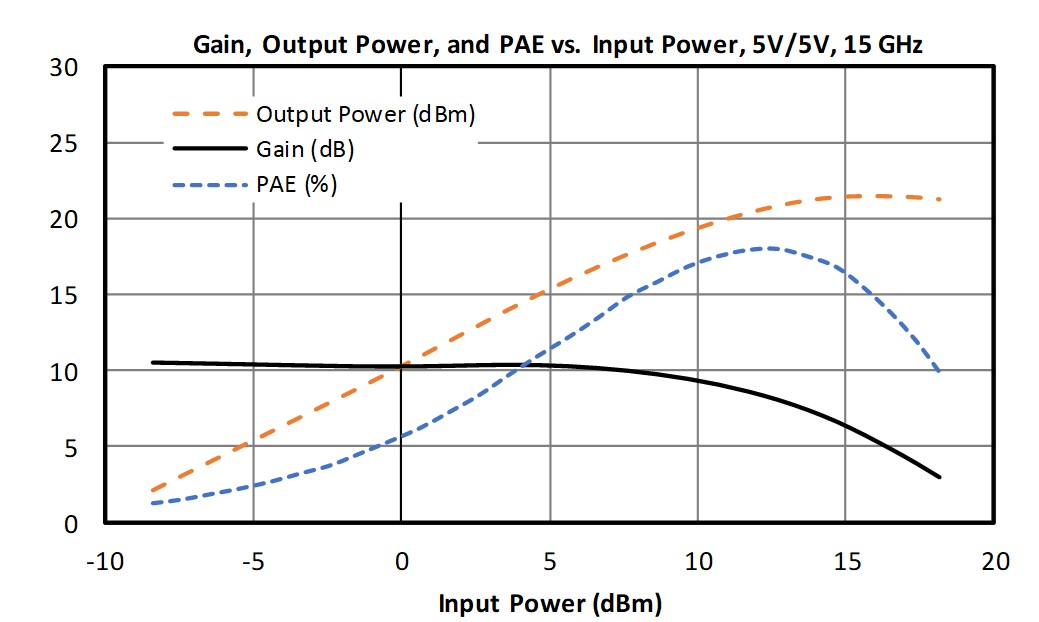
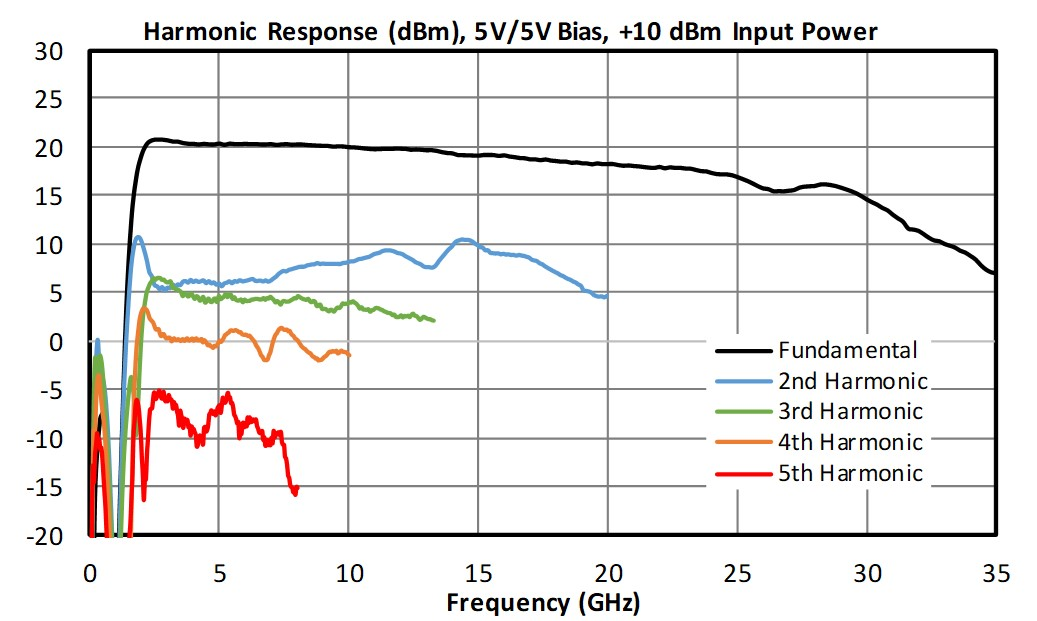
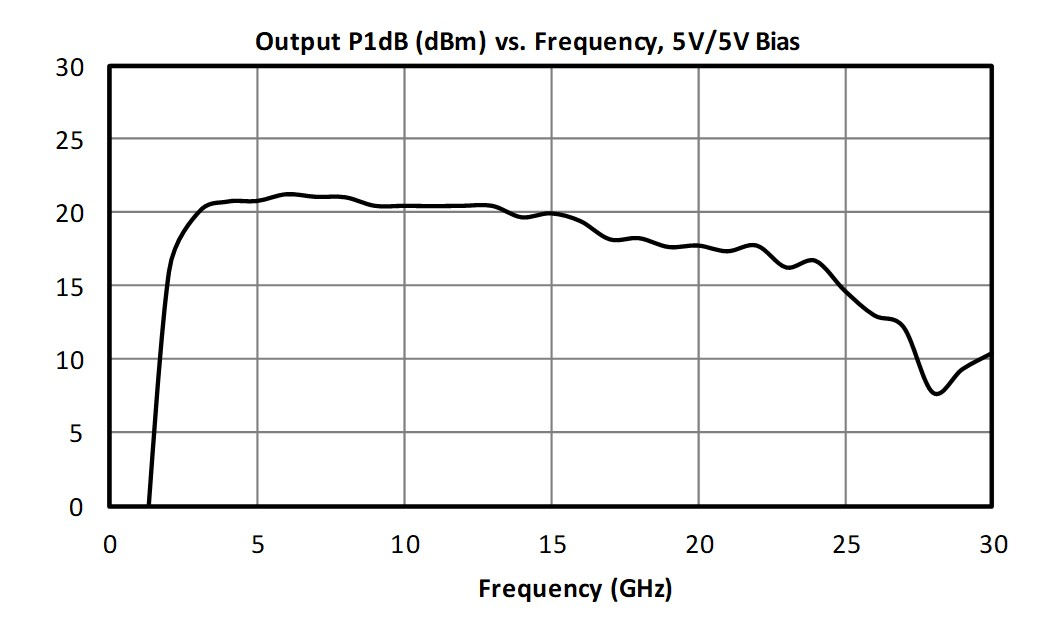
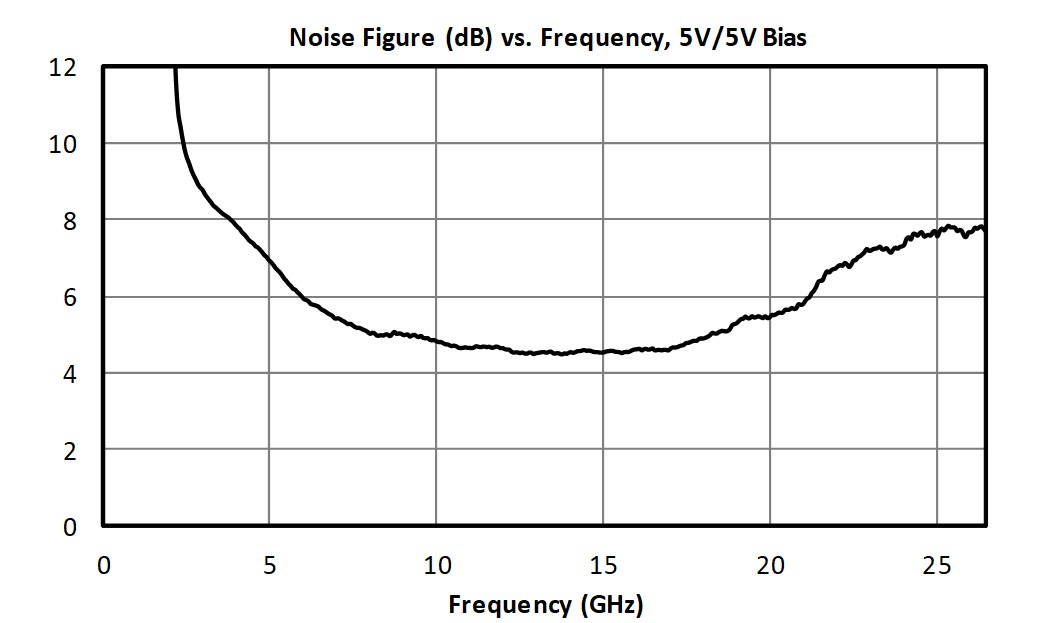
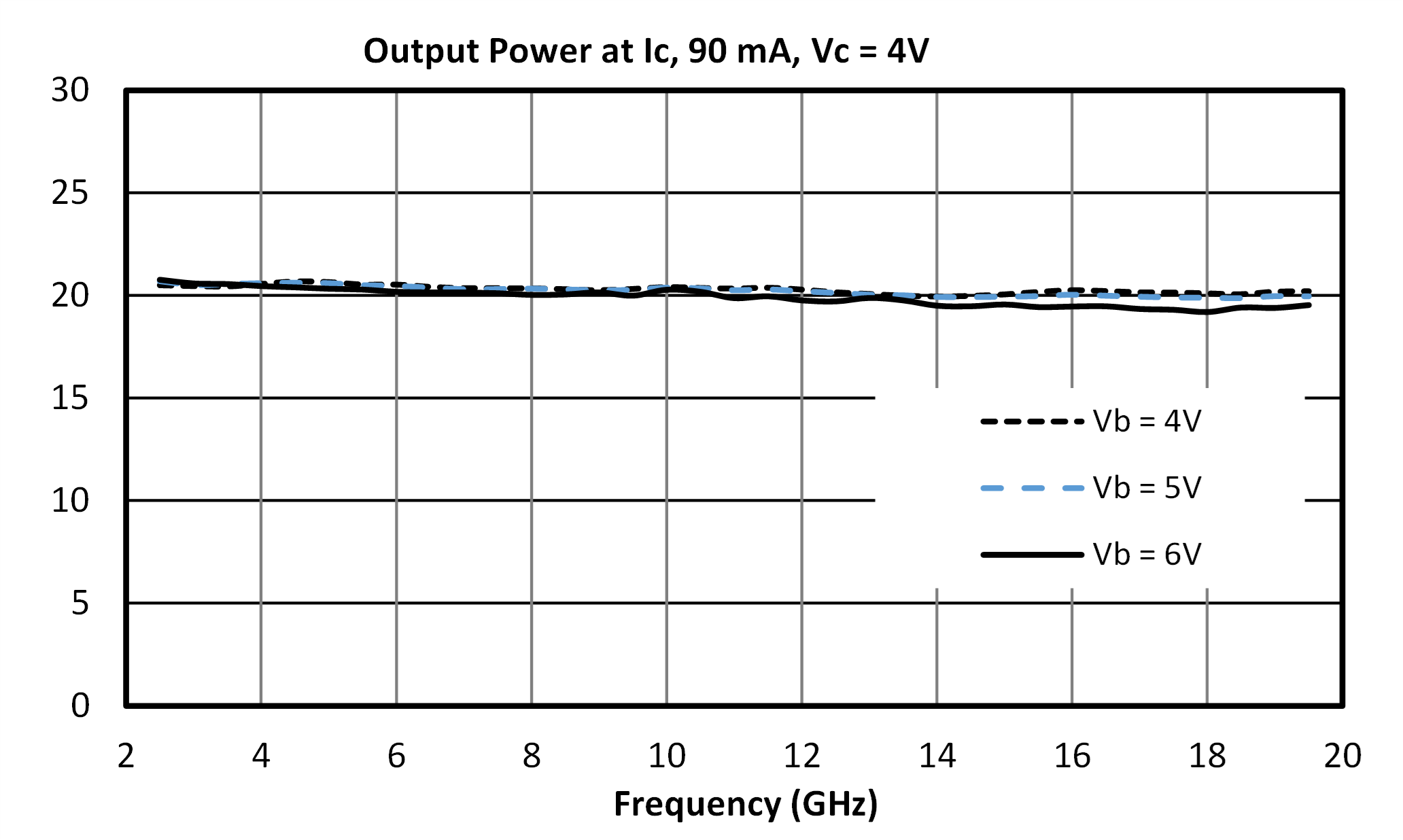
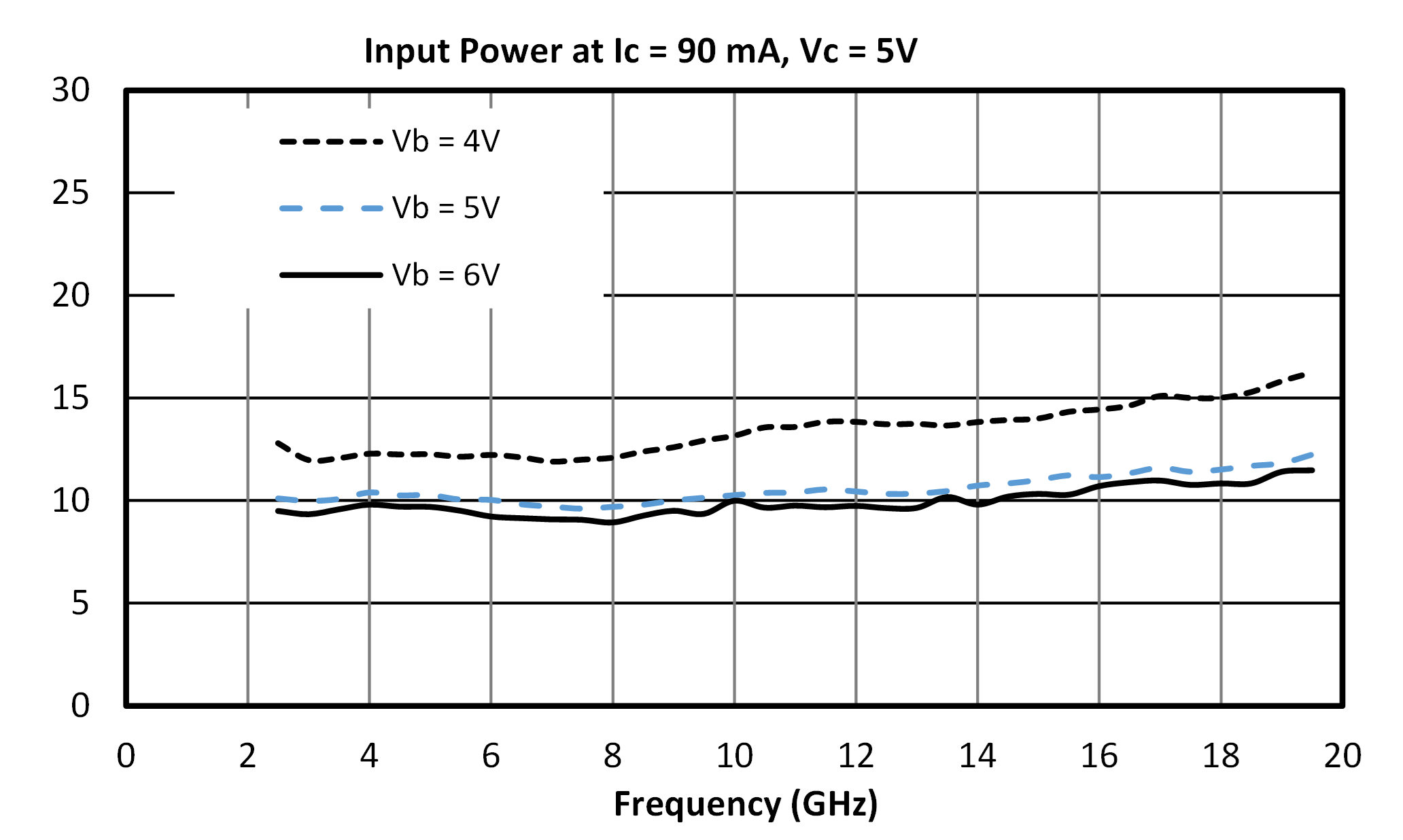
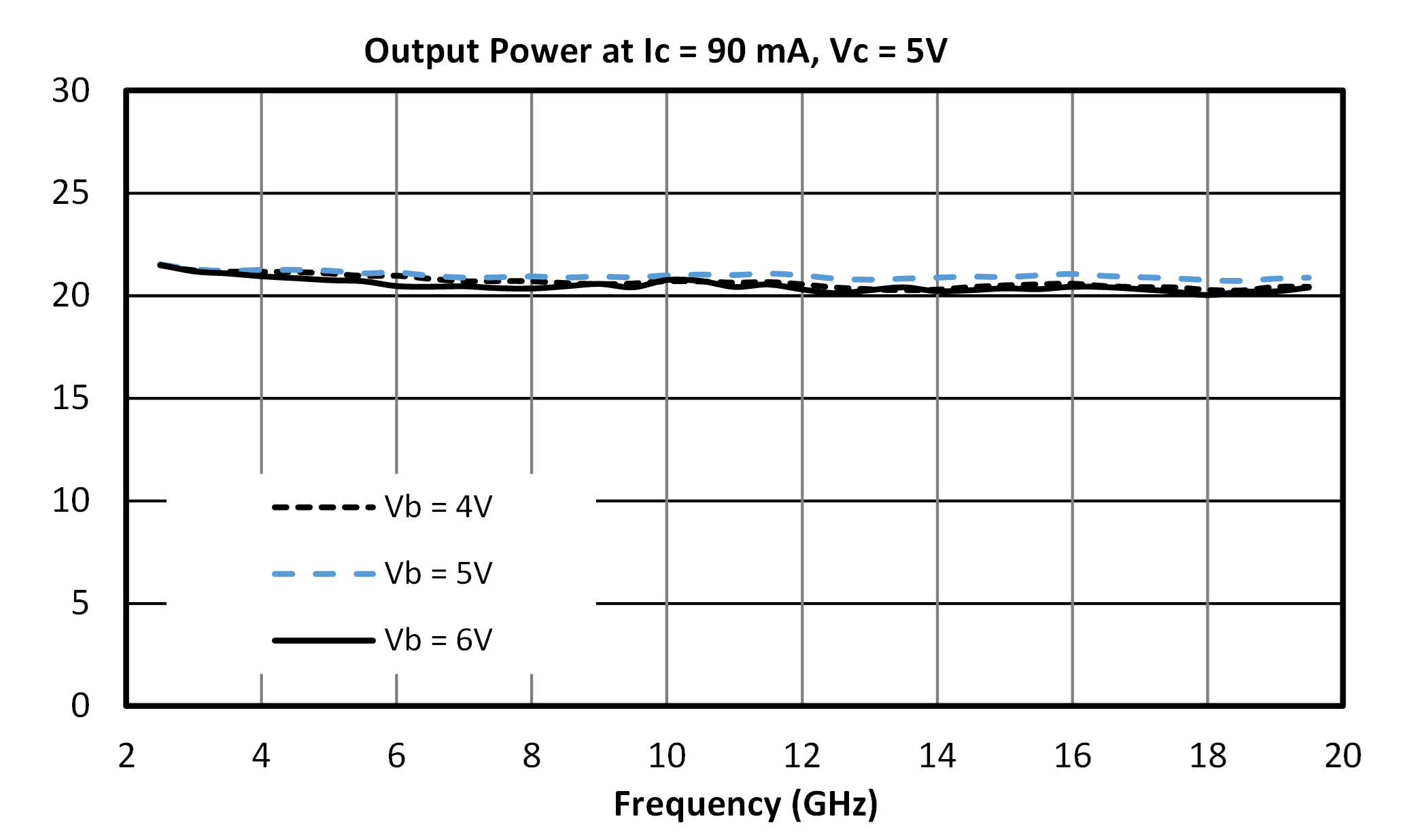
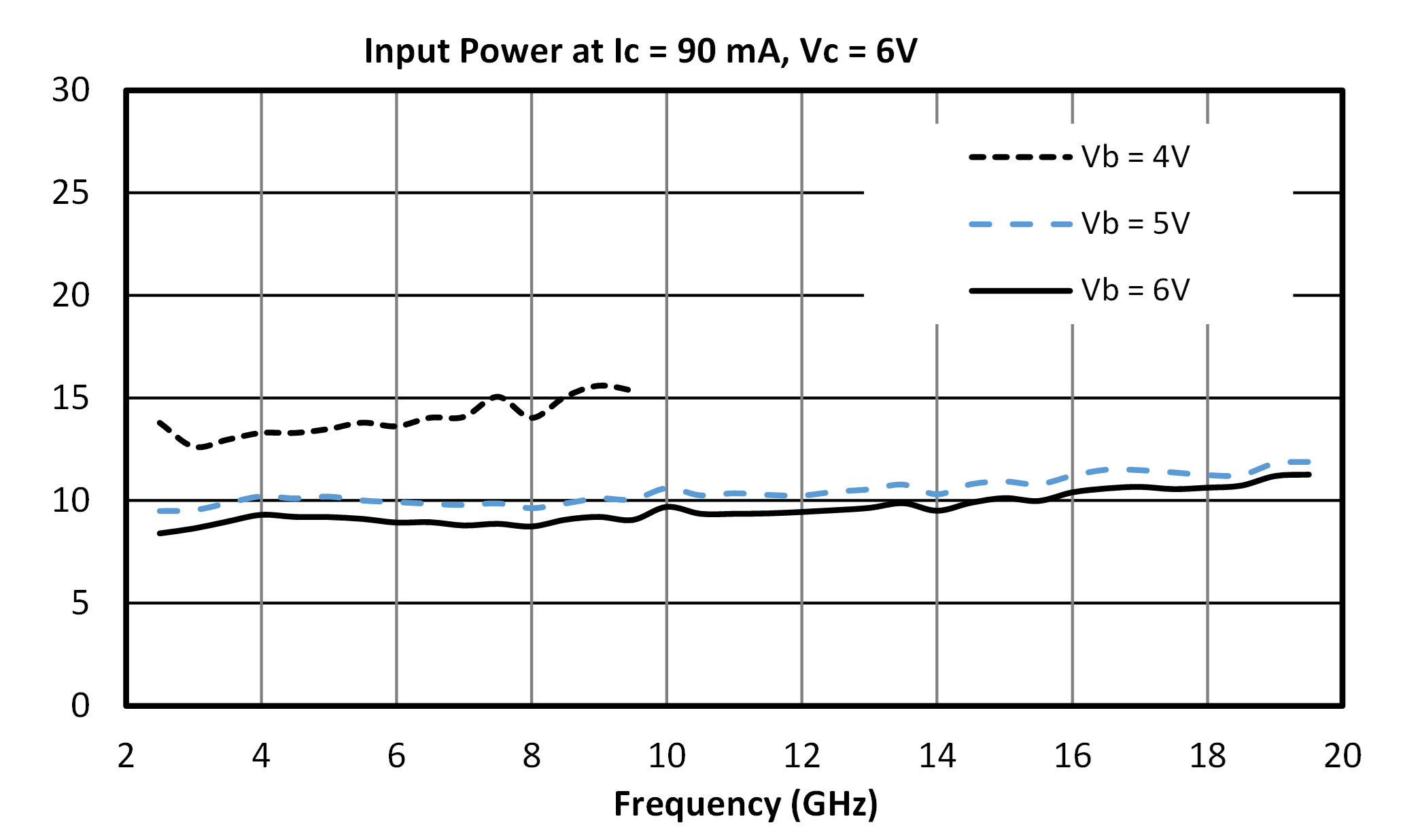
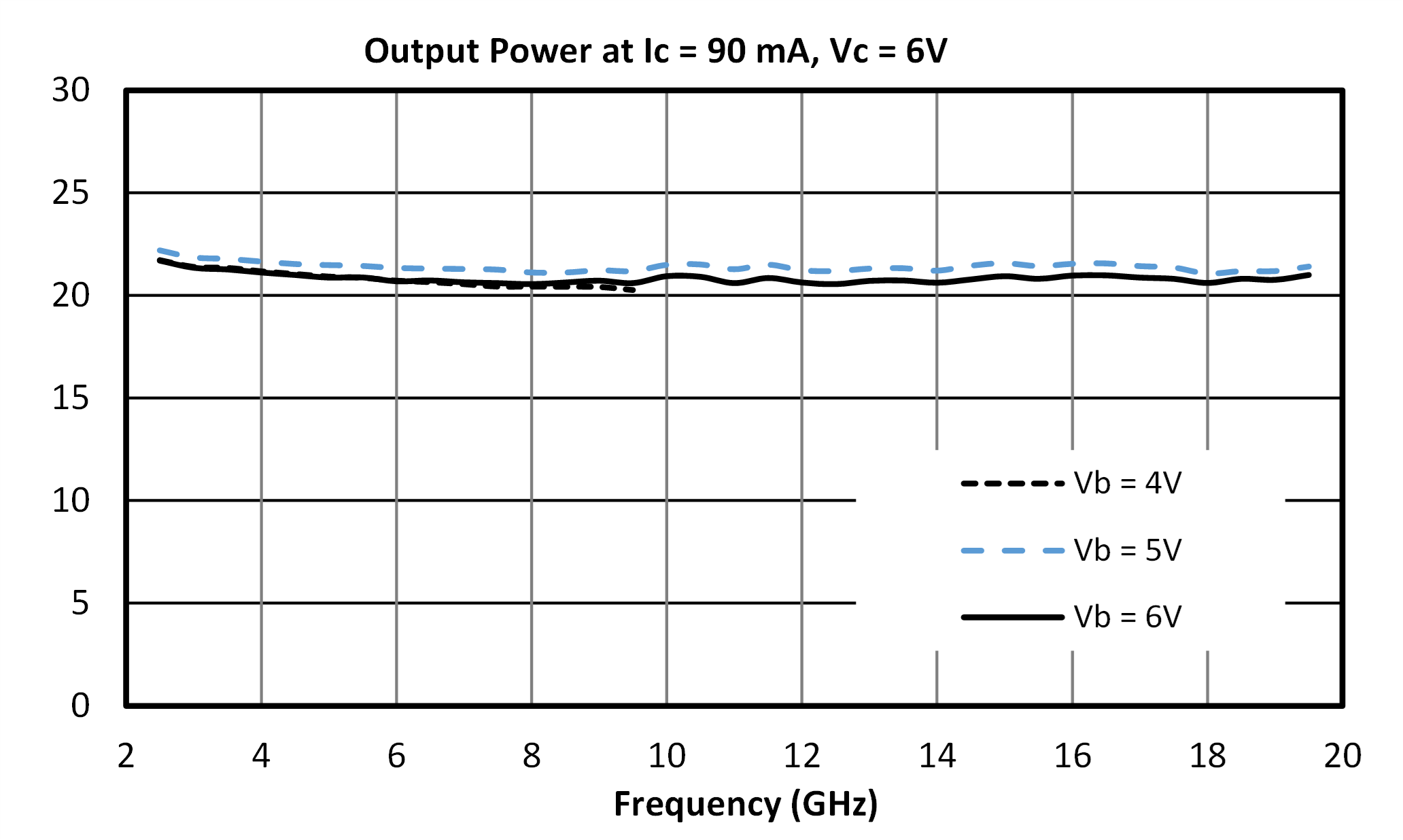
Performance plots for the connectorized module are shown for measurements where directly probed measurements of the die are unavailable. Note that the following measurements include losses from connectors and microstrip traces.
APM-6849CH
GaAs Broadband Low Phase Noise Amplifier
APM-6849CH
GaAs Broadband Low Phase Noise Amplifier
APM-6849CH
GaAs Broadband Low Phase Noise Amplifier
APM-6849CH
GaAs Broadband Low Phase Noise Amplifier
Performance plots for the connectorized module are shown for measurements where directly probed measurements of the die are unavailable. Note that the following measurements include losses from connectors and microstrip traces.
APM-6849CH
GaAs Broadband Low Phase Noise Amplifier

APM-6849CH
GaAs Broadband Low Phase Noise Amplifier