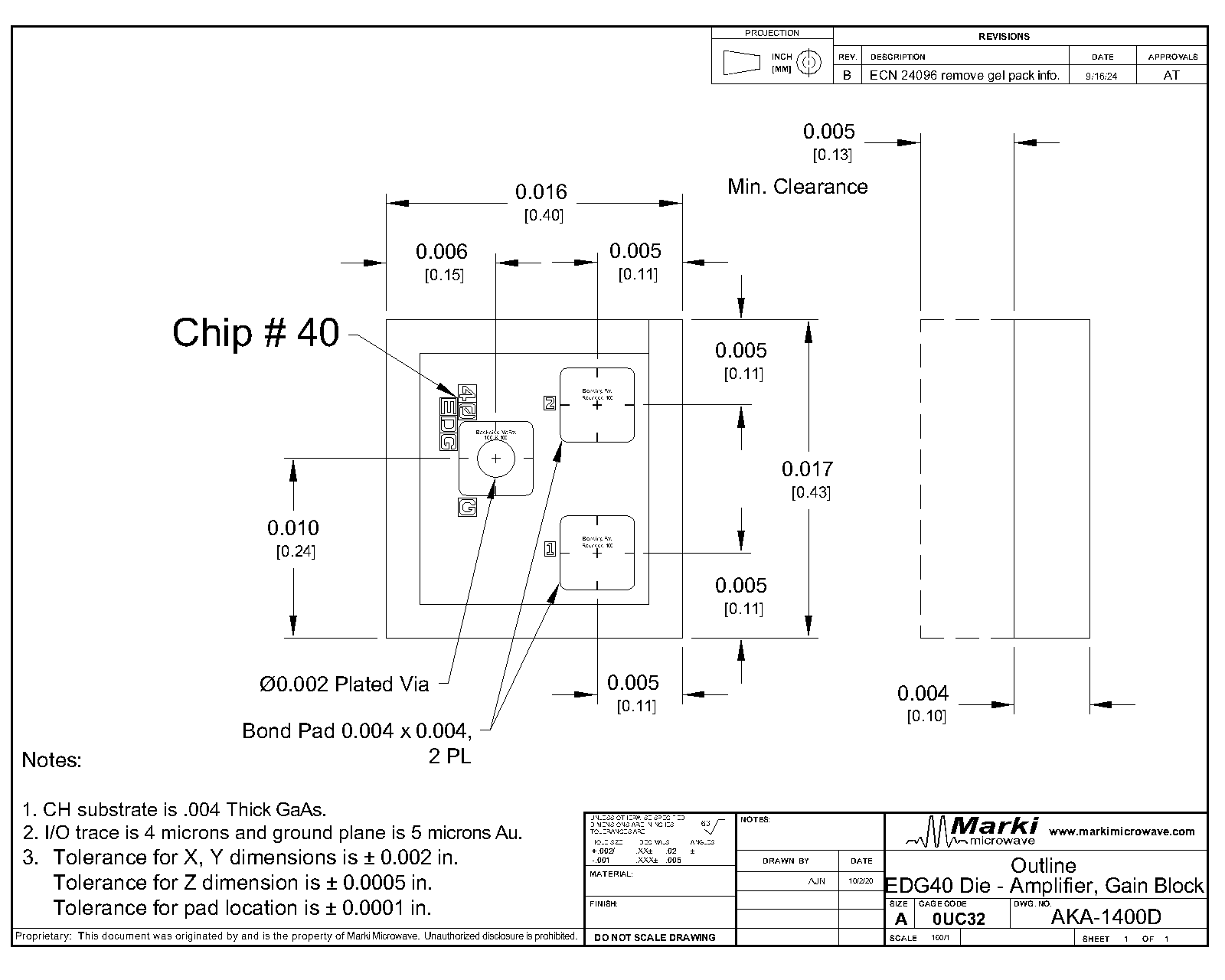
Port Diagram


Sales: 408-778-9952 | General: 408-778-4200 | Fax: 408-778-4300
Sales & Customer Support: [email protected]
Tech Support: [email protected]
The AKA-1400 is a low-cost cascadable broadband InGaP HBT MMIC amplifier. This is a general-purpose gain block amplifier which provides high P1dB, high OIP3, and very small die size. The simple application circuit also requires minimal external components, allowing it to be used in a variety of applications. It is available in bare die form.

N/A
| Part Number | Description | Package | Green Status | Product Lifecycle | Export Classification |
|---|---|---|---|---|---|
| AKA-1400D | DC – 14 GHz Cascadable Broadband InGaP MMIC Amplifier | CH | REACH RoHS | Released | EAR99 |
| Part Number | Description | Package | Green Status | Product Lifecycle | Export Classification |
|---|---|---|---|---|---|
| AKA-1400D | DC – 14 GHz Cascadable Broadband InGaP MMIC Amplifier | CH | REACH RoHS | Released | EAR99 |
AKA-1400D
DC – 14 GHz Cascadable Broadband InGaP MMIC Amplifier
| Revision Code | Revision Date | Comment |
|---|---|---|
| - | 2021-05-01 | Datasheet Initial Release |
AKA-1400D
DC – 14 GHz Cascadable Broadband InGaP MMIC Amplifier
| Port | Function | Description | DC Equivalent Circuit |
|---|---|---|---|
| GND | Ground | Backside of the IC must be connected to a DC/RF ground with high thermal and electrical conductivity. Ground pad connected to IC backside with via. |  |
| RF In (1) | RF Input | This is the RF Input port of the amplifier die. It is RF matched to 50 Ω and requires an external DC blocking capacitor | 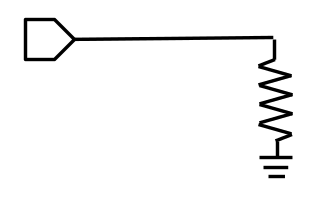 |
| Vd/RF Out (2) | RF Output and Positive Device Voltage Supply Port | This is the amplifier die’s RF Output and positive supply voltage port, Vd. It is RF matched to 50 Ω and is DC coupled. | |
AKA-1400D
DC – 14 GHz Cascadable Broadband InGaP MMIC Amplifier
The Absolute Maximum Ratings indicate limits beyond which damage may occur to the device. If these limits are exceeded, the device may become inoperable or have a reduced lifetime.
| Parameter | Maximum Rating | Unit |
|---|---|---|
| Maximum Operating Temperature | 85 | °C |
| Maximum Storage Temperature | 150 | °C |
| Max Junction Temperature for MTTF > 1E6 Hours | 150 | °C |
| Minimum Operating Temperature | -40 | °C |
| Minimum Storage Temperature | -65 | °C |
| Positive Bias Current (Icc) | 80 | mA |
| Power Dissipation | 312 | mW |
| RF Input Power | 20 | dBm |
| θ_Jc, Junction to Case Thermal Resistance | 215 | ºC/W |
| Parameter | Details | Rating |
|---|---|---|
| ESD | 250 to < 500 Volts | HBM Class 1A |
| Dimensions | - | 0.40 x 0.43 mm |
The Recommended Operating Conditions indicate the limits, inside which the device should be operated, to guarantee the performance given in Electrical Specifications. Operating outside these limits may not necessarily cause damage to the device, but the performance may degrade outside the limits of the electrical specifications. For limits, above which damage may occur, see Absolute Maximum Ratings.
| Parameter | Min | Nominal | Max | Unit |
|---|---|---|---|---|
| Ambient Temperature | -40 | 25 | 85 | °C |
| Positive DC Device Voltage (Vd) | 3.7 | 3.8 | 3.9 | V |
| Positive DC Current (Icc) | 35 | 50 | 80 | mA |
AKA-1400D
DC – 14 GHz Cascadable Broadband InGaP MMIC Amplifier
The electrical specifications apply at TA=+25°C in a 50Ω system. Die are 100% DC tested and RF tested on a per lot basis.
| Parameter | Test Conditions | Minimum Frequency (GHz) | Maximum Frequency (GHz) | Min | Typ | Max | Unit |
|---|---|---|---|---|---|---|---|
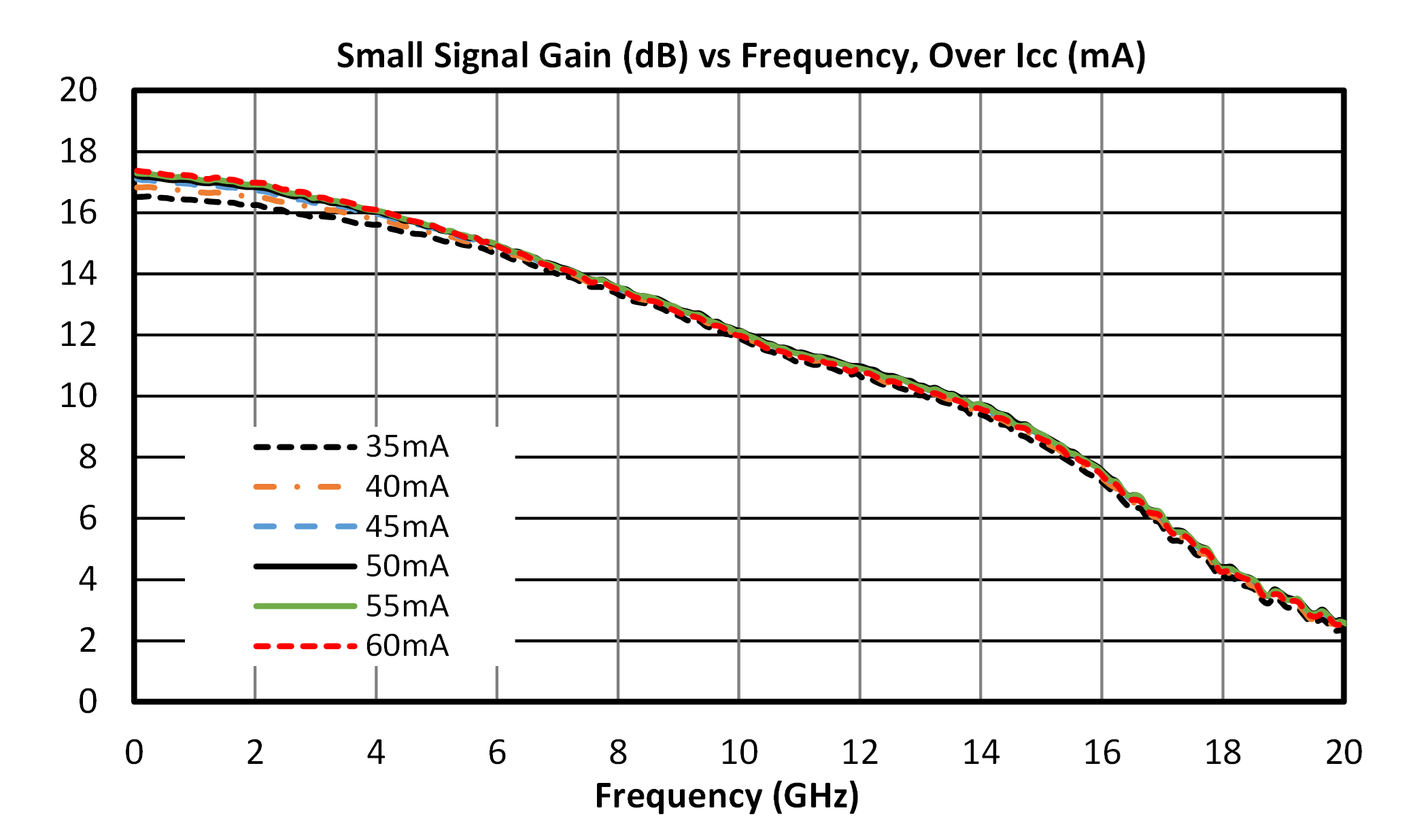
| Small Signal Gain | Vd = +3.8 V, Icc = 50 mA | 0.1 | 1 | 16 | 17 | - | dB |
| Small Signal Gain | Vd = +3.8 V, Icc = 50 mA | 1 | 4 | 15 | 16 | - | dB |
| Small Signal Gain | Vd = +3.8 V, Icc = 50 mA | 4 | 6 | 14 | 15 | - | dB |
| Small Signal Gain | Vd = +3.8 V, Icc = 50 mA | 6 | 12 | 11 | 12 | - | dB |
| Small Signal Gain | Vd = +3.8 V, Icc = 50 mA | 12 | 14 | 9 | 10 | - | dB |
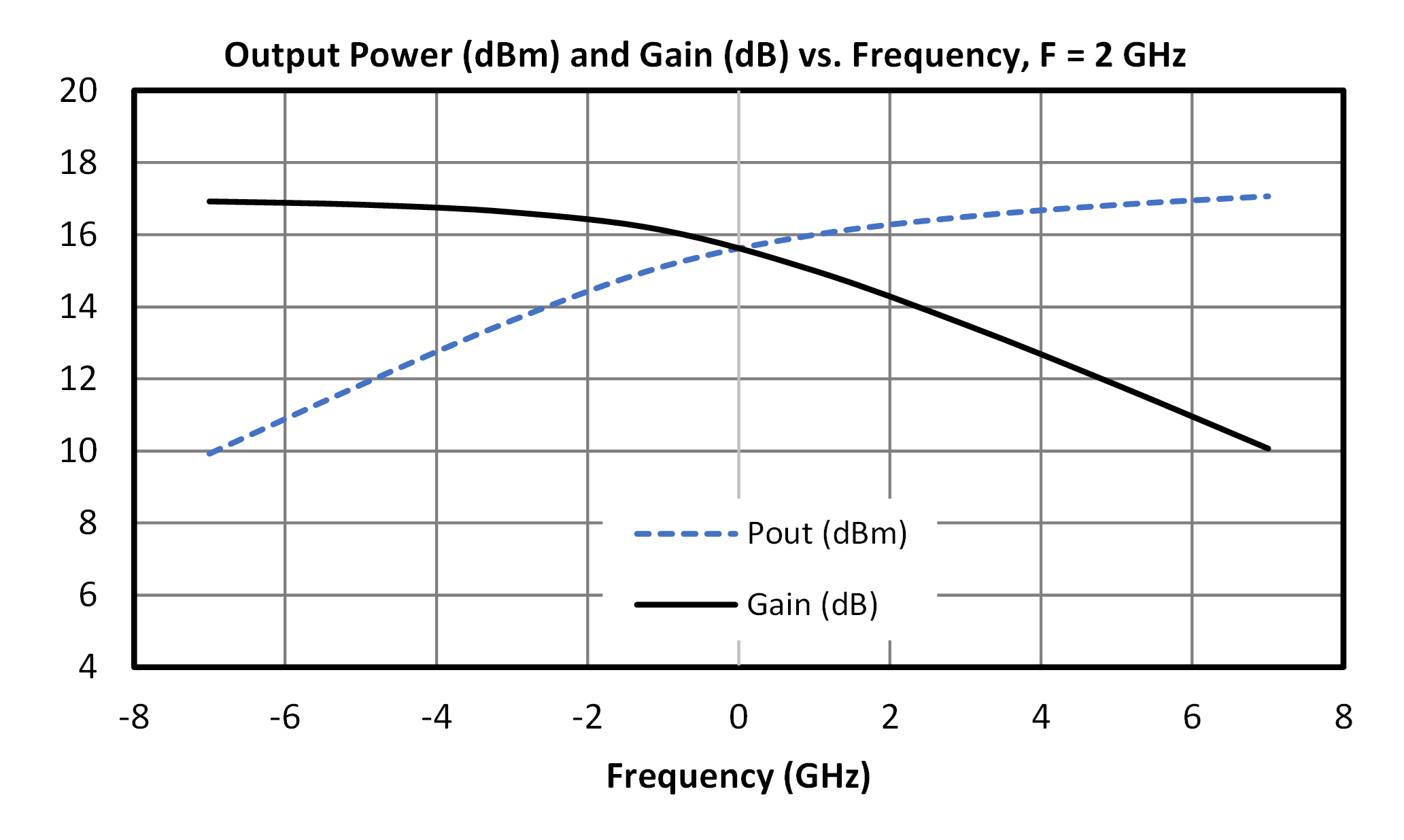
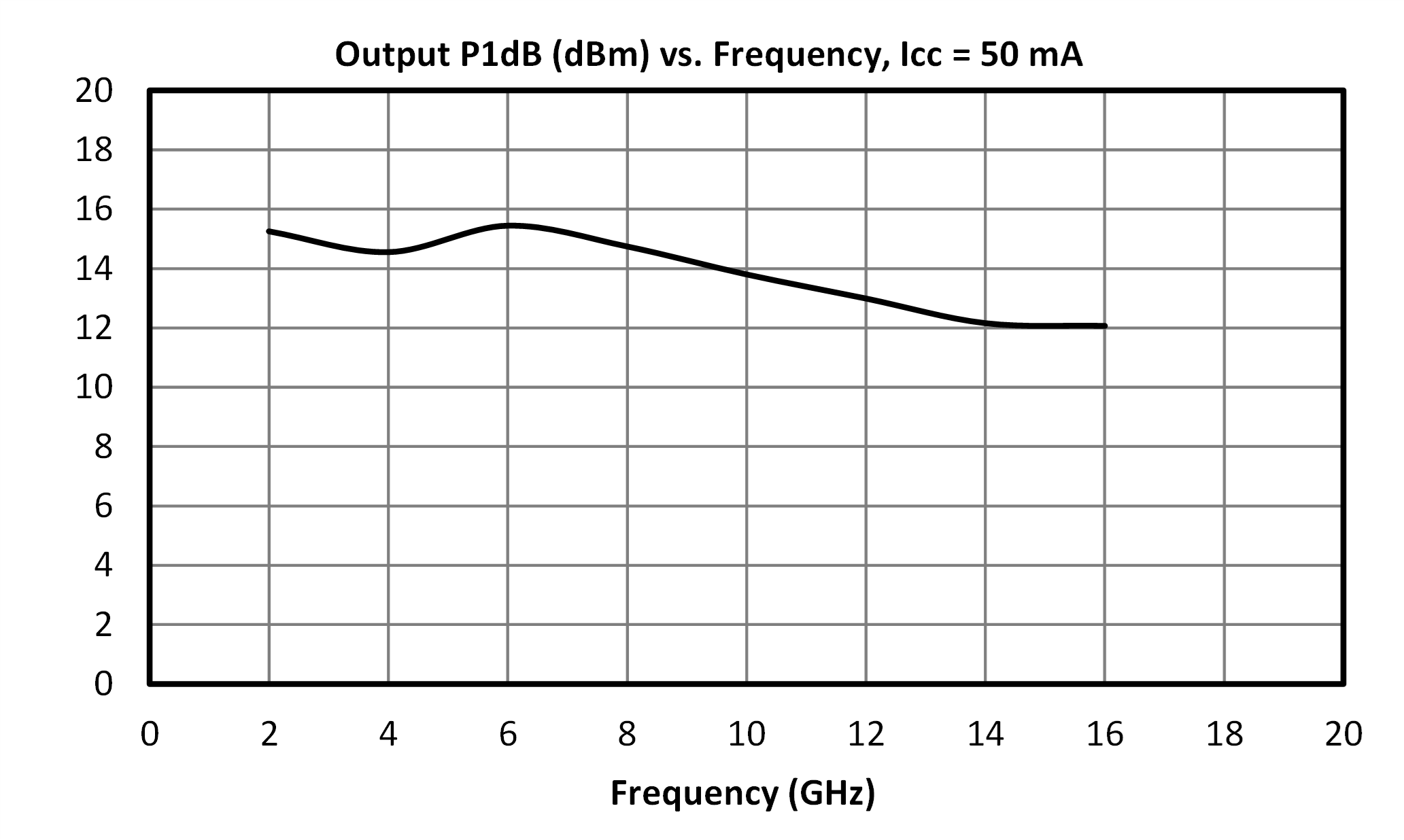
| Output P1dB | Vd = +3.8 V, Icc = 50 mA | 2 | 6 | - | 15 | - | dBm |
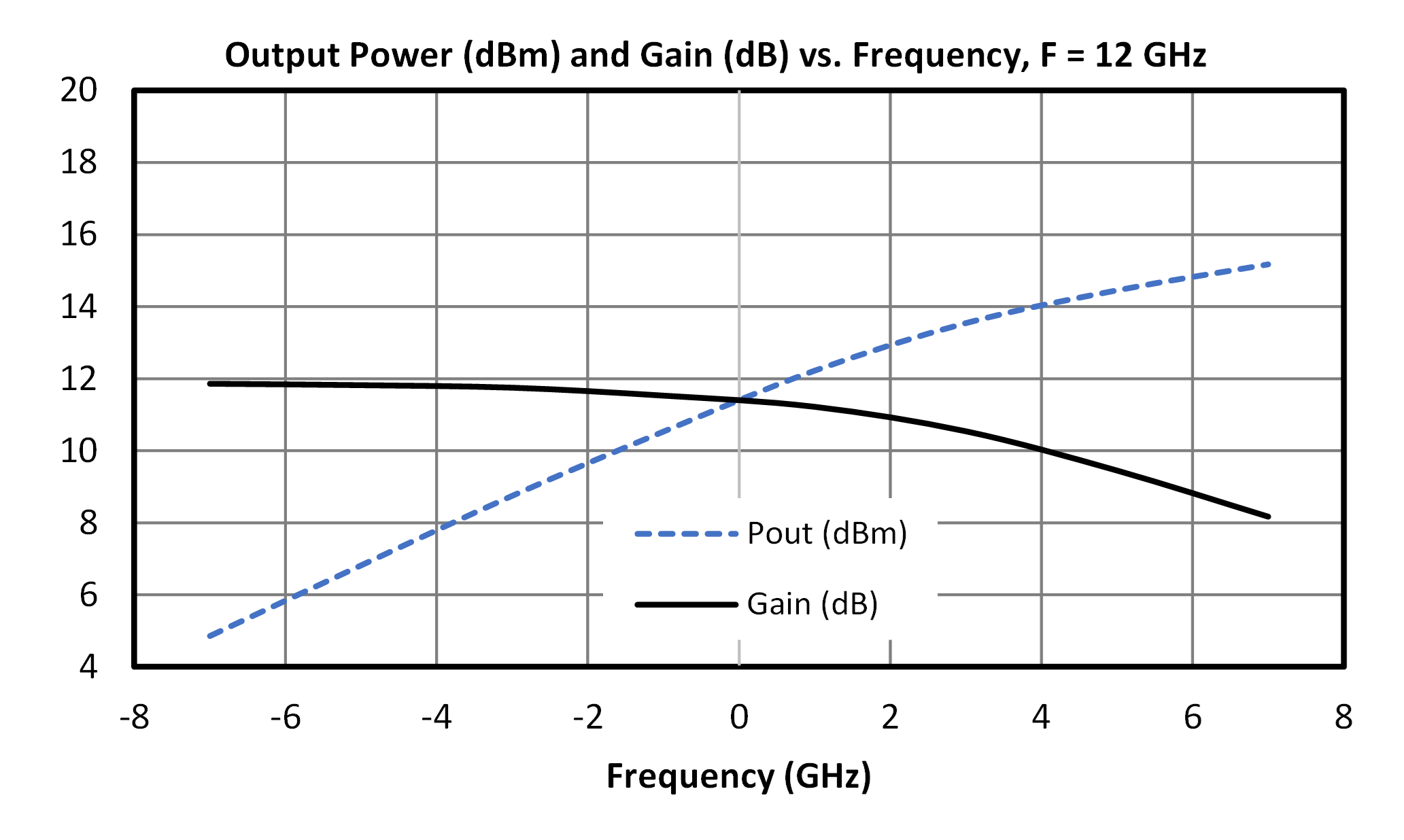
| Output P1dB | Vd = +3.8 V, Icc = 50 mA | 6 | 14 | - | 13 | - | dBm |
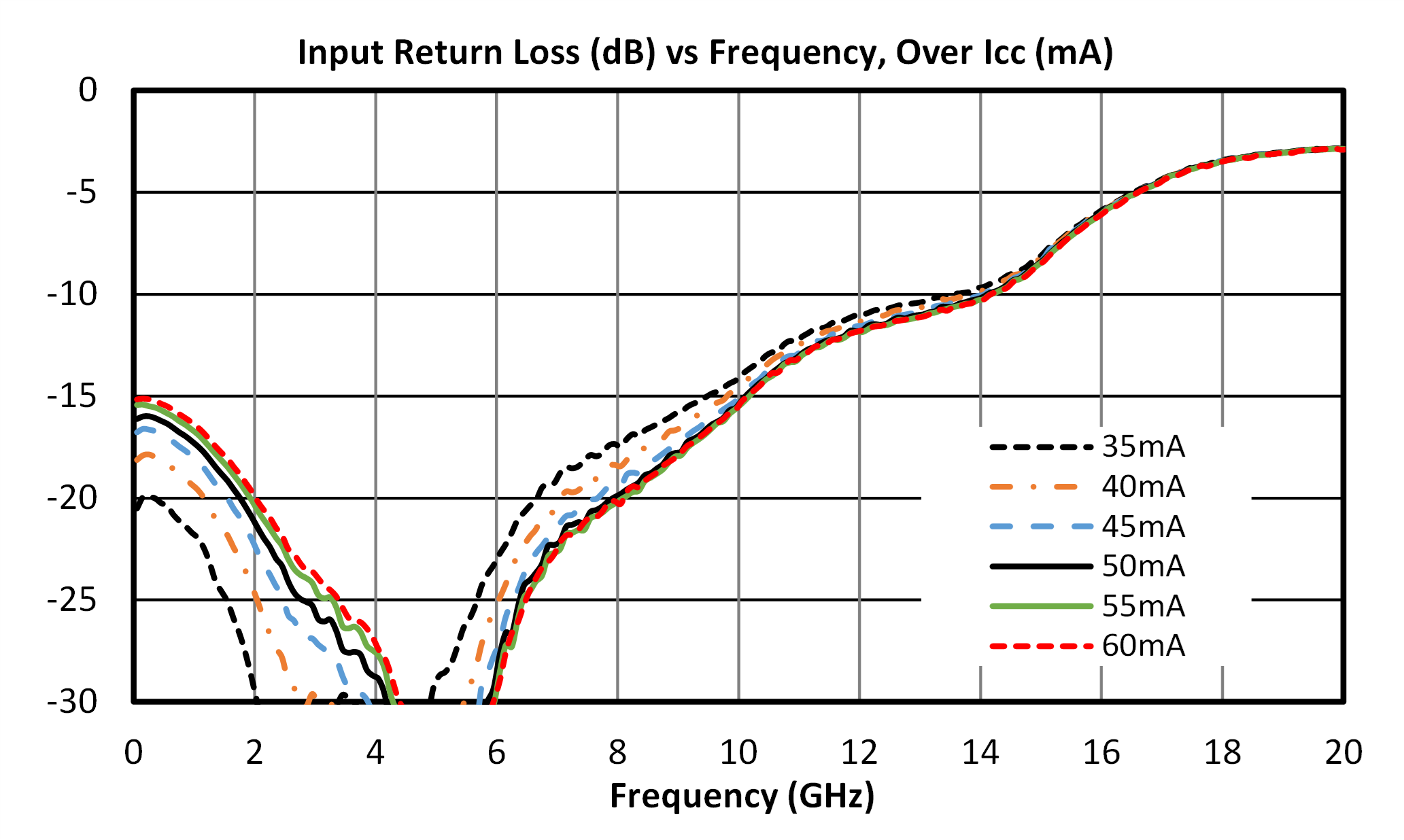
| Input Return Loss | Vd = +3.8 V, Icc = 50 mA | 0.1 | 14 | - | 20 | - | dB |
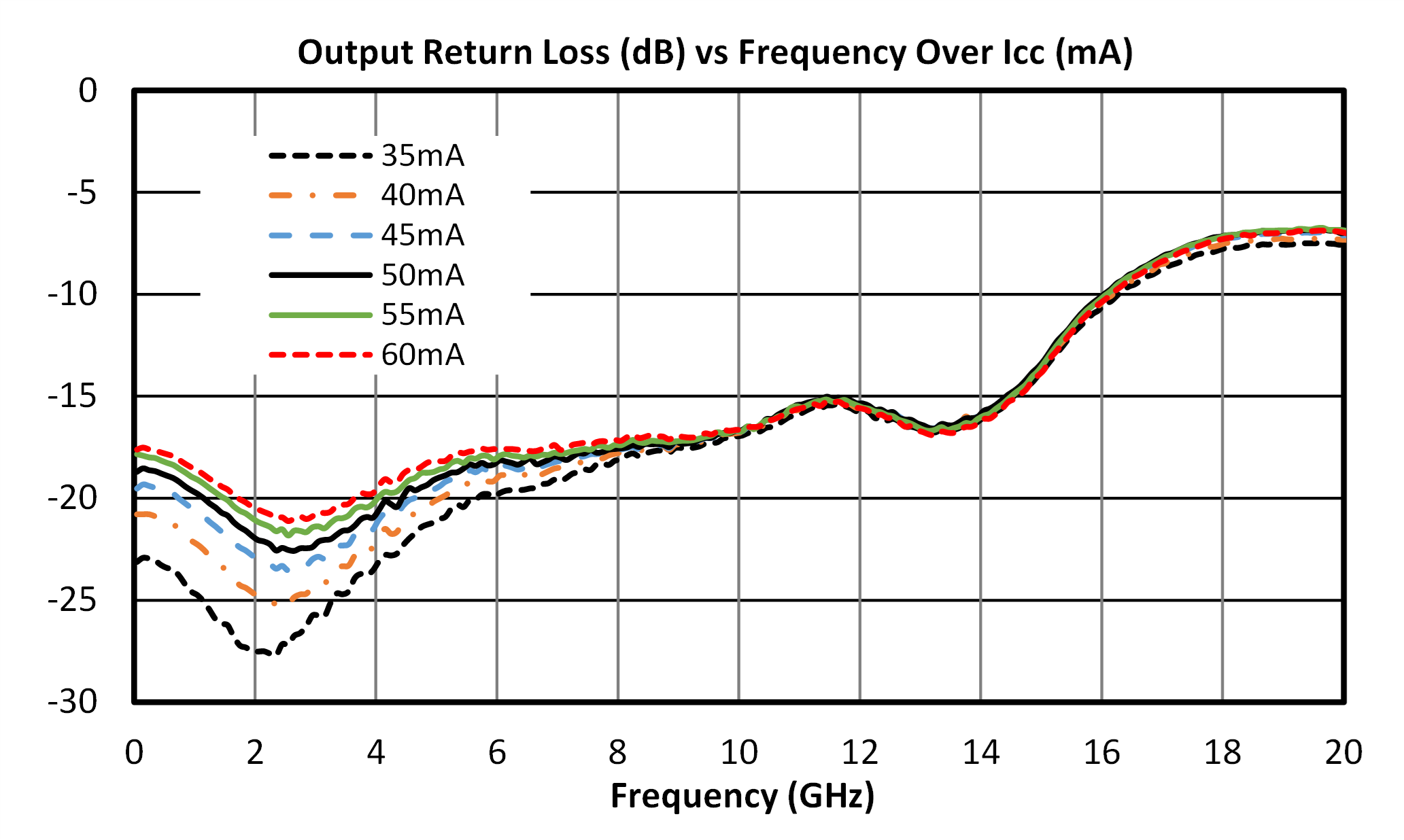
| Output Return Loss | Vd = +3.8 V, Icc = 50 mA | 0.1 | 14 | - | 18 | - | dB |
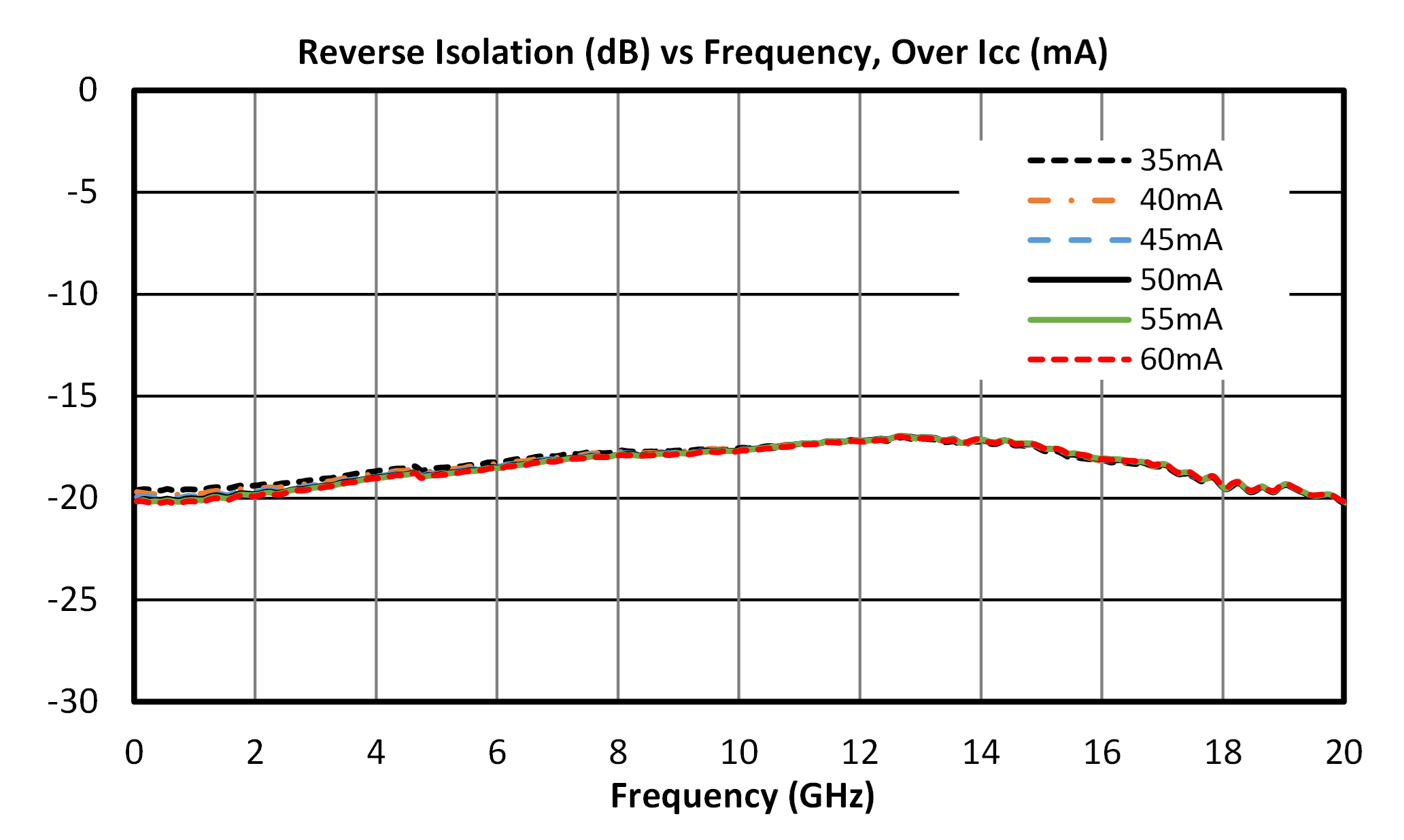
| Reverse Isolation | Vd = +3.8 V, Icc = 50 mA | 0.1 | 14 | - | 18 | - | dB |
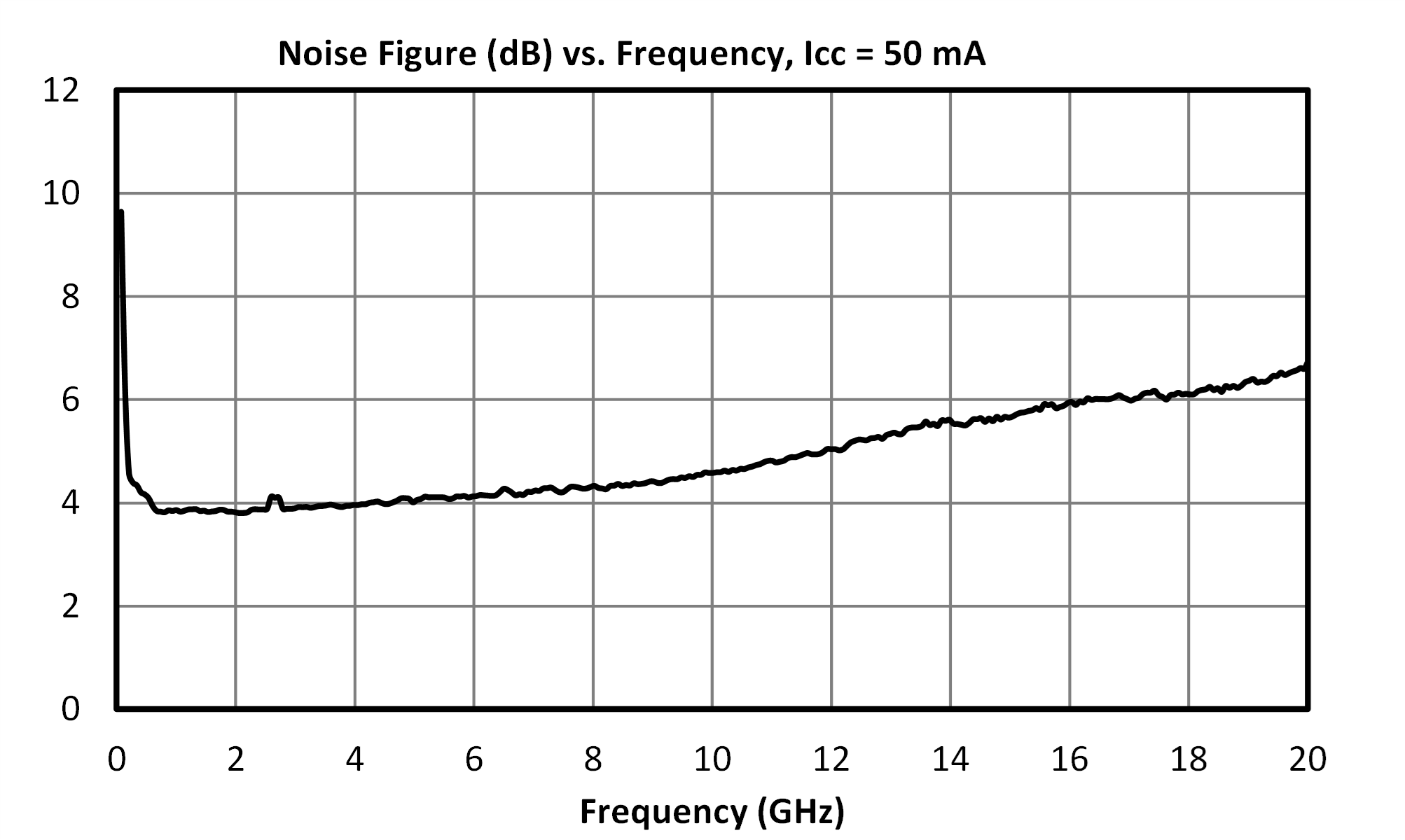
| Noise Figure | Vd = +3.8 V, Icc = 50 mA | 3 | 3 | - | 4 | - | dB |
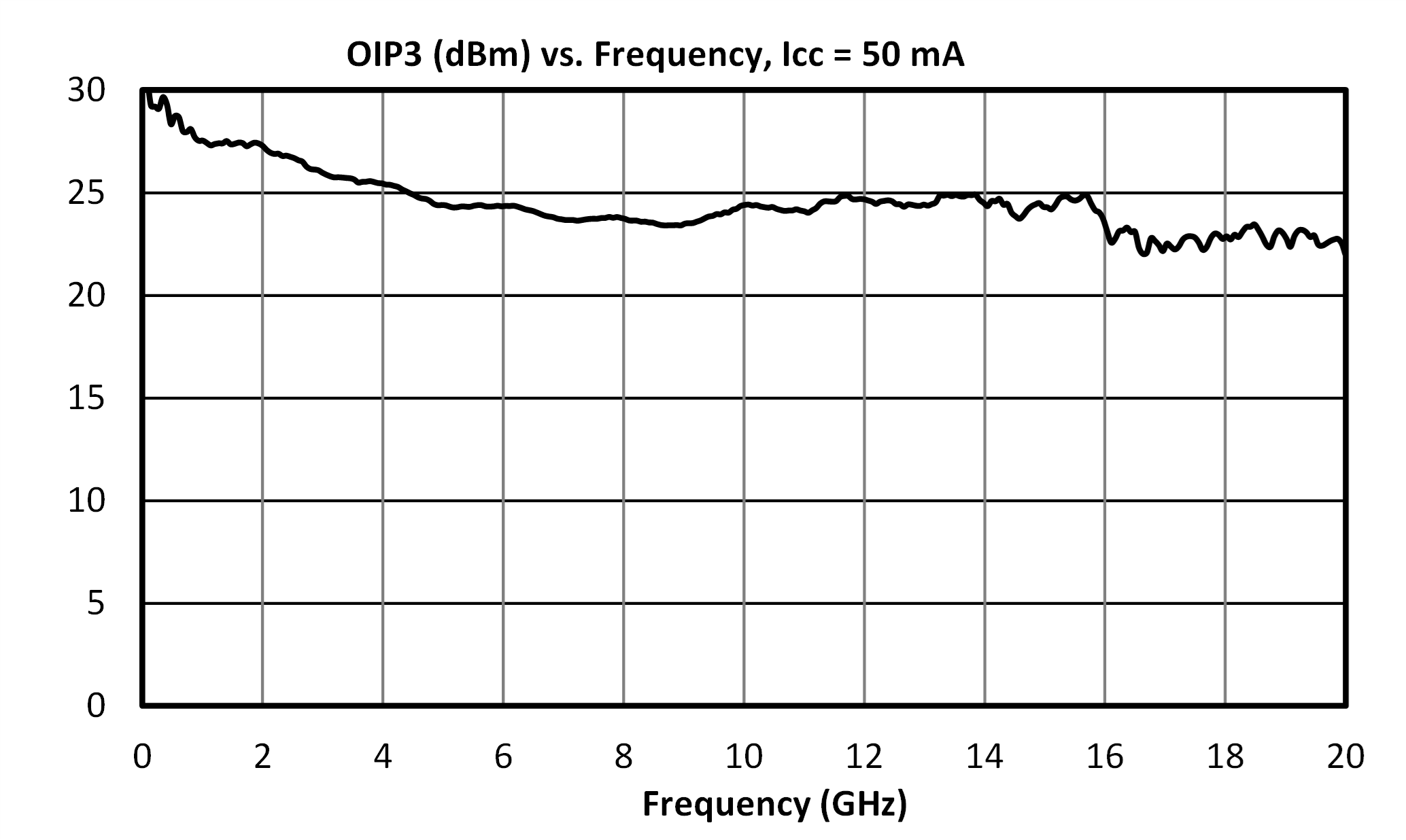
| Output IP3 | Vd = +3.8 V, Icc = 50 mA | 2 | 2 | - | 28 | - | dBm |
| Current Consumption | Vd = +3.8V | - | - | - | 50 | - | mA |
| Parameter | Test Conditions | Minimum Frequency (GHz) | Maximum Frequency (GHz) | Min | Typ | Max | Unit |
|---|---|---|---|---|---|---|---|
| Small Signal Gain | Vd = +3.8 V, Icc = 50 mA | 0.1 | 1 | 16 | 17 | - | dB |
| Small Signal Gain | Vd = +3.8 V, Icc = 50 mA | 1 | 4 | 15 | 16 | - | dB |
| Small Signal Gain | Vd = +3.8 V, Icc = 50 mA | 4 | 6 | 14 | 15 | - | dB |
| Small Signal Gain | Vd = +3.8 V, Icc = 50 mA | 6 | 12 | 11 | 12 | - | dB |
| Small Signal Gain | Vd = +3.8 V, Icc = 50 mA | 12 | 14 | 9 | 10 | - | dB |
| Output P1dB | Vd = +3.8 V, Icc = 50 mA | 2 | 6 | - | 15 | - | dBm |
| Output P1dB | Vd = +3.8 V, Icc = 50 mA | 6 | 14 | - | 13 | - | dBm |
| Input Return Loss | Vd = +3.8 V, Icc = 50 mA | 0.1 | 14 | - | 20 | - | dB |
| Output Return Loss | Vd = +3.8 V, Icc = 50 mA | 0.1 | 14 | - | 18 | - | dB |
| Reverse Isolation | Vd = +3.8 V, Icc = 50 mA | 0.1 | 14 | - | 18 | - | dB |
| Noise Figure | Vd = +3.8 V, Icc = 50 mA | 3 | 3 | - | 4 | - | dB |
| Output IP3 | Vd = +3.8 V, Icc = 50 mA | 2 | 2 | - | 28 | - | dBm |
| Current Consumption | Vd = +3.8V | - | - | - | 50 | - | mA |
AKA-1400D
DC – 14 GHz Cascadable Broadband InGaP MMIC Amplifier
AKA-1400D
DC – 14 GHz Cascadable Broadband InGaP MMIC Amplifier
AKA-1400D
DC – 14 GHz Cascadable Broadband InGaP MMIC Amplifier

AKA-1400D
DC – 14 GHz Cascadable Broadband InGaP MMIC Amplifier